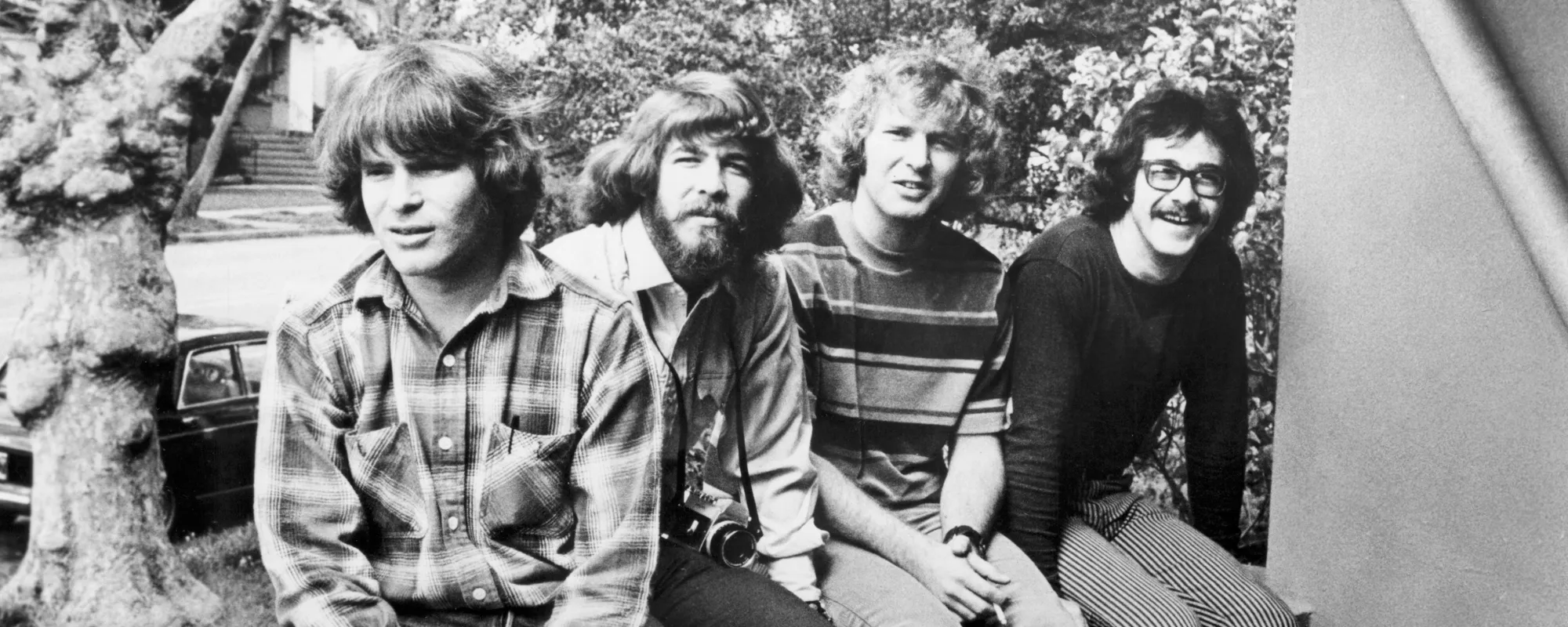
At the Royal Albert Hall on April 14, 1970, Green River sounded bigger than nostalgia. Creedence Clearwater Revival turned a song of boyhood memory into a hard-driving live statement that shook London.
On April 14, 1970, Creedence Clearwater Revival stepped onto the stage of Royal Albert Hall in London and gave Green River a life far beyond the studio recording. This was not simply another run through a familiar hit. In that room, the song carried the snap of a working band at full power: lean, unsentimental, and utterly in command. What makes this performance even more compelling is that the Royal Albert Hall recording itself became part of CCR mythology. For years, many fans associated the title The Concert with this London show, only to learn later that the 1980 release had actually come from Oakland. When the real Royal Albert Hall tapes were finally presented properly decades later, listeners could hear what had been missing all along: the actual atmosphere of that April 14, 1970 night, with Green River standing as one of its great jolts.
By the time the band reached London, Green River was already one of the defining songs in the Creedence Clearwater Revival catalog. Released in 1969 as a single backed with Commotion, it climbed to No. 2 on the Billboard Hot 100. The album Green River also became a major triumph, reaching No. 1 on the Billboard 200. Those chart facts matter because they remind us that this was not an obscure album cut being rediscovered onstage. It was a song audiences already knew, already loved, and likely arrived waiting to hear. Yet the London performance shows how CCR could take a hit and strip away any sense of routine. Nothing sounds decorative here. The groove is tight, the attack is clipped and urgent, and John Fogerty sings as if memory itself has teeth.
The story behind Green River has always given the song a special glow. John Fogerty drew from childhood trips to Putah Creek in Northern California, folding real images of riverbanks, outdoor heat, and small-town textures into the lyric. He also spoke about the title being inspired in part by a familiar Green River soft drink syrup advertisement from his youth. That mix of real memory and commercial Americana is part of what makes the song so vivid. It feels personal, but it also feels collective, as though it belongs to a larger American scrapbook. The genius of the writing is that it never explains too much. Instead, it drops us into smell, weather, mud, and movement. You can almost hear the dragonflies and summer water in the rhythm.
What happened at Royal Albert Hall is that those private images were pushed through amplifiers and turned into something more muscular. The studio version of Green River is compact and brilliantly shaped, but the live performance gives it a sharper edge. Doug Clifford keeps the beat moving with a dry, insistent drive. Stu Cook holds the bottom with that plainspoken force that was so essential to the band’s sound. Tom Fogerty helps thicken the frame, and over it all John Fogerty throws his guitar lines like sparks. The remarkable thing is how little excess there is. Creedence Clearwater Revival did not build grandeur through ornament. They built it through discipline, pressure, and conviction.
That is why this London reading of Green River feels so important. The song is about looking back, but the band never lets it drift into softness. Instead, they make memory feel active, almost urgent. The creek in the lyric is not a museum piece. It is alive, rushing, a place the singer still needs. In 1970, that emotional current mattered. CCR were one of the biggest groups in the world, but they still played with the intensity of musicians who had something to prove every time they walked onstage. There is no lazy victory lap in this performance. There is only momentum.
It is also worth remembering the setting. Royal Albert Hall carried its own weight of prestige, history, and expectation. Creedence Clearwater Revival, with their swamp-rock bite and working-class economy, were not the kind of band that relied on ornate surroundings. That contrast is part of the thrill. In such a celebrated London venue, they did not become more refined or polished. They became more unmistakably themselves. Green River, a song rooted in American boyhood recollection, suddenly belonged to an international audience. That is one reason the performance still resonates. It proves how far a specific song can travel when the feeling inside it is true enough.
There is a final irony here, and it deepens the song’s legacy. A performance that spent years partly obscured by confusion over titles and tapes eventually emerged with fresh clarity, letting listeners hear Green River in the exact time and place where it had once thundered through the hall. Perhaps that is fitting. The song itself is about returning, about being pulled back toward a place that shaped you. In London, on April 14, 1970, Creedence Clearwater Revival played it not as a sentimental postcard, but as a living current. Decades later, it still carries that same charge: a memory turned electric, a river that never really stopped moving.
