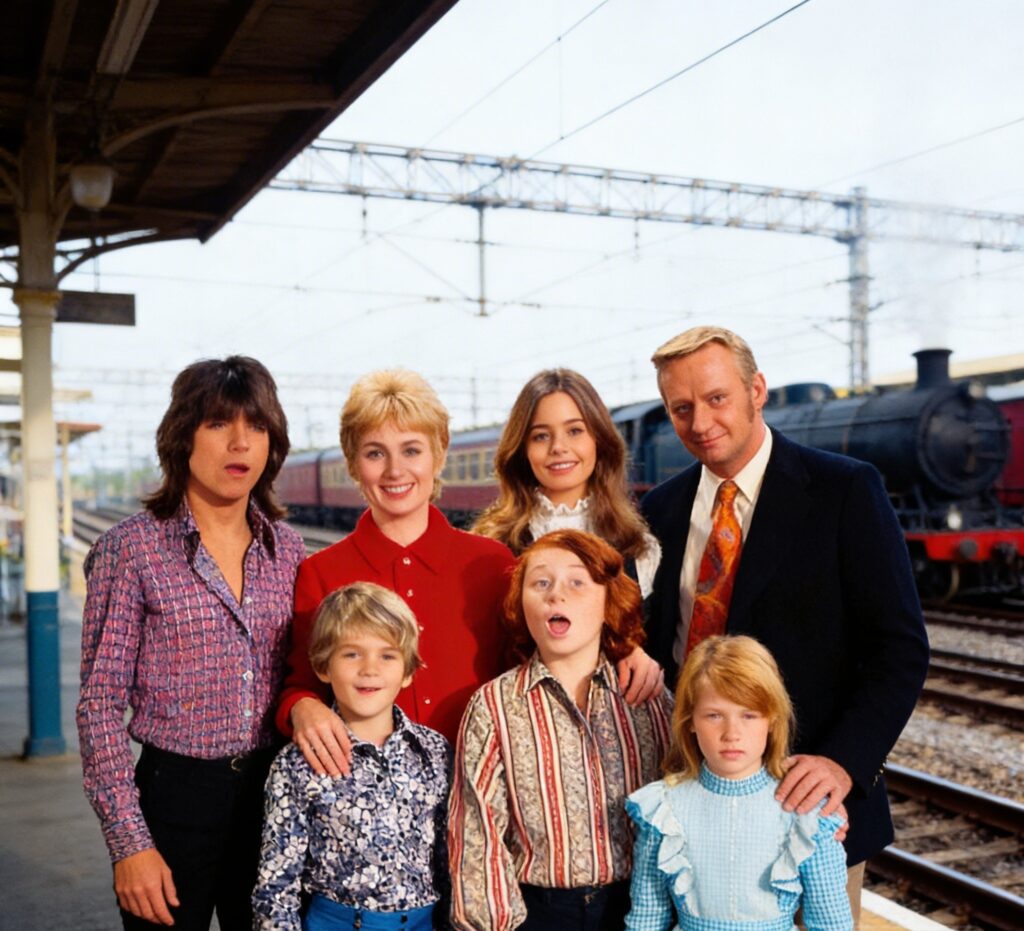
A soft love song wrapped in television sunshine, Looking Through the Eyes of Love quietly revealed how much of The Partridge Family depended on the inner life of David Cassidy.
Released from Shopping Bag in late 1972, Looking Through the Eyes of Love gave The Partridge Family another American Top 40 single, reaching No. 39 on the Billboard Hot 100 by early 1973. That chart detail matters because it places the record in a very specific chapter of the group’s story. The first burst of Partridge hysteria had already passed, the television series was still part of American life, and David Cassidy was no longer just the charming boy at the center of a family sitcom. By then, he had become a major pop attraction in his own right, and listeners were starting to hear something deeper in his singing than teen-idol brightness alone.
On the surface, Looking Through the Eyes of Love is exactly what a listener might expect from the Partridge Family universe: melodic, polished, romantic, and immediately accessible. But the song has a gentleness that separates it from the more buoyant, more obviously commercial hits. It does not rush toward its chorus with sheer teenage exuberance. Instead, it opens itself slowly. The melody floats rather than bounces, and the arrangement leaves room for feeling rather than simply momentum. That is one reason the record has aged so gracefully. It sounds like a soft-focus pop single, yet it carries the faint ache of someone trying to hold on to tenderness in a world built on performance.
The lyric itself is simple in the best way. It speaks of love as a change in perception, as if affection can alter the shape of ordinary life and make everything seem warmer, clearer, and more meaningful. That idea was hardly new in pop music, but here it lands with unusual sincerity. There is no grand declaration, no theatrical heartbreak, no oversized drama. What gives the song its staying power is its restraint. It suggests that love is not always a lightning bolt; sometimes it is a lens. Sometimes it is the quiet shift that makes a person see familiar things differently. That reflective quality gave the song a maturity that fit 1972 better than the broad smile many people still associated with the group.
And that is where David Cassidy becomes the true emotional center of the record. He does not oversing it. He never forces the sentiment. Instead, he leans into the melody with a softness that makes the words feel lived in rather than merely recited. In earlier Partridge Family hits, his voice often carried excitement, flirtation, and youthful confidence. Here, there is something more shaded. The performance still sounds warm and inviting, but there is also a reflective calm in it, almost as if he is standing slightly apart from the machinery around him. That difference is crucial. The song may have been released under the Partridge Family name, but emotionally it belongs to the singer who knew how to make a carefully manufactured pop setting feel personal.
That tension between image and feeling is part of the backstory behind nearly all great Partridge Family records. The television show sold a fantasy of a lovable family band, yet the recordings themselves were the work of skilled studio professionals, guided by producers who understood commercial pop with remarkable precision. Still, no amount of polish could create human connection on its own. What made these records stick was the vocal personality at the center. David Cassidy gave the material pulse, and by the time of Shopping Bag, that pulse was sounding more mature, more self-aware, and in some ways more vulnerable than the group’s early image allowed.
Shopping Bag is not always the first album named when casual listeners talk about The Partridge Family, and that is exactly why this song deserves another look. It comes from a later phase, when the formula was still intact but the emotional colors had deepened. The album title itself sounds playful and lightweight, almost disposable, but the best moments on the record are more nuanced than that. Looking Through the Eyes of Love feels like one of those moments when a supposedly breezy pop project briefly let in real atmosphere. The song does not reject the group’s pop identity; it refines it. It proves that sweetness and sincerity do not have to be opposites.
There is also a larger historical reason the song resonates. In 1972, David Cassidy was living inside an impossible contradiction: he was one of the most visible young stars in pop culture, yet he was also trying to be heard as a serious singer rather than a poster on a bedroom wall. That tension can be heard in this performance. Not as rebellion, and not as bitterness, but as depth. When he sings this song, one hears a young man using a polished commercial format to communicate something more inward. The result is subtle, but subtlety is often what lasts.
That is why Looking Through the Eyes of Love remains so affecting. It was a hit, yes, and it belongs to a famous brand, yes, but its real appeal lies elsewhere. It captures the moment when The Partridge Family stopped sounding like a television idea and started, however briefly, sounding like an emotional truth. In the glow of Shopping Bag, with all the era’s bright colors still intact, David Cassidy gave the song a center that was unmistakably human. Decades later, that is still what reaches across the years: not the packaging, not the marketing, not even the nostalgia alone, but the quiet sincerity of a voice that understood how much feeling could hide inside a carefully crafted pop single.
