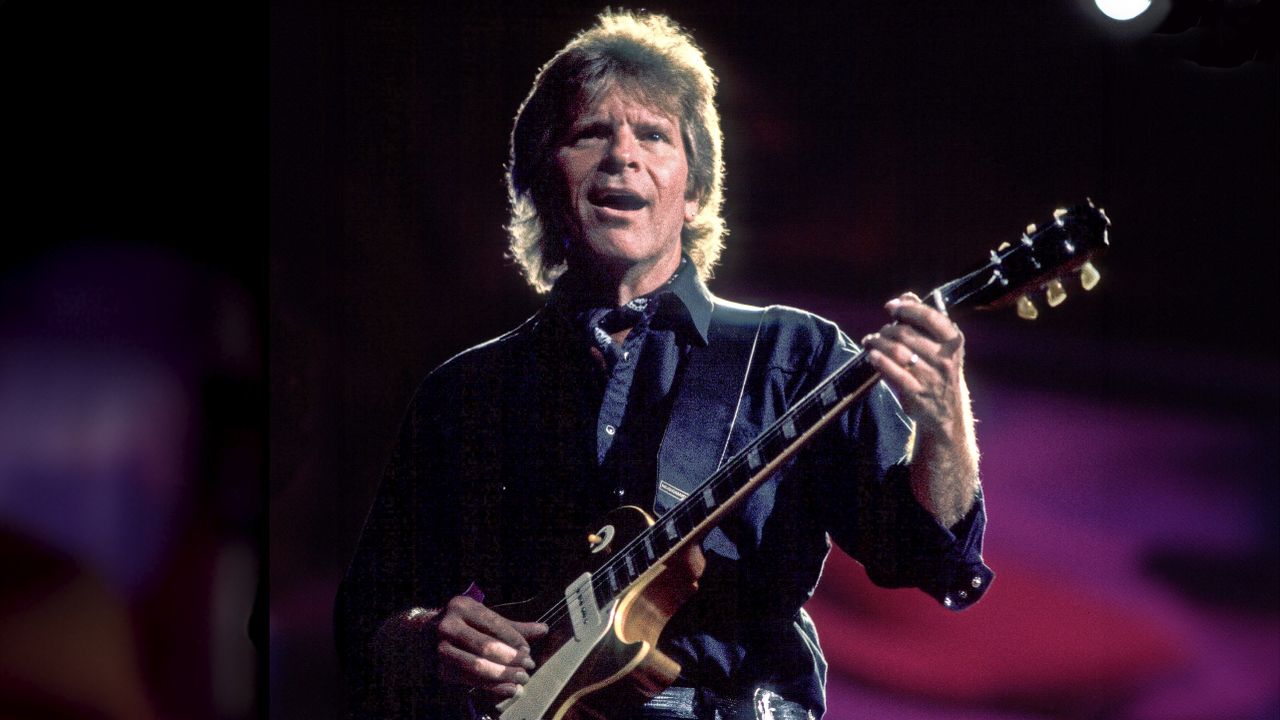
On Rambunctious Boy, John Fogerty turns a long-awaited return into something brisk, rootsy, and free, with Blue Moon Swamp carrying the sound of a solo artist reclaiming his own map.
Rambunctious Boy arrived as part of John Fogerty‘s 1997 album Blue Moon Swamp, the record that marked his first studio album of new material since Eye of the Zombie in 1986 and went on to win the Grammy Award for Best Rock Album. That context matters. This was not simply another track tucked into a late-career release. It was part of a carefully shaped return by one of American rock’s most unmistakable voices, and its backing vocals by the Lonesome River Band gave the song a communal, roots-country spark that made it feel both playful and deeply connected to the music Fogerty had been carrying all along.
For Fogerty, the word solo has always carried a complicated weight. Long before Blue Moon Swamp, he had already written and sung music that seemed to belong to a mythic version of American radio: river songs, road songs, trouble songs, songs that felt dusty even when they were brand new. As the chief creative force behind Creedence Clearwater Revival, he helped define a swampy, compact, instantly recognizable sound that drew from rock and roll, country, blues, R&B, gospel feeling, and a certain hard-won sense of motion. But a solo legacy is not built only by stepping away from a famous band. It is built by finding a way to stand beside one’s own past without being swallowed by it.
That is part of what makes Rambunctious Boy such a revealing moment on Blue Moon Swamp. It does not ask for attention through grand drama. It comes in with a grin, a kick, and a sense of forward movement. The title alone suggests restlessness, mischief, and youthful electricity, and Fogerty leans into that feeling without making the song feel childish or throwaway. His voice, always capable of cutting through a band like a blade through cloth, sounds here as if it is enjoying the chase. There is discipline inside the looseness, craft inside the stomp, and the kind of energy that comes from an artist who understands the difference between sounding young and sounding alive.
The contribution of the Lonesome River Band is more than a decorative feature. Their backing vocals place the song near a bluegrass and country harmony tradition that has always lived close to Fogerty’s musical imagination. Instead of treating roots music as museum glass, the track lets those influences breathe in a lively, present-tense way. The voices behind him suggest a gathering rather than a studio trick: a few people leaning into the same pulse, adding lift to the lead vocal, turning the song from a solo declaration into something with porch-light warmth and roadside momentum.
That blend was central to the character of Blue Moon Swamp. Released in an era when much of mainstream rock had moved toward heavier textures and modern production, the album did not try to chase the moment. Fogerty reached backward and inward at the same time, revisiting the American roots vocabulary that had made his writing so durable while giving it the clarity of a mature craftsman. The Grammy recognition confirmed the album’s public success, but the deeper achievement was emotional. After a long gap between studio albums, Fogerty sounded less like an artist proving a point than one finally moving through his own landscape with renewed ease.
Rambunctious Boy is not usually the first title people name when they talk about Fogerty’s great recordings, and that may be part of its charm. It belongs to the category of songs that reveal an artist’s instincts without needing to carry the whole monument of a career. It shows how naturally he could still bring together rural rhythm, rock and roll bite, and a narrative spark that feels sketched in from the edge of memory. The track does not sound burdened by history, even though history surrounds it. It sounds like someone opening a door, letting the band in, and trusting the old engine to turn over.
There is also a particular pleasure in hearing Fogerty use joy as a form of authority. Many comeback records lean heavily on confession, defiance, or careful self-mythology. Blue Moon Swamp has its serious weight, but Rambunctious Boy reminds us that renewal can arrive in motion. A bouncing groove, a sharp vocal, a set of harmony voices from the Lonesome River Band, and suddenly the story becomes larger than endurance. It becomes about appetite, humor, and the stubborn human need to keep making noise after the quiet years.
In Fogerty’s solo story, this track functions like a small but bright signpost. It says that the old roots were not lost, that the voice had not been emptied by time, and that the songwriter who once made invented swamps, highways, jukeboxes, and back porches feel like shared national memory could still find new life in familiar soil. Rambunctious Boy does not need to be solemn to matter. Its value lies in its looseness, its lift, and the way it lets John Fogerty‘s legacy breathe without stiffness. On a Grammy-winning album shaped by return and rediscovery, this song carries the sound of freedom with dirt on its shoes.
