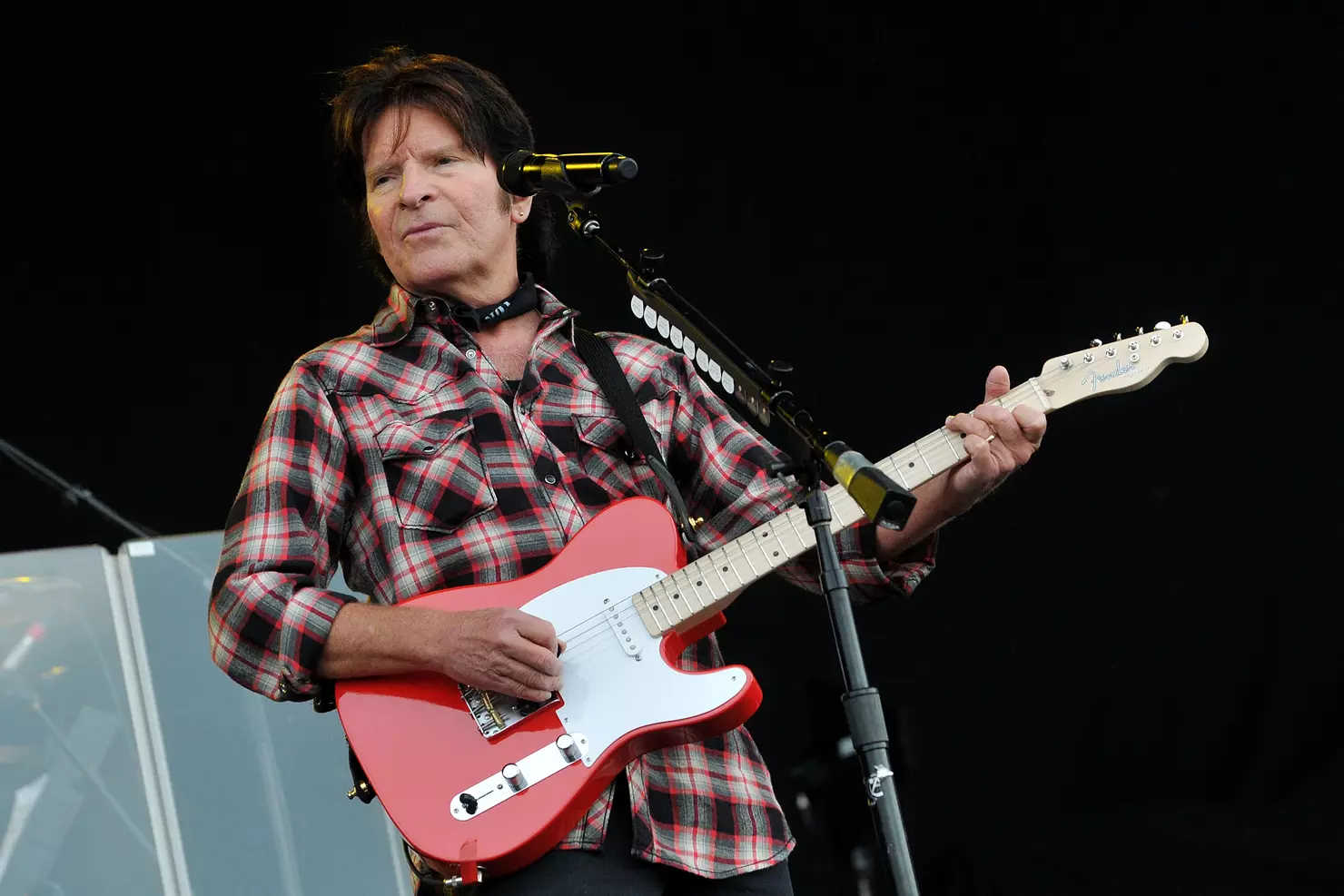
On John Fogerty’s 1975 Asylum debut, Where the River Flows sounds like a fresh start pulled by an old current.
Where the River Flows belongs to John Fogerty, the self-titled album released in 1975 and his first release after signing with Asylum Records. That piece of recording context is not a footnote. It changes the way the song sits in the ear. Fogerty was no longer simply the voice most listeners associated with Creedence Clearwater Revival, and he was no longer using the one-man band identity of The Blue Ridge Rangers, the 1973 roots project on which he famously handled the musical parts himself. In 1975, his own name was on the record, the label had changed, and every guitar figure and vocal phrase seemed to arrive under the pressure of expectation.
The album John Fogerty stands in a complicated place in his catalog. It came after the explosive CCR years, after the brief and unusual detour into country, gospel, and early rock and roll through The Blue Ridge Rangers, and well before the broad public comeback that would arrive with Centerfield in the 1980s. Because of that, the 1975 album can sometimes feel like a bridge people cross too quickly. Yet bridges often reveal more than destinations. They show what an artist chooses to carry, what he leaves behind, and what still clings to the sound no matter how much the circumstances have changed.
Asylum Records had its own atmosphere in the mid-seventies, a label associated with singer-songwriters, West Coast independence, and artist-centered records. Fogerty, however, did not suddenly turn into a confessional Laurel Canyon figure. His musical language remained compact, rhythmic, and rooted in the American forms that had always fed him: rock and roll, rhythm and blues, country, swampy guitar lines, plainspoken choruses, and images of travel, weather, and water. Where the River Flows carries that familiar geography, but in the context of the Asylum debut it also feels like a man returning to his own map after the roads have been renamed.
The self-titled album included originals such as Rockin’ All Over the World and Almost Saturday Night, two songs that would become easier reference points for the record’s afterlife. It also included covers like Sea Cruise, Lonely Teardrops, and You Rascal You, reminders of Fogerty’s deep affection for earlier American popular music. In that company, Where the River Flows does not behave like the loudest announcement on the album. Its importance is quieter. It belongs to the middle distance, where Fogerty’s old instincts and his new business reality meet without needing to declare victory.
Rivers had always suited Fogerty’s imagination. Although he came from California, his songs often carried the feel of an invented South: bayous, boats, rain, crossroads, and muddy banks that were less literal postcards than emotional landscapes. He used place as rhythm. He used water as motion. A river in a Fogerty song is rarely just scenery; it suggests escape, labor, memory, and the pull of somewhere beyond the present tense. In Where the River Flows, that image takes on a special charge because of where the recording appears in his story. The title does not point toward arrival. It points toward movement. It follows rather than conquers.
That is what makes the track feel so tied to its 1975 setting. A new record deal can look, from the outside, like a clean break. For a musician, it is usually more tangled than that. The voice is the same voice. The hands know the same shapes on the guitar. The audience hears the past even when the artist is trying to begin again. Fogerty’s gift had always been directness, but directness is not the same as simplicity. On this album, and especially in a song like Where the River Flows, the plain surface carries the strain of transition. The music does not need to explain the change; the change is already inside the way the song moves.
Listening to it now, the track matters less as a forgotten hit that should have been bigger and more as a document of artistic weather. It catches Fogerty at a moment when the public memory of CCR was still close, when the expectations attached to his name were heavy, and when Asylum offered a new frame without erasing the old one. The river in the song becomes a useful metaphor for the record itself: steady, restless, familiar, and impossible to hold still. Where the River Flows may not be the first title many people name when they think of John Fogerty’s post-CCR work, but it carries a revealing current. It reminds us that a fresh start is rarely silent. Sometimes it still sounds like the water that brought you there.
