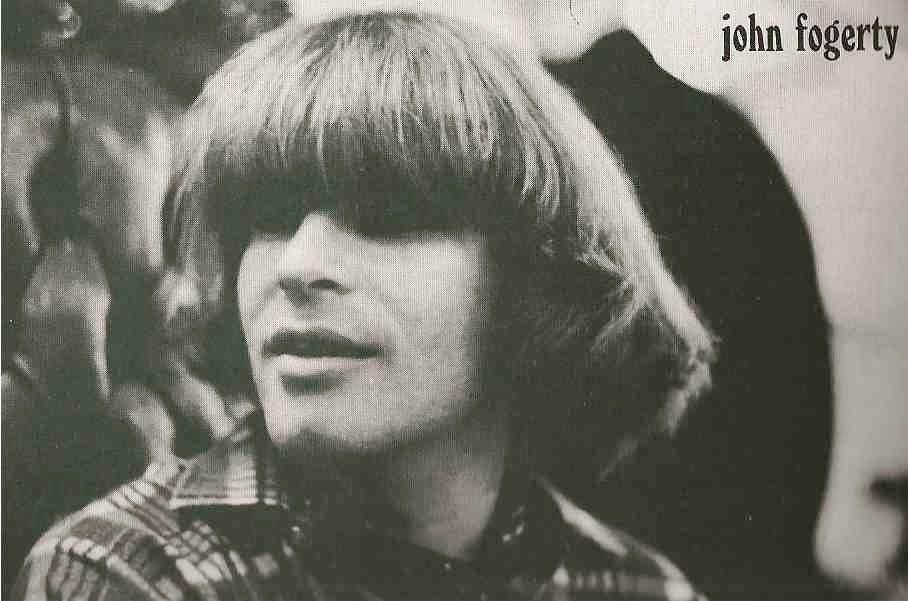
In John Fogerty‘s Broken Down Cowboy, the road before love feels dusty, spare, and deeply human.
Broken Down Cowboy appeared on John Fogerty‘s 2007 album Revival, a record whose very title carried weight for anyone who knew his long history with Creedence Clearwater Revival, Fantasy Records, and the stubborn American pulse that had always run through his music. But this particular song does not arrive like a public comeback statement or a loud declaration of creative survival. It comes in more quietly, as a melancholy ballad with the feel of a man lowering his voice after the dust has settled. Fogerty has connected the song’s emotional landscape to the period of his life before he met the woman who became his wife, Julie, whom he married in 1991. That context gives the recording a different kind of gravity: it is not only a western character sketch, but a private self-portrait written in the language of open roads, weariness, and hope not yet visible.
On much of Revival, Fogerty sounded determined to reclaim familiar ground. The album, released after years in which the Fantasy name had been tied to difficult memories and legal battles, found him returning to a sharp, roots-driven sound: guitars that kicked, rhythms that moved with purpose, and songs that seemed to carry the old CCR weather without trying to imitate it. Tracks such as Don’t You Wish It Was True and Creedence Song leaned into brightness, memory, and motion. Broken Down Cowboy, by contrast, pauses beside the road. It is one of the moments where the album’s title becomes less about career renewal and more about personal repair.
The phrase itself, Broken Down Cowboy, is almost deceptively simple. Fogerty has spent much of his career drawing from American archetypes: riverboats, bayous, working men, drifters, soldiers, back-road dreamers. He is a Californian who learned how to make imaginary landscapes feel lived in, and here the cowboy is not a heroic figure riding into a clean sunset. He is worn, uncertain, perhaps embarrassed by how much life has taken out of him. The image is not glamorous. It is human. The song understands that a person can keep moving and still feel stranded; can look tough from a distance and still be carrying an exhausted interior life.
That is where the connection to Fogerty’s life before meeting Julie matters. It would be too easy to hear the song only as a genre exercise, another piece of Americana from a writer who has long known how to make mythic images sing. But when the cowboy becomes a shadow of the singer himself, the ballad opens up. The dust is no longer just scenic. The weariness is no longer only theatrical. It suggests a man between chapters, before the stability and partnership that would help reshape his later life. Fogerty’s marriage to Julie became a central part of his personal and professional renewal, often associated with a period in which he reemerged with more confidence, warmth, and clarity. Broken Down Cowboy seems to look backward from that safer shore, remembering what it felt like before rescue had a name.
Musically, the song works through restraint. It does not need to announce its sadness with grand gestures. Fogerty’s voice, always known for its bite and urgency, settles into a more weathered tone here. The power is still present, but it is held closer to the chest. That restraint is important. A louder performance might have turned the song into melodrama; a more polished one might have softened the dirt at its edges. Instead, the ballad feels like a confession disguised as a trail song. The listener is not pushed toward a single emotion. We are simply invited to sit with a man who has been carrying too much for too long.
What makes Broken Down Cowboy especially affecting is the way it fits into Fogerty’s larger story without demanding to be the headline. He had already lived several public lives by the time Revival arrived: the young voice of Creedence, the solo artist burdened by disputes over his own past, the writer who could make American imagery feel both mythic and plainspoken. In 2007, he was not trying to prove he could still shout. He already could. The more revealing moments came when he allowed the music to show what toughness costs. This song, placed among brighter and harder-driving material, becomes a small emotional clearing on the album.
There is a quiet honesty in a singer of Fogerty’s stature choosing to present himself not as a conquering survivor, but as a damaged rider before the turn in the road. The ballad does not erase the years of struggle, nor does it turn love into a simple cure. It suggests something more modest and more believable: that a person may reach a point of exhaustion and still be capable of being found; that a life can look broken from one angle and unfinished from another.
Heard that way, John Fogerty‘s Broken Down Cowboy is one of the tenderer shadows inside Revival. It carries the loneliness of the before, but also the knowledge that the before did not last forever. Its melancholy is not a dead end. It is a memory of the road just before the map changed.
