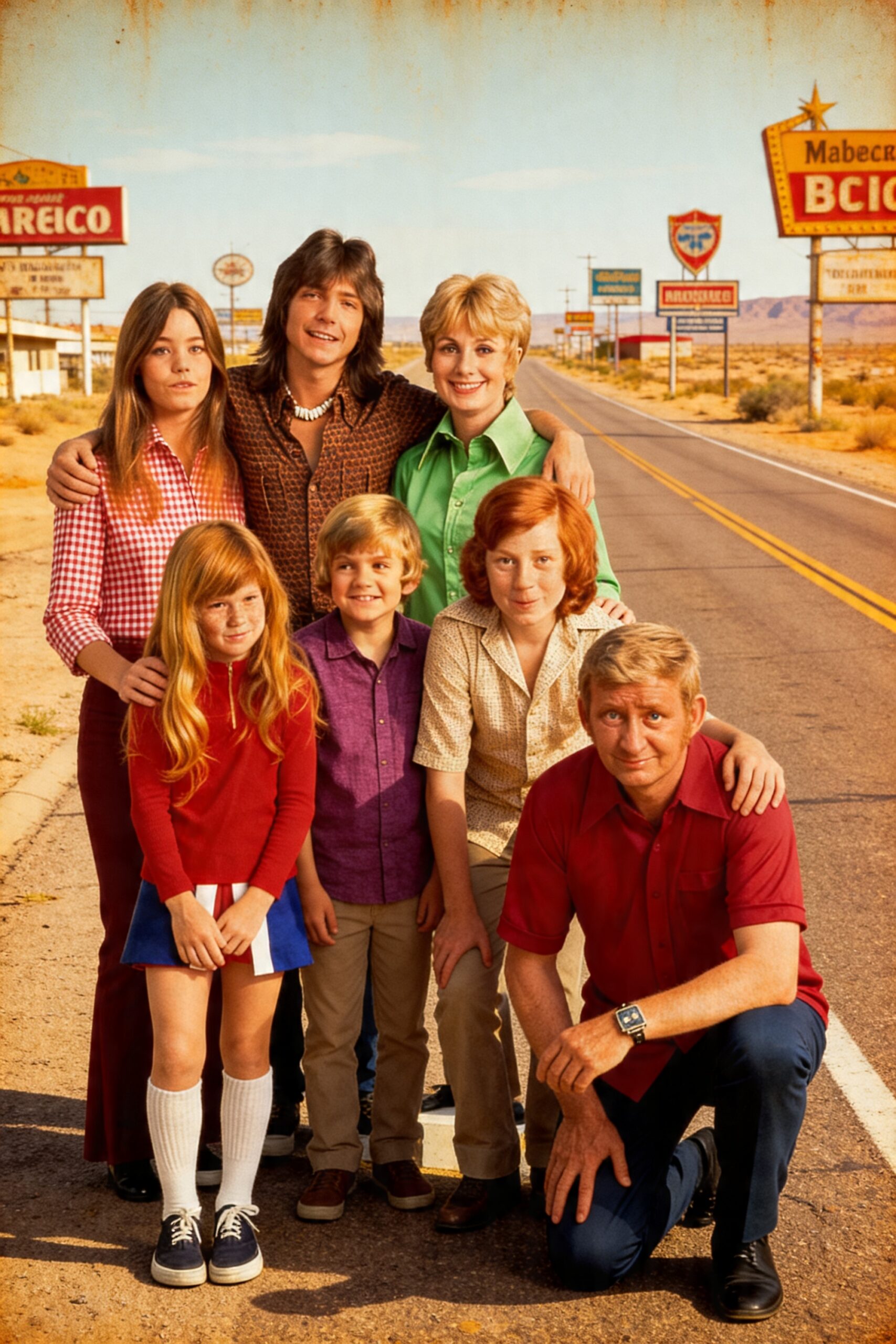
Bright on the surface and quietly aching underneath, Point Me in the Direction of Albuquerque turns a simple destination into a song about longing, movement, and the hope that one more road can still lead you home.
The Partridge Family built its reputation on pop songs that sounded effortless, sunny, and made for instant sing-alongs, but one of the real pleasures of going back through the catalog is discovering how many of those records carried more feeling than people gave them credit for. Point Me in the Direction of Albuquerque is a fine example. It arrived during the group’s peak early-1970s period, and although it was not one of the family’s major stand-alone Billboard Hot 100 smashes in the United States, it has lasted as the kind of deep-cut favorite that devoted listeners remember with unusual affection. That matters, because some songs survive not through chart dominance, but through the atmosphere they leave behind.
The first thing worth saying is that the record captures the strange and successful chemistry that made The Partridge Family more enduring than many television-born pop projects of the era. On screen, the group was a cheerful fictional family band. In the studio, the records were shaped by top Los Angeles professionals, steered through the polished hit-making instincts of the Bell Records years, and lifted by the unmistakable lead voice of David Cassidy. That combination often produced music that sounded breezy at first contact and emotionally richer after a few listens. Point Me in the Direction of Albuquerque belongs squarely in that tradition.
What makes the song linger is its central image. Albuquerque is not just a city in the lyric; it feels like a far-off marker on an emotional map. The title itself suggests motion, uncertainty, and dependence on someone else for direction. That is a beautifully simple device. Instead of declaring heartbreak in grand, dramatic language, the song asks for a route. It is built on the idea that when life has gone sideways, what a person wants most may not be a speech or a solution, but a signpost. In that sense, the song speaks to a very old feeling: the wish to get moving again before the heart grows too heavy where it is.
Musically, it carries the bright, accessible sheen that listeners expect from The Partridge Family. The melody is easy to take in, the rhythm moves with a light pop stride, and the arrangement never burdens the song with too much seriousness. Yet that lightness is exactly why the emotional undertow works. A darker production might have made the message feel obvious. Here, the ache arrives quietly. David Cassidy was especially good at this sort of performance. He could sound youthful and open on the surface, while letting just enough strain into the phrasing to suggest that the singer is trying hard to stay composed. That gives the song its emotional credibility.
The backstory of the record is also part of its appeal. Like many Partridge Family releases, it came from a machine that some critics of the day dismissed as manufactured pop. There is truth in that description, but it does not tell the whole story. A manufactured record can still be beautifully made, sincerely sung, and emotionally real in the moment it reaches the listener. In fact, that contrast may be why this song feels so poignant now. It came from a highly controlled pop environment, yet it communicates restlessness, distance, and yearning with surprising naturalness. That tension between polish and feeling is one of the hidden strengths of the entire Partridge Family catalog.
There is also something unmistakably American about the song’s imagery. A place name like Albuquerque opens up a wide landscape in the mind: long roads, passing signs, a horizon that feels both hopeful and lonely. The song does not need heavy poetry because the geography does part of the work. One word can summon distance, dust, and the romantic idea that another town might hold relief or renewal. In early-1970s pop, that was a powerful trick. It gave a compact radio song the emotional size of a travel diary.
For many listeners, the meaning of Point Me in the Direction of Albuquerque deepens with time. When heard young, it can sound like an energetic tune about movement and adventure. Heard later, it becomes something else: a song about needing bearings, about trying to recover emotional direction after confusion, disappointment, or simple weariness. That is why the song still lands. It is not really about one destination. It is about the human need for one. That may be the quiet secret behind its lasting appeal.
It also deserves to be remembered as proof that The Partridge Family was more than a handful of famous hits. Yes, the big chart landmarks remain important, and no discussion of the group can ignore the towering success of I Think I Love You, which reached No. 1 in America. But deep favorites such as Point Me in the Direction of Albuquerque show another side of the story. They reveal how much craft, mood, and emotional intelligence were working beneath the surface of what people too quickly called bubblegum. That label was never large enough to hold records like this.
In the end, the song remains memorable because it makes a modest gesture feel profound. It does not ask for the world. It asks for direction. And in that small request lies the whole emotional center of the record. The Partridge Family gave the song polish, David Cassidy gave it warmth, and time has given it something even better: the ability to sound brighter and sadder at once. That is often the mark of a song that has stayed alive for good reason.
