In David Cassidy’s 2003 reading of “A Song for You”, the familiar Leon Russell ballad becomes less a showcase than a quiet reckoning with time, image, and the cost of being heard too early.
When David Cassidy recorded “A Song for You” for his 2003 album A Touch of Blue, he was stepping into one of the most emotionally exposed songs in modern popular music. Written by Leon Russell and first released on Russell’s 1970 solo debut, the song had already lived many lives by the time Cassidy approached it. It had been shaped by voices as different as Donny Hathaway, Ray Charles, The Carpenters, and Willie Nelson, each finding a different room inside its confession. Cassidy’s version does not try to outsing that history. Its power lies in the way it lets the song meet the man he had become.
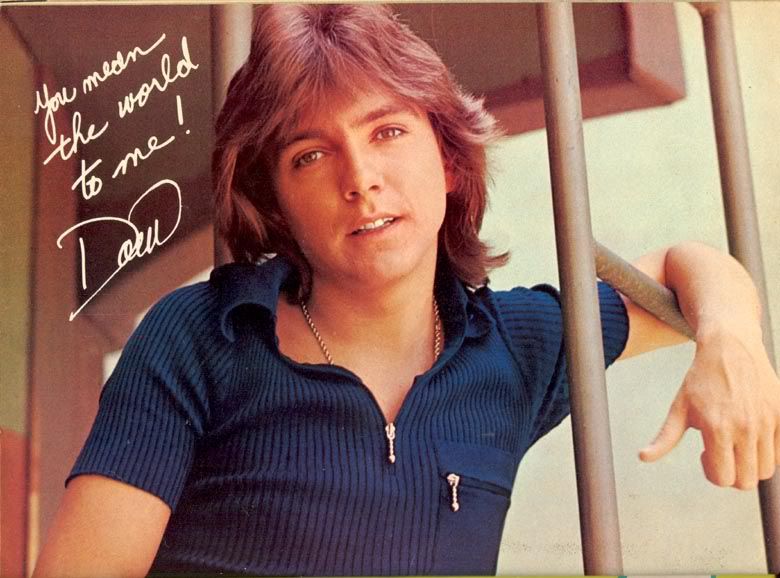
That matters because Cassidy carried a complicated musical inheritance. To millions, he was frozen in the bright television glow of The Partridge Family, the young face and voice of early-1970s pop adoration. The screams around him were real, the records sold in enormous numbers, and the affection was sincere. But fame that arrives that loudly can also make it difficult for an artist to be heard quietly later on. Cassidy spent much of his adult career working against the assumption that his story ended with the posters, lunch boxes, and soft-focus teenage devotion. By the time A Touch of Blue appeared in 2003, he was no longer asking to be received as a boyish idol. He was singing from the other side of a life that had included theater work, concert stages, reinventions, public scrutiny, and the stubborn need to keep performing after the first wave of fame had long receded.
“A Song for You” is especially well suited to that kind of late-career reintroduction. Russell’s lyric is built like an apology delivered after the room has gone still: “I’ve been so many places in my life and time” is not merely a famous opening line, but a threshold. The song is about performance and intimacy colliding. It admits that a singer may have stood in front of thousands and still failed someone close. It understands applause as both a gift and a veil. For an artist like Cassidy, whose public identity was shaped by the strange distance between mass adoration and private self-definition, those words carry a particular resonance.
On A Touch of Blue, Cassidy’s interpretation leans toward adult pop sophistication rather than the polished rush of his early hit-making years. The mood is reflective, the emotional temperature cooler and more inward. Instead of pushing the song toward theatrical climax too quickly, he allows the phrasing to carry the weight. There is value in that restraint. A singer with Cassidy’s history did not need to announce maturity with force; the more compelling choice was to let maturity sound like breath, pause, and memory. In this setting, “A Song for You” becomes less about vocal display than about credibility of feeling.
The long shadow of the song’s previous versions also makes Cassidy’s cover interesting. Donny Hathaway gave it a kind of sacred soul intensity, as if the confession were being carved directly into the air. Ray Charles brought the authority of a life fully inhabited, turning its regret into something grand and deeply human. Karen Carpenter, with The Carpenters, found a wounded purity in it. Cassidy could not, and wisely did not, become any of those singers. His version works because it is attached to his own public story: a man once heard through the noise of hysteria now choosing a song that asks to be heard in silence.
There is a subtle courage in covering a song this well known. A weaker reading can seem decorative; a stronger one must reveal why the singer needed it. Cassidy’s connection to the material comes from the distance between the young performer people remembered and the adult interpreter standing in the song’s doorway. “A Song for You” gives him language for that distance. Its tenderness is not innocent. Its regret is not theatrical excess. It is the kind of song that understands how easily love, ambition, travel, ego, and survival can become tangled across the years.
He does not erase the earlier David Cassidy in this performance. Instead, he lets that younger image linger in the background, almost like an old photograph on a table. That is part of the emotional pull. The listener hears not only a cover of a Leon Russell classic, but also an artist negotiating with the version of himself that history kept replaying. The song becomes a meeting place between public memory and private adulthood.
In that sense, Cassidy’s 2003 version from A Touch of Blue deserves attention not because it replaces the great earlier interpretations, but because it adds a different kind of truth to the song’s long afterlife. It reminds us that a standard can become newly meaningful when it reaches a singer at the right age, after enough road, applause, misunderstanding, and reflection have gathered behind the voice. David Cassidy did not need to turn “A Song for You” into a monument. He only needed to stand inside it honestly. And in that quieter space, the song gave him something his early fame rarely allowed: the sound of being seen as a grown man.
