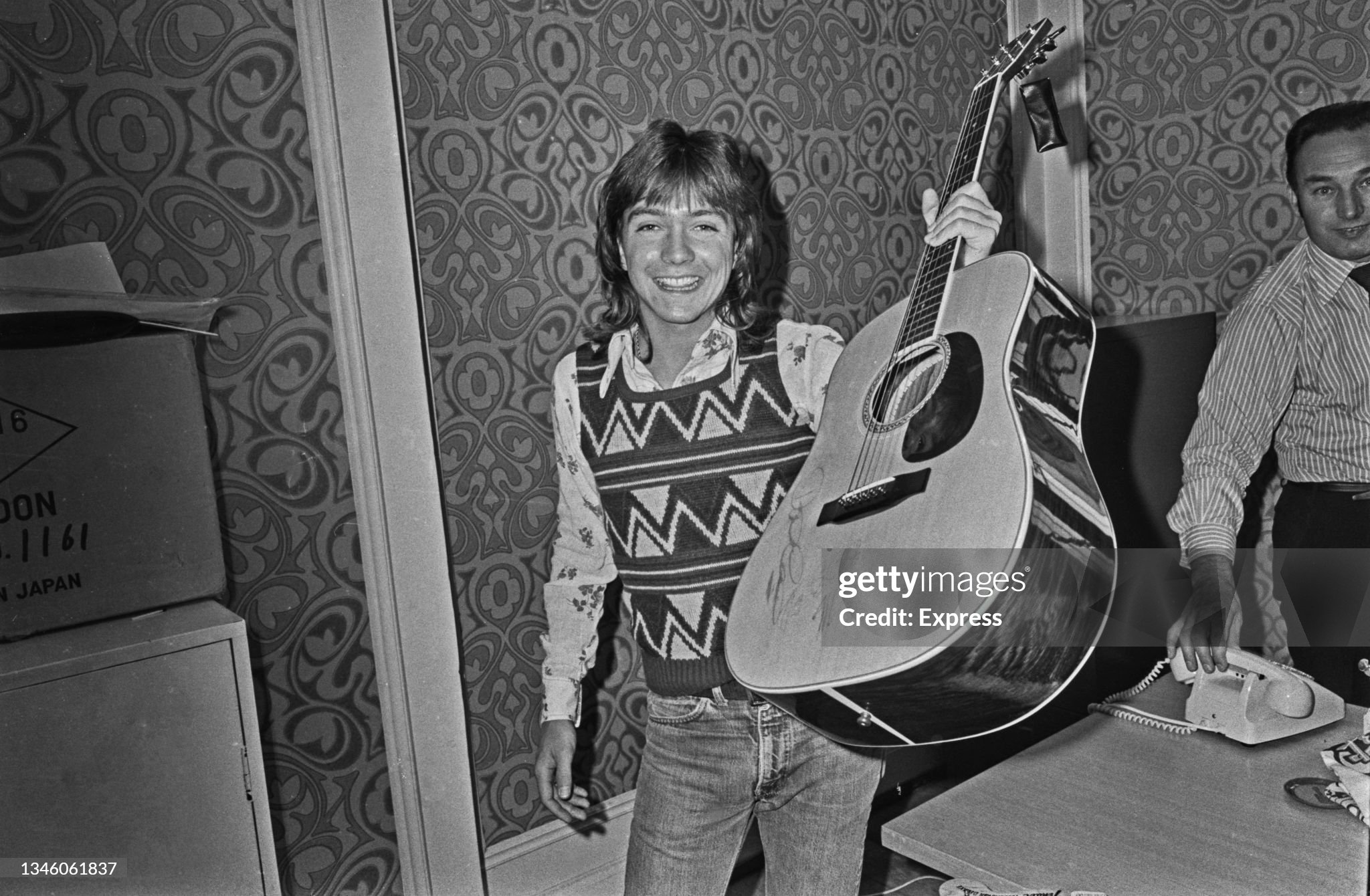
I Am a Clown gave David Cassidy a rare chance to sing past the posters and fan magazines, revealing how loneliness can live behind a perfect public smile.
In 1972, David Cassidy was one of the most recognizable young stars in the world. His face was everywhere, his voice was tied to the runaway success of The Partridge Family, and the machinery of fame rarely paused long enough to ask what that kind of attention might cost. That is part of what makes “I Am a Clown”, featured on Cherish, such an affecting listen all these years later. Written by Tony Romeo, the song carried a deeper ache than many listeners expected from Cassidy’s teen-idol era. Released as a single in the UK, it climbed to No. 3 on the UK Singles Chart, proving that even within a polished pop setting, there was room for something more exposed and more human.
On the surface, “I Am a Clown” is easy to mistake for another bright early-1970s pop record: melodic, accessible, carefully arranged, and instantly memorable. But the heart of the song lives somewhere else. Romeo’s lyric is built around a performer whose job is to entertain, to keep smiling, to keep the show moving, even while something far more fragile is happening underneath. That image of the clown is not merely theatrical. It is a metaphor for the emotional bargain of celebrity itself: the face the world applauds is not always the face that tells the truth.
That is why the song has followed David Cassidy in such a haunting way. Whether or not it was written as a direct autobiography, it felt uncannily close to the life he was living at the time. Cassidy was adored on a massive scale, but he was also increasingly vocal about feeling boxed in by an image that left little room for the fuller artist he wanted to become. By 1972, he was already pushing against the limits of being seen only as a teen sensation. In that light, “I Am a Clown” sounds less like a routine pop recording and more like a mirror held up to the pressure of his own public life.
Tony Romeo, who understood how to write songs that connected quickly and clearly, gave Cassidy a lyric with unusual emotional shading. The song does not collapse into self-pity. Instead, it captures a quieter sorrow: the exhaustion of always having to perform, the isolation of being loved in a collective way while still feeling personally unseen. That emotional contradiction is what gives the record its lasting power. Many songs from the era were built to charm the moment. “I Am a Clown” does something harder. It lingers after the melody ends because it points to a truth many people recognize, whether they have stood on a stage or not.
Musically, the recording walks a delicate line. It keeps the melodic sweetness that made Cassidy such a natural pop presence, yet there is a shadow in the phrasing that changes the whole mood. He does not oversing it. In fact, part of the performance’s strength comes from restraint. The sadness is not pushed forward with theatrical force; it rises through tone, through timing, through the feeling that he understands the character from the inside. That balance between polish and pain is exactly what makes the song memorable. A less gifted singer might have made it sentimental. Cassidy made it believable.
The placement of the song on Cherish matters too. That album, associated for many listeners with the softer glow of early-1970s pop, contained moments that revealed more depth than Cassidy’s image often allowed critics to admit. “I Am a Clown” stands as one of the clearest examples. It reminds us that beneath the fame, the screaming audiences, and the carefully managed image, there was an artist capable of communicating emotional conflict with real grace. For listeners who return to it now, the song often lands differently than it did the first time. What once sounded simply catchy can now sound almost painfully revealing.
And perhaps that is the true meaning of this record. David Cassidy was marketed as the smiling dream boy of his generation, but “I Am a Clown” let a more complicated truth slip through. It suggested that applause does not erase loneliness, and that being watched by millions is not the same as being understood. That is a theme that has only grown more poignant with time. The song still carries the glow of its era, but it also carries something older and sadder: the knowledge that public joy and private isolation often sit side by side.
For many fans, that is why “I Am a Clown” remains more than a nostalgic favorite. It is one of those records that gently changes shape as life changes shape. What begins as a beautifully written pop song becomes, over the years, a quiet confession hidden in plain sight. And in David Cassidy’s voice, that confession still feels tender, dignified, and heartbreakingly clear.
