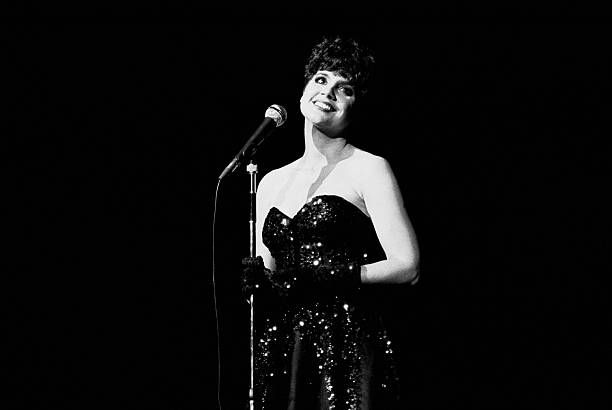
On Adieu False Heart, Linda Ronstadt and Ann Savoy turn “Walk Away Renee” into a hushed, graceful conversation about distance, restraint, and the kind of sorrow that never needs to raise its voice.
When Linda Ronstadt joined Ann Savoy for the 2006 album Adieu False Heart, the result did not feel like a casual duet project or a nostalgic exercise. It felt like a meeting of deep musical temperaments. Ronstadt, long celebrated for her ability to move effortlessly through rock, country, mariachi, torch songs, and standards, met Savoy, one of the most respected guardians of Cajun and Louisiana-rooted music, in a space where style mattered less than feeling. Their version of “Walk Away Renee” became one of the clearest examples of that chemistry.
It is important to say from the beginning that this 2006 recording is not trying to compete with the famous 1966 original by The Left Banke. It does something more difficult: it listens to that earlier heartbreak, then speaks back in a different emotional language. Commercially, “Walk Away Renee” was never pushed as a major chart single for Ronstadt and Savoy, but the album Adieu False Heart did reach No. 146 on the Billboard 200 after release. The song they chose to reinterpret already carried enormous history, since The Left Banke‘s original “Walk Away Renee” climbed to No. 5 on the Billboard Hot 100 in 1966 and became one of the defining baroque-pop records of its era.
That original song was written by Michael Brown, Bob Calilli, and Tony Sansone, and over the years its backstory has become part of its legend. It has often been linked to Renée Fladen-Kamm, a woman in the band’s circle who inspired Brown’s melancholy fascination. Whether listeners knew all the details or not, they responded to the same thing: the ache of loving someone while understanding, with painful clarity, that you must step aside. That is the entire emotional architecture of “Walk Away Renee”. It is not a song of dramatic collapse. It is a song of composure under emotional pressure.
That may be exactly why Linda Ronstadt and Ann Savoy were such an inspired pairing for it. Ronstadt had always possessed one of the great interpretive voices in American popular music, but by 2006 there was something especially moving in the way she used restraint. She no longer needed to prove power. She could suggest an entire history of feeling with a small turn of phrase. Savoy, meanwhile, brought not only vocal presence but a whole cultural sensibility rooted in folk memory, acoustic intimacy, and songs that live by touch rather than grand design. Together, they make “Walk Away Renee” feel less like a polished pop artifact and more like a truth passed from one heart to another.
The arrangement matters enormously. Where the original Left Banke recording is famous for its baroque-pop textures, its strings, and its almost architectural sadness, the Adieu False Heart version feels earthier and closer to the body. It breathes. The space around the voices becomes part of the meaning. Nothing is rushed. Nothing is over-decorated. Instead of surrounding the pain with orchestral beauty, Ronstadt and Savoy let the emotional distance stand almost bare. That choice changes the song’s center of gravity. In 1966, “Walk Away Renee” felt like a young man’s elegant heartbreak framed in chamber-pop sophistication. In 2006, it sounds older, wiser, and in some ways even sadder, because it no longer pleads. It accepts.
That is the beauty of the collaboration. Linda Ronstadt does not dominate Ann Savoy, and Savoy does not function as decoration around Ronstadt’s legend. They meet each other. The performance is built on mutual regard, and you can hear that in every phrase. One voice carries clarity, the other carries grain; one suggests long-traveled roads, the other suggests inherited memory. Together they create a version of “Walk Away Renee” that feels both personal and communal, as if private longing has been folded into the larger American song tradition.
In the broader context of Adieu False Heart, this makes perfect sense. The album is full of material shaped by old-world sentiment, Southern textures, and the living conversation between folk, country, Cajun, and acoustic roots music. It was never designed as a mainstream pop comeback. It was designed as an act of devotion: devotion to songcraft, to musical ancestry, and to the quiet art of singing with another person instead of in front of them. “Walk Away Renee” stands out because it captures all of that in one performance. It honors memory without becoming trapped inside memory.
And perhaps that is why this version lingers. So many covers try to modernize a classic or make it bigger. Linda Ronstadt and Ann Savoy do the opposite. They make it smaller, closer, and more human. They remind us that the song’s true meaning was never hidden in its famous title or even in its exquisite melody. It was hidden in the decision at the center of it: to love someone enough to know when your presence has become its own kind of sorrow. In their hands, that old wound does not fade. It deepens, softens, and becomes strangely beautiful.
That is what real collaboration can do. It does not simply add voices together. It reveals meanings that one voice alone might leave untouched. On Adieu False Heart, “Walk Away Renee” becomes more than a remake. It becomes a conversation across decades, genres, and emotional experience. And in that conversation, both Linda Ronstadt and Ann Savoy sound exactly where they belong.
