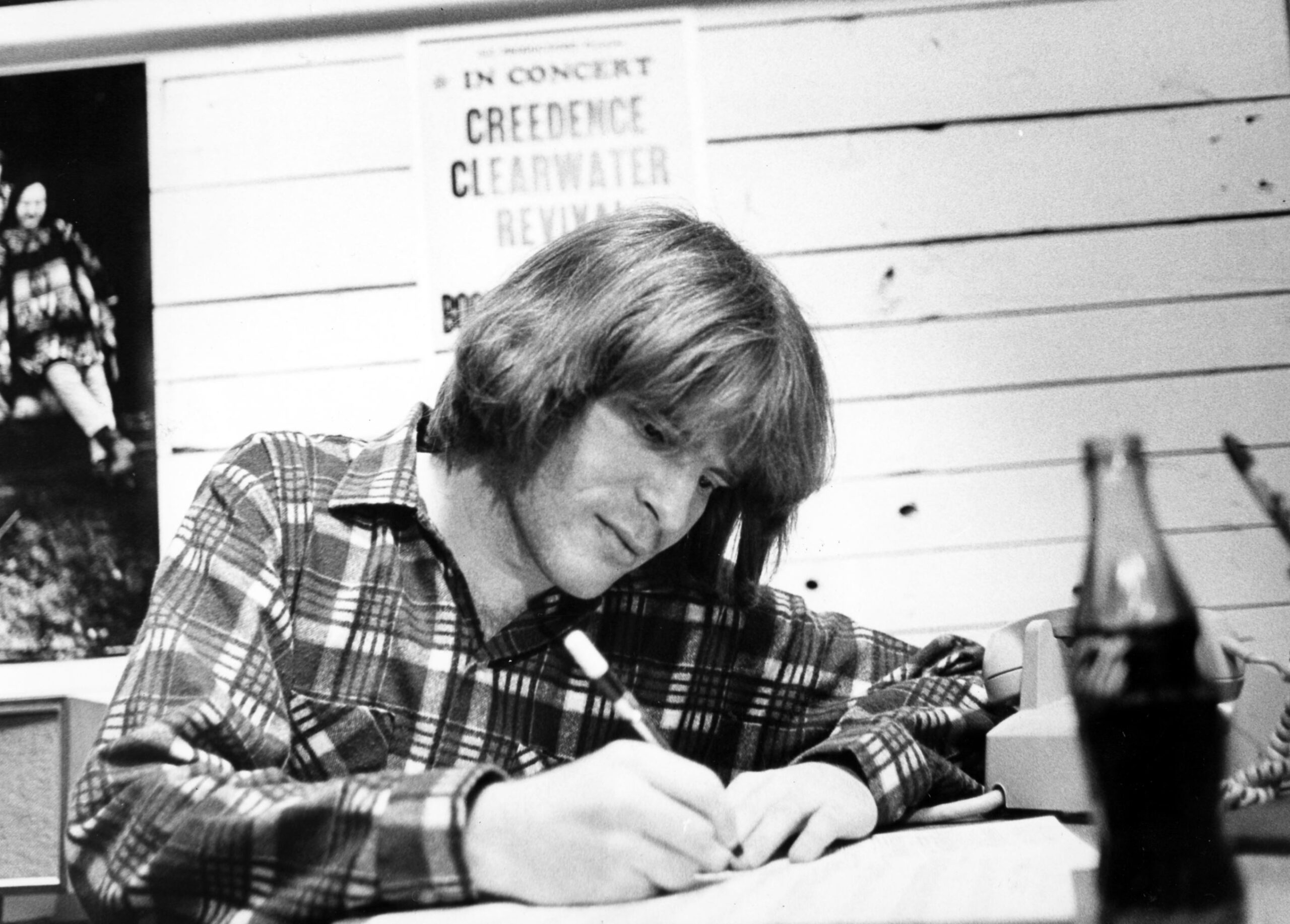
A song already filled with dread and motion became something even more gripping onstage, as Creedence Clearwater Revival turned “Tombstone Shadow” into a fierce, breathing document of April 1970.
There is something especially satisfying about hearing a performance finally restored to its proper place in history. That is part of what gives Creedence Clearwater Revival’s “Tombstone Shadow” such force on the 2022 archival release At the Royal Albert Hall. This was not just another live issue pulled from the vaults. It was the long-awaited unveiling of the band’s actual April 14, 1970 performance in London’s Royal Albert Hall, a show that had been clouded for years by one of rock’s stranger archival mix-ups. For listeners who care about context, that matters. And for a song as darkly charged as “Tombstone Shadow”, the right room, the right date, and the right moment make all the difference.
It is worth noting early that “Tombstone Shadow” was not released as a standalone single, so it did not have its own individual chart run. But it came from Bayou Country, the 1969 album that reached No. 7 on the Billboard 200 and helped establish CCR as one of the defining American bands of their era. By the time they arrived in London in spring 1970, John Fogerty, Tom Fogerty, Stu Cook, and Doug Clifford were not merely successful; they were operating with the kind of hard-earned certainty that only a great road band possesses. They could take a deep album cut and make it land with the urgency of a hit.
That is exactly what happens here. On the studio version from Bayou Country, “Tombstone Shadow” already feels tense, haunted, and restless. The lyric suggests bad luck closing in, a threatening presence that will not quite leave a man alone. It is one of John Fogerty’s most vivid titles, built on the old language of omens and unease. Yet he never overloads the song with explanation. The “shadow” is both literal and symbolic: fear, trouble, pressure, fate, maybe even the inescapable darkness that follows every bright piece of news. That ambiguity is part of the song’s power. It sounds personal, but it also belongs to its time, arriving in the late 1960s when American music was full of movement, anxiety, and gathering storm clouds.
Live at the Royal Albert Hall, that mood becomes more physical. The band does not romanticize the song. They drive it. Doug Clifford’s drumming gives it a hard, clipped push, while Stu Cook’s bass keeps the ground moving underneath it. Tom Fogerty’s rhythm guitar helps lock the groove into place, and over all of it comes John Fogerty’s unmistakable voice, sharp-edged, urgent, and just rough enough to sound lived in. He does not sing “Tombstone Shadow” as a mysterious mood piece. He attacks it. What had been ominous in the studio becomes nearly confrontational onstage, as if the band has decided that the only answer to dread is momentum.
That was one of the great strengths of Creedence Clearwater Revival. They were rarely interested in ornament. Even at the height of their fame, they played with remarkable economy. No grandstanding, no endless stretching out, no theatrical padding. Their confidence came from discipline. That makes this 1970 performance especially revealing. CCR were already riding an extraordinary run of records, and audiences knew them for songs like “Proud Mary,” “Bad Moon Rising,” “Green River,” and “Travelin’ Band.” But a song like “Tombstone Shadow” reminds us that their albums were deeper than the familiar radio staples. In concert, those deeper tracks often carried a little more danger.
The 2022 release also carries historical weight for another reason. For decades, many fans associated the name “Royal Albert Hall” with a different CCR recording due to a long-standing labeling mistake tied to an older live release. At the Royal Albert Hall finally corrected that story and gave listeners the genuine London performance. That correction is not just technical housekeeping. It changes how we hear the band. We are no longer dealing with a vague legend or a misfiled memory. We are hearing the real thing: Creedence Clearwater Revival in one of the world’s most famous halls, in April 1970, at the very moment when their lean, American swamp-rock attack was crossing oceans without losing an ounce of bite.
And perhaps that is why “Tombstone Shadow” stands out so strongly in this setting. It is not the obvious centerpiece of the catalog, which gives it a certain freedom. Without the burden of overfamiliarity, the song can hit a listener fresh. The performance reveals how naturally the band could transform menace into swing, unease into propulsion. The audience may have come expecting the big hits, but songs like this show what held the whole machine together: tension, precision, and the sense that John Fogerty could turn a few stark images into an entire landscape of trouble.
There is also a deeper emotional pleasure in hearing this track now, so many years after the night itself. The 2022 archival release does not feel like a museum piece. It feels alive, almost stubbornly so. “Tombstone Shadow” still growls, still presses forward, still carries that old warning in its bones. And because it is heard in its proper historical frame at last, the performance lands with a fuller meaning. It is not simply a fine live rendition of a strong album cut. It is a recovered moment of truth from a band that understood how to make darkness move.
