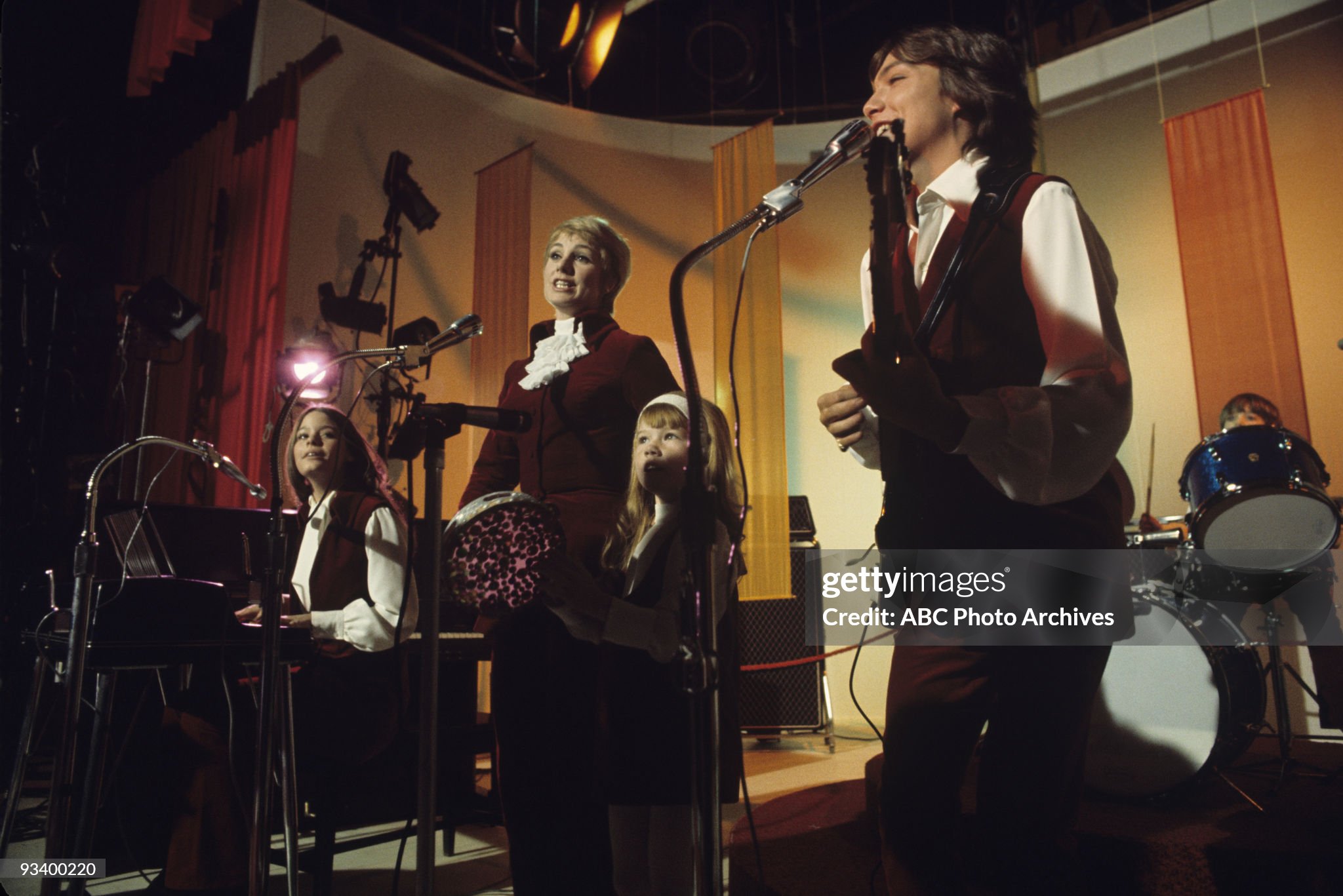
Some songs do not need urgency to stay with you. On The Partridge Family’s 1971 album Sound Magazine, “Brown Eyes” opens a quieter space where David Cassidy’s voice can glow instead of push.
Appearing on Sound Magazine, the third album credited to The Partridge Family, “Brown Eyes” is the kind of track that can slip past people who remember the group mainly through its biggest radio moments. That is exactly why it deserves another listen. Released in 1971, during the height of the television show’s popularity and the frenzy surrounding David Cassidy, the album arrived in a moment when the Partridge name was everywhere. But “Brown Eyes” does not feel oversized or calculated for maximum impact. It feels smaller in the best sense: gentler, closer, more willing to trust tone and tenderness.
That matters because Sound Magazine was part of a larger pop machine that moved fast. The TV series had already turned The Partridge Family into a weekly presence in American homes, and the records had to live both as extensions of that bright family image and as real pop releases competing on their own terms. In that kind of environment, the songs built for instant recognition naturally drew attention first. Album cuts often had a different job. They filled in the emotional edges. They carried the mood between the singles. They showed whether a voice could hold attention when there was no big commercial hook racing to the front.
“Brown Eyes” is valuable precisely because it reveals that side of David Cassidy. He was one of the defining teen voices of the era, and much of his fame understandably centered on charisma, looks, and the electric speed of sudden stardom. Yet when you strip away the noise around the phenomenon, what remains is a singer with an instinctive warmth in his phrasing. On this track, he does not need to sell excitement. He does not have to lean hard into drama. He simply lets the melody sit in a comfortable place, and the result is disarmingly appealing.
There is a softness in the performance that tells its own story. The arrangement stays light and inviting, giving the song an easy motion instead of forcing it forward. That musical restraint leaves room for Cassidy’s tone to do the real work. He sounds relaxed, but not careless; sweet, but not overly polished into blankness. There is a smile in the way he shapes certain phrases, and just enough hush in the delivery to make the song feel conversational. It is not a performance trying to overwhelm the listener. It is a performance that wins by staying near.
That quality helps explain why some Partridge Family album tracks continue to reward listeners long after the larger cultural storm has faded. The hits gave people a jolt of recognition, but songs like “Brown Eyes” offer something more personal. They let you hear David Cassidy not only as a pop figure but as an interpreter of mood. Even within the carefully constructed world of a television-linked recording project, he could create the impression of ease, as if the song had reached him before it reached the audience. That is a subtle gift, and one that often becomes clearer with time.
It also says something about Sound Magazine as an album. Records from this era were often consumed quickly, attached to schedules, television episodes, fan magazines, and changing charts. But when heard now, away from all that movement, the album reveals more texture than its reputation sometimes gets credit for. “Brown Eyes” helps establish that texture. It is part of the record’s emotional breathing room, a reminder that not every memorable pop performance needs to arrive with bright fanfare. Sometimes a song lasts because it seems content to remain modest.
And modesty can be revealing. In louder songs, a singer may impress through force, attack, or sheer momentum. Here, David Cassidy draws attention through comfort and lightness. The warmth in his voice is not abstract praise; you can hear it in the lack of strain, in the openness of the lines, in the sense that he is not acting out emotion so much as gently carrying it. That kind of singing can be easy to underrate because it feels natural. Yet naturalness is often the hardest thing to preserve inside polished pop production. On “Brown Eyes”, he preserves it beautifully.
There is also something touching about how this song sits inside the Partridge Family story. The public image was colorful, busy, youthful, and endlessly marketable. The cultural memory often freezes that image in bright TV tones. But a track like this reminds us that beneath the machinery there was still a human voice capable of warmth, restraint, and simple charm. It reminds us why David Cassidy connected so deeply in the first place. Not only because he looked the part of a star, and not only because the songs were expertly shaped, but because he could make a gentle melody feel sincerely inhabited.
That is why “Brown Eyes” lingers. It does not demand attention the way a smash single does. It stays with you more quietly than that. Heard now, in the context of Sound Magazine and the whirlwind year of 1971, it feels like one of those songs that reveals its best qualities slowly. It catches the listener not with spectacle but with closeness. And in that closeness, David Cassidy gives one of the most appealing things a pop singer can give: the feeling that the song is not merely being performed, but warmly held.
