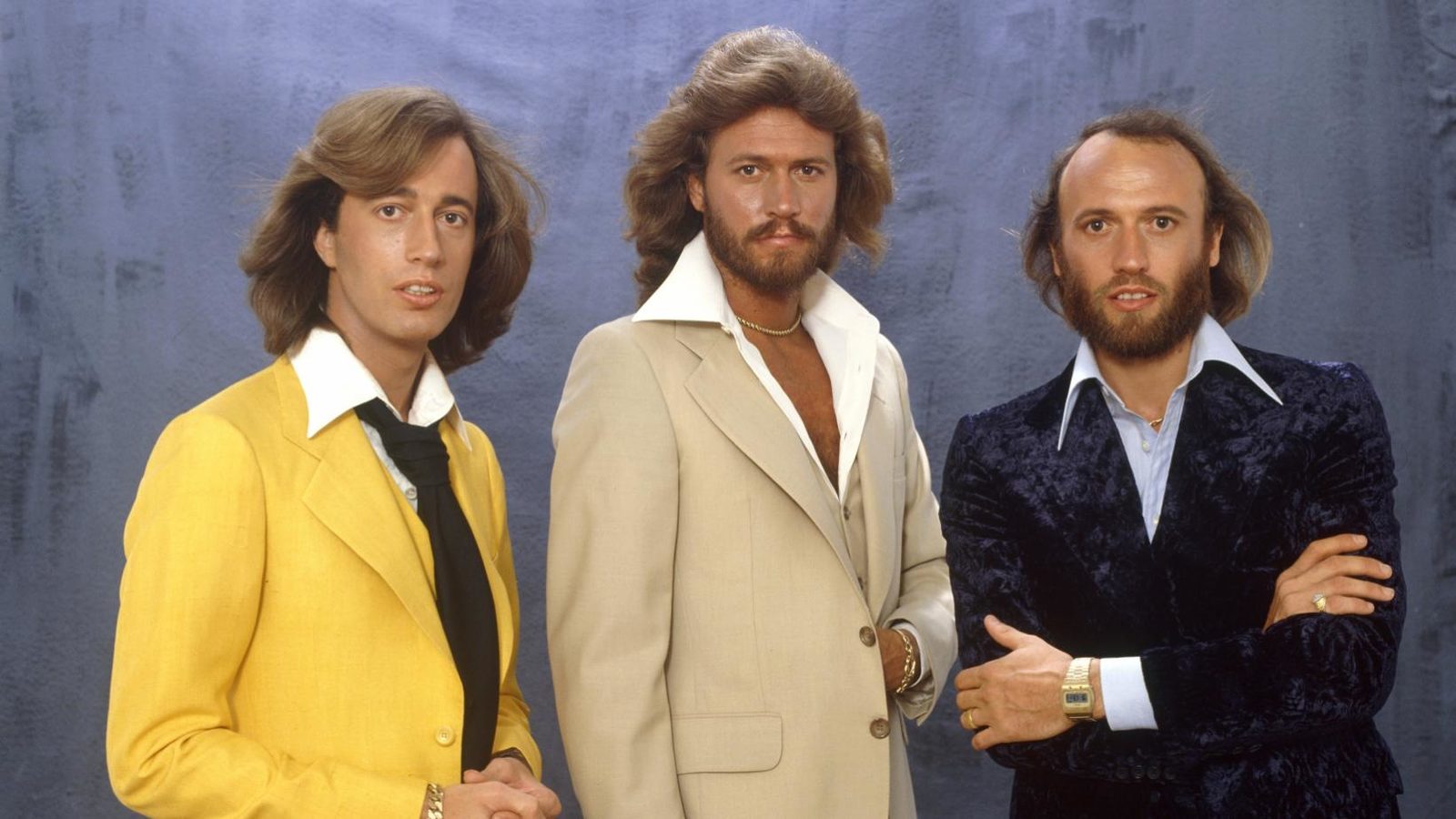
Before later fame changed the frame, And the Sun Will Shine showed how the Bee Gees could make orchestral pop feel intimate, uneasy, and almost painfully human.
On the Bee Gees‘ 1968 album Horizontal, And the Sun Will Shine sits slightly off to the side of the group’s best-known story, but that quiet position is part of what makes it so revealing. Written by Barry, Robin, and Maurice Gibb, the song belongs to the band’s early period of ornate, emotionally charged pop, when their records were reaching beyond beat-group energy and into something more carefully sculpted. This was not yet the world that later fixed the group in popular memory. It was a moment shaped by close harmonies, literary melancholy, and a growing confidence that studio arrangement could carry as much feeling as the words themselves.
If the song is overlooked, it is not because it lacks ambition. Quite the opposite. And the Sun Will Shine is one of those album tracks that reveals how much the Bee Gees were hearing in their own heads during the late 1960s. Horizontal captured a band that was still young but already restless, eager to push pop toward richer colors and more inward moods. In this setting, the song becomes a kind of small chamber piece. It moves with deliberation, allowing melody, harmony, and atmosphere to do the emotional work together rather than chasing a quick radio payoff.
At the center of it is Robin Gibb. His lead vocal is the reason the song stays with you. Robin had a voice that could sound both direct and distant at once, as if every line were arriving from somewhere just beyond the room. On And the Sun Will Shine, he does not oversing the sorrow or force the drama. He lets it gather. The title promises brightness, but his delivery turns that promise into something more complicated, as though light is being imagined from inside a darker place. That tension is the song’s secret strength. It does not simply contrast sadness with hope; it makes them live together in the same breath.
The arrangement matters just as much. The early Bee Gees were deeply drawn to orchestral textures, and this track shows how seriously they were pursuing that sound. The song breathes with the stately patience of baroque pop: strings swelling around the melody, harmonies entering with care, the rhythm section holding everything in a measured frame. Nothing feels casual. Nothing feels thrown away. Even the space between phrases seems composed. The result is dramatic, but not in a theatrical or excessive sense. It is dramatic the way a well-lit stage can be dramatic, when a single figure stands still and the atmosphere around him says the rest.
That is part of what makes the song such a powerful deep cut. It lets you hear the Bee Gees before history simplified them. Too often, major artists get reduced to the era that sold the most records or produced the most familiar images. But a group’s real artistic identity is usually larger than its most famous chapter, and And the Sun Will Shine is a perfect reminder of that. Here, the brothers sound less interested in immediate impact than in emotional architecture. They are building feeling slowly, almost ceremonially, trusting the listener to stay with the song long enough for its full mood to unfold.
Within Horizontal, that ambition gives the track extra weight. The album came during a period when British pop was learning how expansive it could become, and the Bee Gees were among the artists proving that emotional seriousness and melodic beauty did not have to compete. They could deepen one another. In And the Sun Will Shine, you can hear that idea taking shape in real time. The song never loses its pop identity, but it refuses to stay simple. It reaches for elegance, shadow, and ambiguity. It wants to leave a trace, not just a hook.
Robin’s presence is especially important because he gives the record its unsettled emotional weather. Barry Gibb could bring warmth and command, and the group’s harmonies often supplied polish, but Robin Gibb carried a different kind of intensity. He sounded as though he understood how fragile a beautiful melody could be. On this track, that quality becomes the whole point. The brothers’ harmonies do not smooth his voice into comfort; they surround it, deepen it, and make the song feel suspended between consolation and ache. It is one of those performances where restraint creates more pressure than volume ever could.
That may be why the song still feels so striking now. Not because it announces itself as a lost classic, but because it reveals a band thinking on a larger scale than casual memory often allows. Long before later reinventions, the Bee Gees were already exploring how pop could hold delicacy, sadness, and formal beauty in the same space. And the Sun Will Shine may not be the first title named in any quick summary of their career, but it opens a more intimate door. It shows the group in the act of reaching upward artistically, and it shows Robin Gibb turning that reach into something piercingly personal.
Some songs endure through familiarity. Others endure by waiting patiently for listeners to come back and hear what was there all along. And the Sun Will Shine belongs to the second kind. In its poised arrangement, in its dusky emotional coloring, and above all in Robin’s beautifully held vocal, the song preserves a version of the Bee Gees that deserves more room in the conversation: ambitious, tender, formally adventurous, and unafraid of sadness dressed in elegance. It is not just a forgotten album track from Horizontal. It is a glimpse of the group’s early imagination at full stretch, already reaching toward the sky while keeping one foot in shadow.
