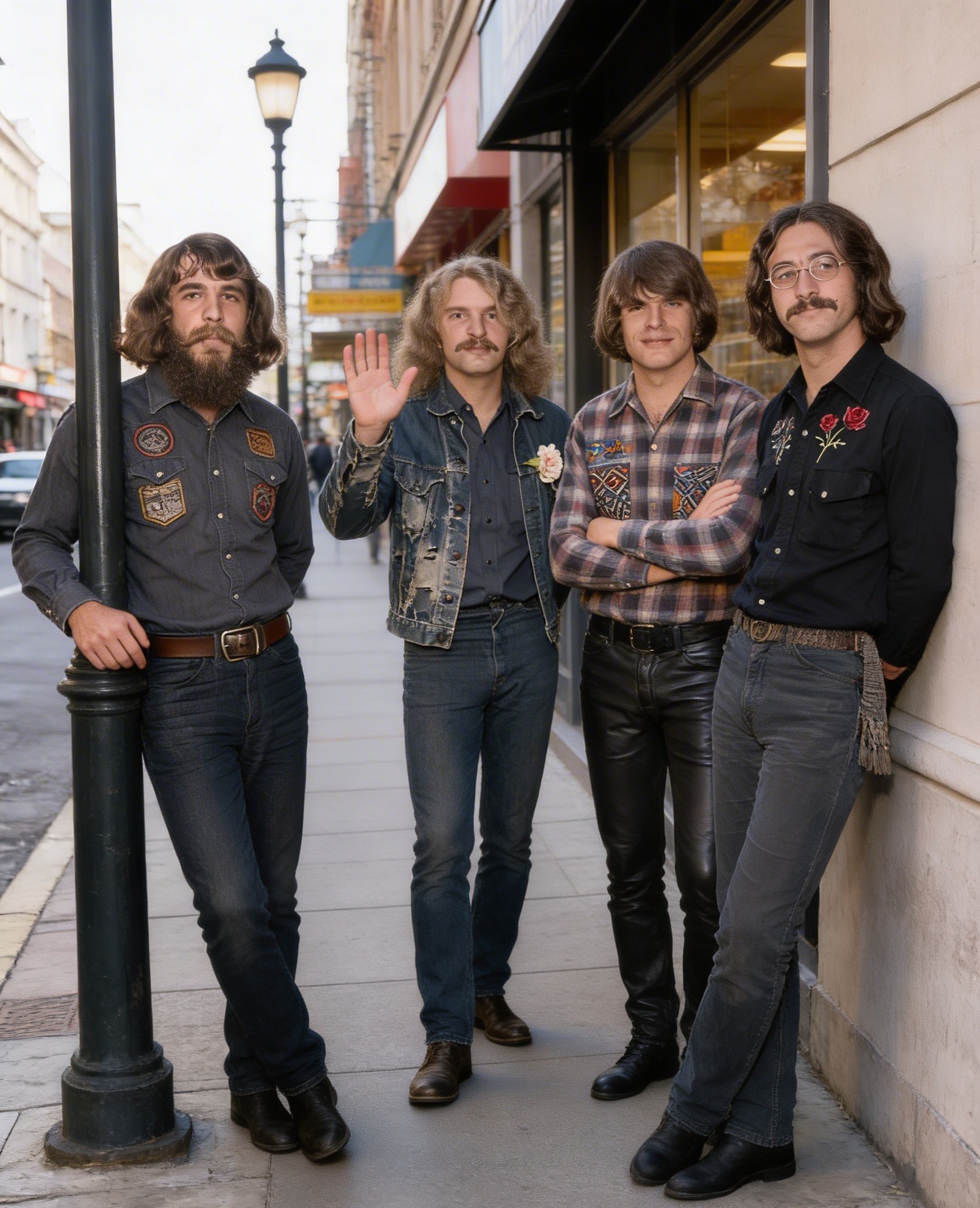
A protest song can shout, but Creedence Clearwater Revival ended Willy and the Poor Boys with a slow-burning warning.
Released in 1969 as the final track on Willy and the Poor Boys, “Effigy” is one of Creedence Clearwater Revival’s darkest political recordings: a six-minute John Fogerty composition shaped in response to the Nixon administration and the charged American atmosphere surrounding it. The song does not work like a campaign speech, a newspaper editorial, or even a typical protest single. It feels instead like a fire seen across a public square, distant enough to become symbolic, close enough to make the air change.
The album that carries it is often remembered for more immediate flashes of Creedence brilliance. “Down on the Corner” has the bounce of a street band making music out of almost nothing. “Fortunate Son” delivers its political anger with the force of a door kicked open, naming class privilege and war-era hypocrisy in language that still feels lean and direct. By contrast, “Effigy” arrives after those songs have already done their work. It closes the record not by resolving its tensions, but by darkening them.
That placement matters. Willy and the Poor Boys was the third Creedence album released in 1969, a year when the band’s productivity was almost startling. John Fogerty was writing compact songs that sounded ancient and urgent at once, built from rock and roll, blues, country, swampy guitar textures, and a voice that could cut through radio static. But “Effigy” stretches beyond the band’s usual compression. Its length gives it room to smolder. Instead of making one sharp strike and leaving, it circles its central image until the listener begins to feel trapped inside it.
The musical character of “Effigy” is essential to its protest energy. The groove is steady rather than explosive, with the rhythm section holding a hard, patient line while the guitars carve out a tense, shadowed atmosphere. There is no decorative excess in the arrangement. Creedence had a way of making simplicity feel severe, and here that severity becomes political. The band does not need orchestration or studio grandeur to suggest disorder. The pressure comes from repetition, from the sense that the song is watching something burn and refusing to look away.
Fogerty’s vocal performance carries the same restraint. He does not sing “Effigy” as though he is trying to persuade a crowd through volume alone. His delivery is edged, wary, and accusatory, but it leaves space around the words. That space is where the unease gathers. The lyric’s image of fire on the palace lawn turns the language of power into a scene of public reckoning. The song does not have to name every target. Its title suggests symbolic destruction: an image made to stand in for authority, anger, judgment, and fear.
Because it was written in the Nixon era, “Effigy” belongs to a specific American political moment: the Vietnam War still ongoing, public trust under pressure, and protest becoming part of the country’s daily soundscape. Yet the song’s strength is that it avoids becoming a period slogan. John Fogerty writes with enough directness to make the anger clear, but enough imagery to let the song keep moving through time. The listener hears not only one administration, but a broader warning about what happens when power hardens and citizens begin to see leadership as something distant, fortified, and combustible.
That is why the track feels so different from “Fortunate Son”, even though both belong to the same album and the same political season. “Fortunate Son” is fast, cutting, and instantly memorable; its protest is built for recognition. “Effigy” is slower and stranger. It asks for endurance. Its six minutes do not behave like an indulgence; they become the point. Protest here is not just a burst of anger. It is the discipline of staying with discomfort long enough to understand its shape.
As an album closer, the song changes the aftertaste of Willy and the Poor Boys. What could have ended as a portrait of rough-edged American life instead ends in warning. The record’s earlier songs often draw from communal sounds: handclaps, street corners, working-class humor, folk memory, the plainspoken authority of people outside the centers of power. “Effigy” gathers those energies into something more ominous. It suggests that the country being sung about is not merely colorful or resilient, but strained by forces it can no longer ignore.
There is a particular courage in ending a popular rock record this way. Creedence were not hiding their politics in abstraction, but they were also not flattening them into easy theater. “Effigy” refuses the satisfaction of a neat victory. The fire burns, the rhythm presses forward, and Fogerty’s voice leaves the listener inside the question of what that burning means. In doing so, the song captures a form of protest that is less about triumph than vigilance.
More than half a century later, “Effigy” still feels alive because it understands anger as atmosphere, not merely announcement. It is the sound of a band closing the door on one of its strongest albums while leaving a glow under the frame. The song’s power is not that it tells the listener exactly what to think, but that it makes indifference difficult. Creedence found, in six dark minutes, a way to make protest feel like weather moving in.
