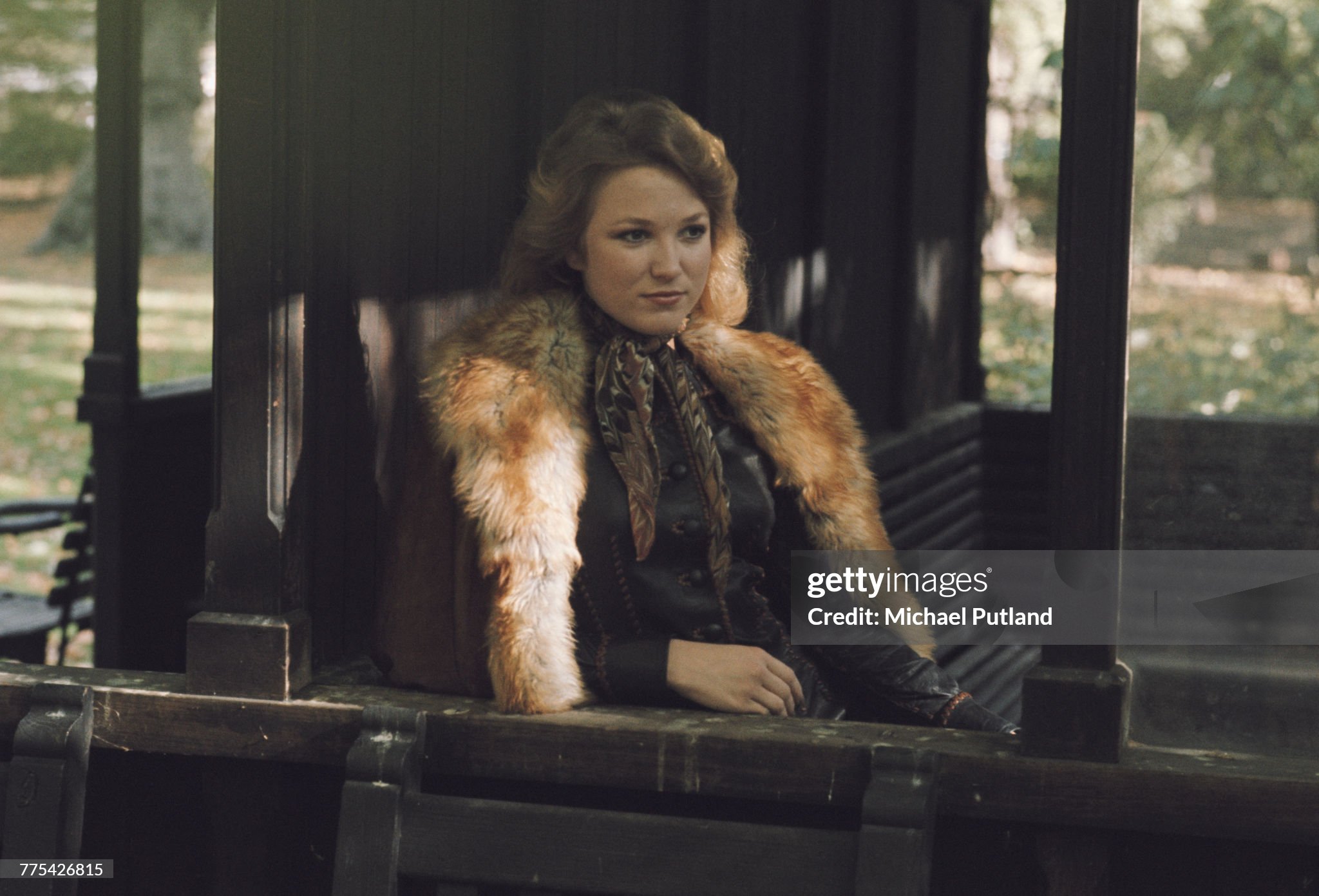
A thirteen-year-old voice gave Delta Dawn an old wound and a child’s fearless clarity.
In 1972, Tanya Tucker released Delta Dawn as her debut single for Columbia Records. She was thirteen years old. The song, written by Alex Harvey and Larry Collins, was produced by Billy Sherrill and quickly became the record that introduced Tucker to country music audiences. Those facts alone explain why the single is remembered, but they do not explain the strange force of hearing it: a young singer standing at the center of a story that sounds weathered, shadowed, and older than she could possibly be.
Delta Dawn is built like a Southern gothic miniature. Its title character is not simply described; she is seen by a town. She walks with tokens of a past that may be romance, delusion, grief, faith, or some mixture of all four. The song gives her a name, an image, and a question, then refuses to fully solve her. There is a faded flower, a remembered promise, and the dream of being taken to a “mansion in the sky,” a phrase that brings gospel language into a story of public judgment and private longing. In lesser hands, the material could have become theatrical excess. Tucker’s version stays closer to the ground.
The astonishment of the record lies partly in the contrast between the singer’s age and the song’s subject, but that contrast is not a gimmick. Tucker does not sound like a child imitating adult pain. She also does not sound like an old soul in the sentimental sense. Her performance has a directness that makes the lyric sharper. She sings with a firm, low-centered confidence, letting certain phrases carry a rough edge without overworking them. The maturity is not in decoration; it is in how little she pushes. She seems to understand, instinctively or musically, that the story becomes more powerful when the singer does not try to explain the woman at its center.
Sherrill’s production gives the performance a country-pop frame without softening the unease. The rhythm moves steadily, the background voices answer and lift, and the arrangement leaves enough space for Tucker’s lead vocal to feel exposed. There is a public quality to the sound, as if the town itself is present in the chorus, repeating what it has seen and half-believed. Against that backdrop, Tucker’s voice becomes the song’s moral center. She is not mocking Delta Dawn, not rescuing her, and not turning her into a warning. She is simply holding the story long enough for the listener to feel its ambiguity.
That ambiguity is central to the female story-song tradition in country music. The genre has often made room for women whose lives are narrowed by gossip, desire, poverty, memory, or social expectation. In Delta Dawn, the woman is visible but not fully known. The townspeople may think they understand her, but the song’s questions keep opening. Tucker’s youth adds another layer: the singer is too young to have lived the character’s life, yet her clarity prevents the performance from becoming condescending. The result is not autobiography. It is interpretation, and it reveals how a voice can carry compassion before experience has given it a name.
The record also marked the beginning of one of country music’s most unusual early careers. Tucker’s breakthrough was not built on innocence in the conventional sense. Her first major statement placed her inside adult narrative material, a pattern that would continue as she moved through songs with darker edges and complicated women. In the early 1970s, when Nashville production was balancing traditional country storytelling with more polished arrangements, Delta Dawn gave Tucker a rare entrance: youthful in age, but not presented as fragile. The single reached the country Top Ten and established her as a singer whose power came from nerve, tone, and presence rather than novelty alone.
A year later, Helen Reddy would take Delta Dawn to a wider pop audience with her 1973 version, and that recording became a defining version for many listeners. But Tucker’s 1972 country recording has its own distinct gravity. It is leaner in feeling, less triumphant, more uncanny. The young voice does not smooth the story into reassurance. It leaves the woman walking, still watched, still carrying the signs of a life that others have reduced to rumor.
Heard now, Tanya Tucker’s Delta Dawn remains striking because it asks for patience. It does not hand the listener a moral. It does not ask us to decide whether Delta Dawn is foolish, faithful, broken, or blessed. Instead, it gives us a singer young enough to make the story feel innocent and strong enough to make it feel severe. The performance endures because of that balance: a girl’s voice carrying an adult mystery without pretending to own it. Sometimes the deepest country storytelling begins not with confession, but with the courage to look at another person and leave their sorrow intact.
