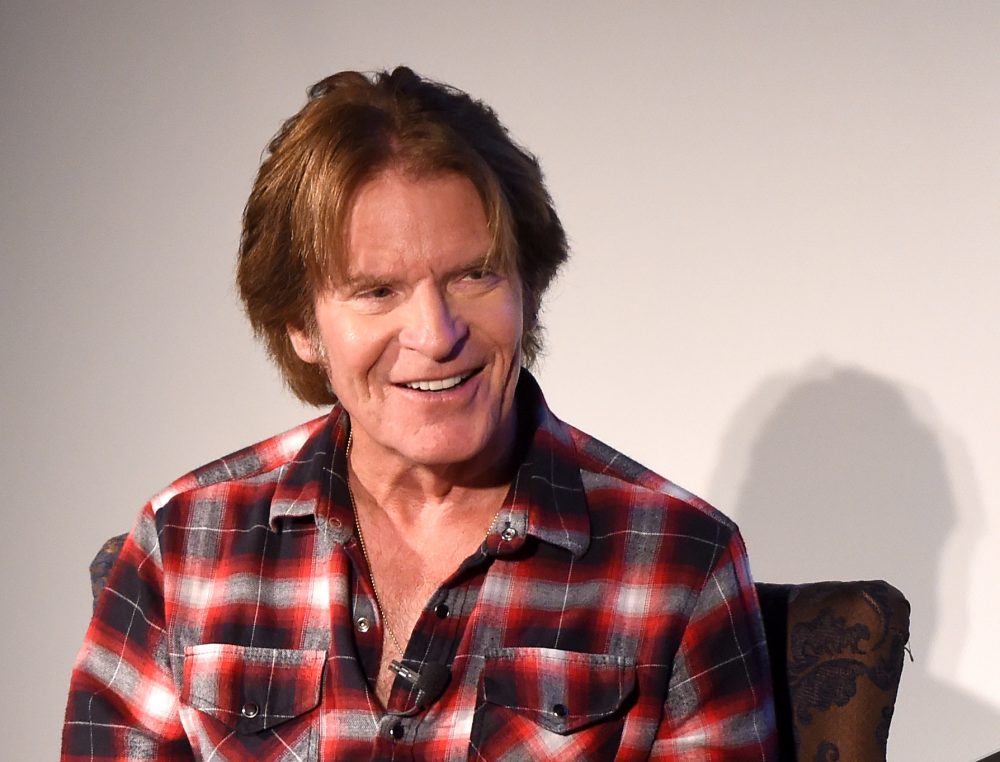
Before the hits made them legends, Creedence Clearwater Revival used I Put a Spell on You to reveal the dark, urgent heart of their sound.
There are cover songs that pay tribute, and then there are cover songs that feel like a door being kicked open. Creedence Clearwater Revival‘s version of I Put a Spell on You, from the band’s 1968 self-titled debut album Creedence Clearwater Revival, belongs to the second kind. Long before Proud Mary, Bad Moon Rising, or Green River became part of American musical memory, this recording announced something fierce and unmistakable: John Fogerty was not interested in simply preserving old rock and rhythm-and-blues classics. He wanted to seize them, rough them up, and make them burn in a new way.
That debut album would later reach No. 52 on the Billboard 200, helped greatly by the success of Susie Q, which climbed to No. 11 on the Billboard Hot 100. Yet chart numbers only tell part of the story. If Susie Q gave the group commercial traction, I Put a Spell on You gave them emotional identity. It was one of those early performances that told listeners this band had depth, grit, and a slightly dangerous edge.
The song itself already carried a remarkable history. First made famous by Screamin’ Jay Hawkins in 1956, I Put a Spell on You was one of the great shocks of early rock-era R&B. Hawkins delivered it with theatrical menace, half-haunted and half-mocking, turning obsession into a kind of ritual drama. His version became a signature recording because it sounded unlike anything else around it. It was exaggerated, eerie, and unforgettable. But what Creedence Clearwater Revival understood was that the song did not need stage theatrics to feel unsettling. It only needed pressure, groove, and a voice willing to sound genuinely possessed.
That is where John Fogerty changed everything. His vocal on I Put a Spell on You is not campy and not playful. It is intense, hard-edged, and almost claustrophobic. He sings as if the words are being forced out of him, as if desire has curdled into fixation. There is still drama in the performance, of course, but it is a drama rooted in rock power rather than theatrical spectacle. Fogerty does not imitate Hawkins. He reinvents the emotional center of the song. What had once felt like a bizarre midnight performance now feels like a storm rolling in over a dark back road.
Musically, the transformation is just as striking. Creedence Clearwater Revival were still a young band in 1968, but they already understood the force of economy. The arrangement is lean, direct, and purposeful. The guitars bite without becoming flashy. The rhythm section of Stu Cook and Doug Clifford keeps everything moving with a blunt, muscular pulse. Tom Fogerty‘s rhythm work helps give the track its thick, grinding shape. Nothing is wasted. Nothing is ornamental. The band does not decorate the song; they tighten it until it feels dangerous.
That is the secret of this cover reinvention. Creedence took a song associated with spectacle and made it feel elemental. In their hands, I Put a Spell on You becomes less about novelty and more about compulsion. The lyric itself is simple, almost primitive in its directness, but simplicity is often where the strongest emotions live. Love here is not sweet, not noble, not even romantic in the usual sense. It is need. It is jealousy. It is the frightening realization that feeling can overwhelm dignity. John Fogerty sings those emotions without softening them, and that honesty is what gives the performance its staying power.
There is also something revealing about where this recording sits in the band’s story. Creedence Clearwater Revival came out of El Cerrito, California, yet they sounded as if they had somehow absorbed the heat, mud, and mythology of the American South. That paradox would become one of the most fascinating things about them. On their debut album, they were still defining exactly who they were. By choosing songs like Susie Q and I Put a Spell on You, they showed deep respect for American roots music, but they also proved they could reshape that tradition instead of merely echoing it. This was not revivalism in the museum sense. It was living music, restless and hungry.
And perhaps that is why the performance still feels so alive. Later Creedence songs would be sharper, more famous, and more culturally embedded. But this track carries the thrill of a band on the edge of becoming itself. You can hear ambition in it. You can hear restraint giving way to conviction. You can hear John Fogerty discovering that his voice could do more than carry a tune; it could dominate a room, unsettle a listener, and turn an old song into something newly unforgettable.
For many listeners, that is the lasting beauty of Creedence Clearwater Revival‘s I Put a Spell on You. It honors Screamin’ Jay Hawkins without being trapped by him. It keeps the song’s darkness but trades gothic showmanship for swamp-rock force. It reminds us that a great cover is not about copying the past with perfect manners. It is about hearing the truth inside a song and finding the courage to sing that truth in your own voice. In 1968, before the biggest hits arrived, Creedence did exactly that. And the result still sounds like a warning, a challenge, and a declaration all at once.
