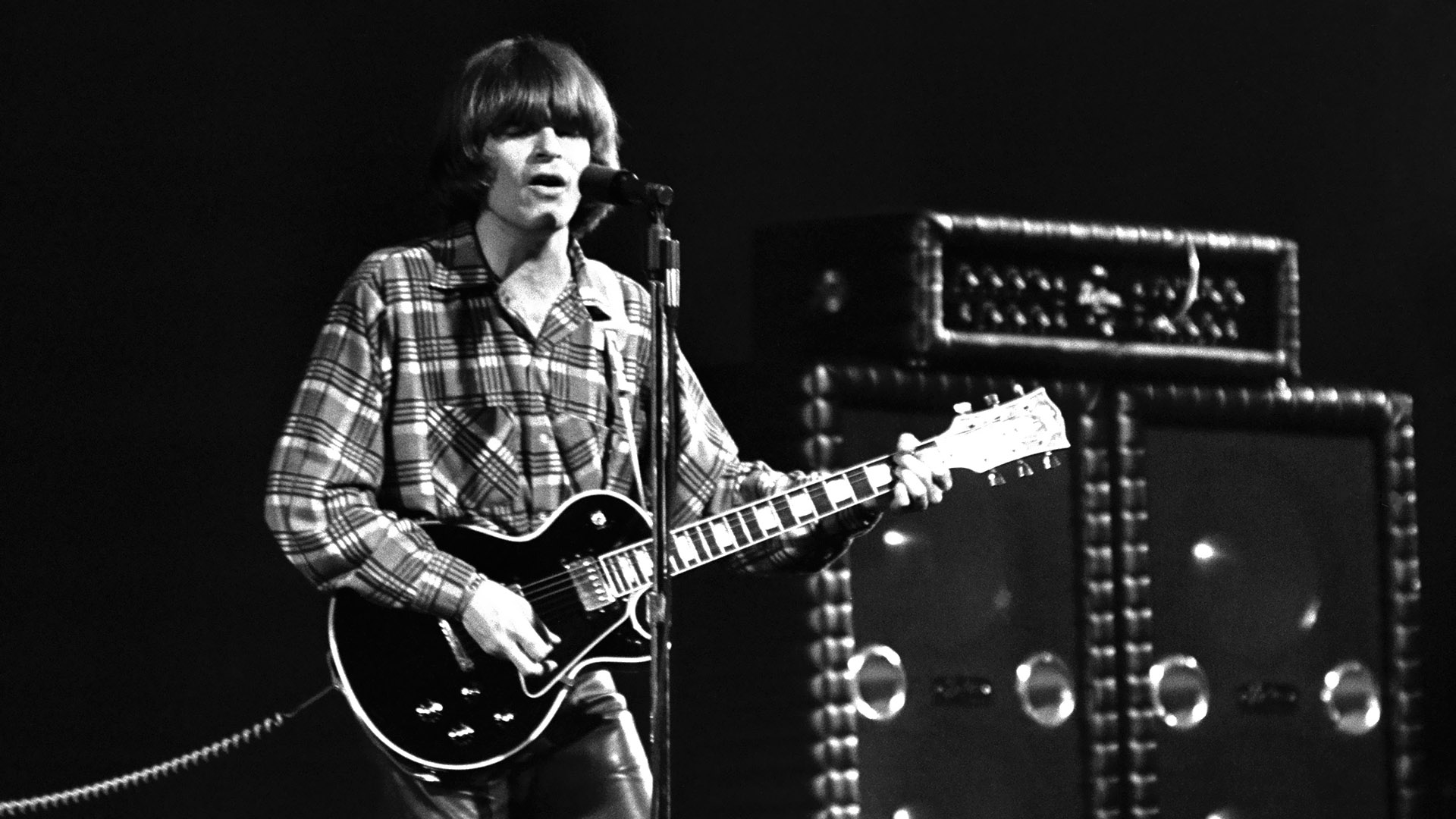
In I Saw It On T.V., John Fogerty steps away from the roar of comeback hits and turns toward something more lasting: the way a nation learned its own story through the glow of a television screen.
When John Fogerty released Centerfield in early 1985, the headlines naturally went to the big radio moments. The album itself became a major success, reaching No. 1 on the Billboard 200, while songs like The Old Man Down the Road carried the force of a long-awaited return. But tucked inside that triumphant comeback was a quieter, more reflective piece: I Saw It On T.V.. It was not one of the album’s major charting singles, and because of that it has often lived in the shadows of the bigger hits. Yet for many listeners, this gentle, acoustic-driven track may be one of the most revealing songs on the record.
What makes I Saw It On T.V. so compelling is its point of view. Fogerty does not sing as a historian standing above events, nor as a preacher trying to summarize the American century in neat lessons. He sings as a witness — one of millions of ordinary people who watched history enter the home through a screen. That is the emotional key to the song. It is not only about public milestones; it is about private reception. It is about how national memory is formed in living rooms, in silence, in surprise, in disbelief, in those moments when the outside world suddenly feels close enough to touch.
By 1985, that idea already carried a powerful charge. Television had become the great common room of American life. Generations had seen triumph, unrest, ceremony, heartbreak, hope, and confusion arrive through that box in the corner. John Fogerty, who had always been one of rock’s great writers of American atmosphere, understood something important here: history is not remembered only through textbooks or speeches. Very often, it is remembered through images. Through the way a room looked when the news came on. Through the stillness after an announcement. Through the sense that the country had changed before supper was finished.
That is why the arrangement matters so much. I Saw It On T.V. is not built like an anthem. It does not charge forward with the muscular drive that many listeners associate with Fogerty’s most famous work in Creedence Clearwater Revival. Instead, it leans on a restrained, acoustic-centered feel that lets the words carry the weight. The performance sounds thoughtful rather than flashy, intimate rather than declarative. Even on an album as celebratory as Centerfield, this song feels like a pause in the room — the moment after the cheering, when memory starts speaking in a lower voice.
There is also a deeper layer to its place on Centerfield. Fogerty’s return in 1985 was more than a commercial comeback. It was a personal reemergence after years of frustration, legal strain, and artistic distance following the collapse of Creedence Clearwater Revival. In that light, I Saw It On T.V. sounds even more meaningful. Here was an artist long associated with American imagery — rivers, back roads, ballparks, work, weather, radio, and restless motion — coming back with a song about how America sees itself. Not through myth alone, but through mediation. Not face to face, but screen to screen. There is something quietly modern in that, and something quietly sad too.
The song’s meaning rests in that tension. Television can connect, but it can also flatten. It can bring the nation together, but it can also remind us how far away real events remain from the people watching them. Fogerty seems deeply aware of both truths. His lyric does not feel cynical, but neither does it feel innocent. It understands that historical milestones can become shared memory while still leaving behind confusion, distance, and unresolved feeling. That balance gives the song its dignity. It is reflective without becoming sentimental, patriotic without becoming simplistic.
And that may be why the song still resonates. Today, when so much of life reaches us through screens of every size, I Saw It On T.V. feels less like a period piece and more like an early meditation on mediated memory itself. The details belong to an older America, yes, but the emotional experience is still recognizable: the feeling of learning who your country is through images, broadcasts, and moments you did not physically attend yet somehow carry within you forever.
Among the brighter, more outward-facing tracks on Centerfield, this song remains a different kind of achievement. It may not have been the chart-maker. It may not be the first title casual listeners mention. But it gives the album moral depth. It reminds us that John Fogerty was never only a writer of riffs and hooks. He was, and is, a writer of American feeling — of the uneasy space where public history and private memory meet. In I Saw It On T.V., he found a simple, searching way to say that some songs do not merely revisit the past. They ask what it felt like to live through it.
