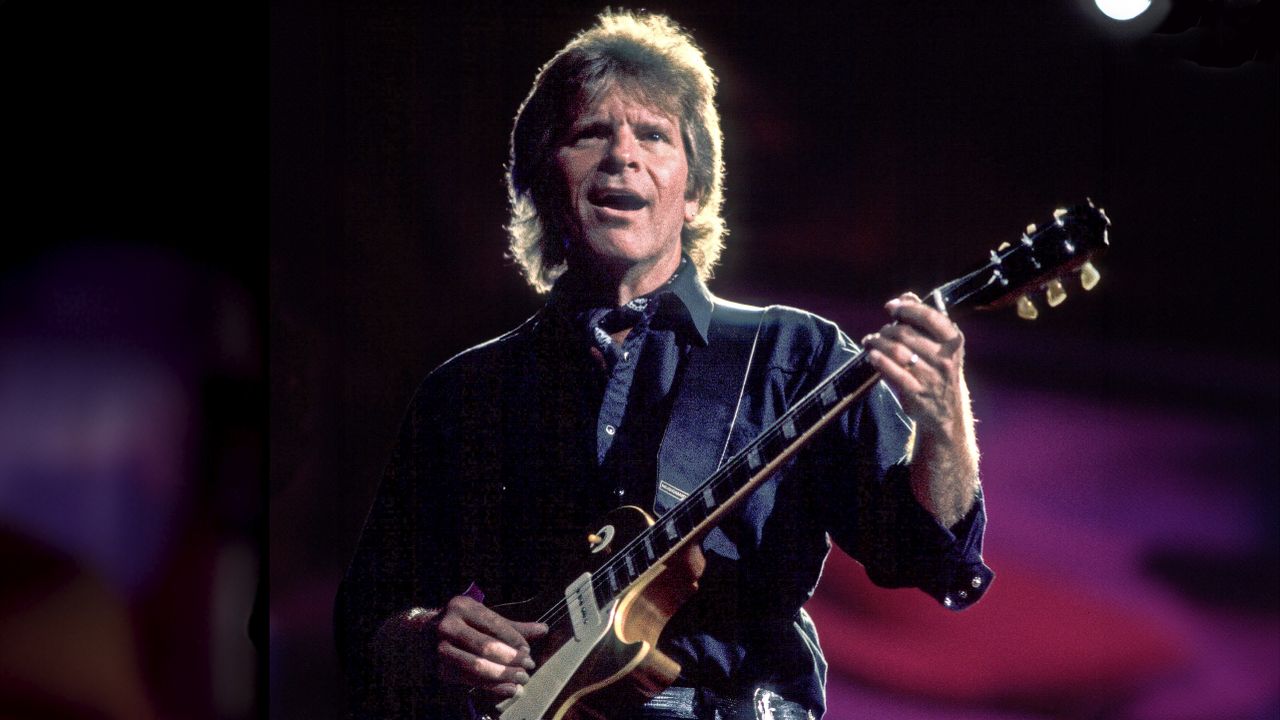
What began as Creedence Clearwater Revival’s hypnotic 1968 breakthrough was transformed by Apocalypse Now into something darker, stranger, and unforgettable.
There are songs that arrive with one meaning, and then history gives them another. “Suzie Q” is one of those records. When Creedence Clearwater Revival released its version in 1968, the song felt like a humid, dangerous invitation — raw, repetitive, electric, and impossible to ignore. By the time Francis Ford Coppola used it in Apocalypse Now in 1979, that same groove had been pulled into a completely different emotional weather. It no longer sounded merely seductive. It sounded like appetite without balance, pleasure without safety, a rock record colliding with war until both seemed morally unsteady.
That is why the song’s appearance in Apocalypse Now has stayed with audiences for decades. In the film’s notorious Playboy Playmates sequence, “Suzie Q” blares across a makeshift show staged for American troops in Vietnam. What should feel like escapist entertainment becomes something far more unsettling. The music is catchy, even joyous on the surface, but Coppola frames it inside a landscape of exhaustion, tension, and frayed restraint. The result is one of the film’s most jarring musical choices: a hit from the late 1960s turned into a cinematic symbol of heat, frenzy, and disorientation.
To understand why this use of “Suzie Q” lands so hard, it helps to remember what the record originally meant for Creedence Clearwater Revival. The song was not written by the band; it was first recorded by Dale Hawkins in 1957, with its authorship commonly credited to Hawkins, Stan Lewis, and Eleanor Broadwater. But CCR’s version was the one that changed the band’s fortunes. Released as the debut single from the album Creedence Clearwater Revival in 1968, it became the group’s breakthrough hit, reaching No. 11 on the Billboard Hot 100. For many listeners, this was the first major sign that John Fogerty and company had found a sound that was both rooted in old American rock and utterly their own.
The CCR version stretched the material into a long, trance-like performance. On the original album, “Suzie Q” ran over eight minutes and was famously split into two parts to fit the LP. That mattered. This was not a neat, tidy pop remake. It was a swampy reinvention, driven by John Fogerty’s wiry vocal, the band’s relentless pulse, and a guitar atmosphere that felt thick as summer air. It was hypnotic rather than polished, menacing rather than romantic. Even at the start, there was something uneasy in it.
And that unease is exactly what Apocalypse Now recognized. The film did not simply borrow a familiar old hit to evoke period atmosphere. It used the song’s inner tension. Set against the chaos of the Vietnam War, “Suzie Q” becomes almost accusatory. The swagger of the record is still there, but now it plays before men who are strained, isolated, and psychologically frayed. The performance scene in the film spirals quickly from entertainment into disorder, and the music helps carry that shift. The same beat that once announced a hungry young American rock band now underscores a system coming apart.
That is part of the genius of soundtrack placement when it is done well. A song does not need new lyrics to gain new meaning. It only needs a new frame. In 1968, “Suzie Q” introduced Creedence Clearwater Revival to the mainstream as a band with bite, groove, and identity. In 1979, the film repositioned that identity inside a brutal national memory. Suddenly, the song was not just about desire or rock-and-roll attitude. It became bound up with spectacle, masculinity, and the surreal moral confusion that Apocalypse Now was trying to capture.
There is another layer here too, and it helps explain why the choice feels so American in the deepest sense. Creedence Clearwater Revival were often associated with bayou imagery, Southern textures, and working-class directness, even though they came from California. Their music carried the sound of a country arguing with itself — old roots music pushed through late-1960s urgency. In that way, “Suzie Q” was already carrying a kind of national friction. Apocalypse Now took that friction and placed it inside one of the most unsettling depictions of American power ever put on film. The fit was not accidental. It was almost too perfect.
Listeners who return to the song after seeing the movie often hear it differently. That is the mark of a powerful cinematic use. The opening riff still pulls you in, but memory intervenes. You do not hear only a breakthrough rock single anymore. You hear helicopters, heat, crowd noise, confusion, and a show that stops being a show. You hear how a record can survive the decade that made it and still be reborn in another cultural moment.
For Creedence Clearwater Revival, “Suzie Q” was the first big step — the record that announced them. For Apocalypse Now, it was a weapon of atmosphere, turning familiar rock energy into something feverish and unstable. That is why the song still matters in both histories. It stands at the crossroads of breakthrough and redefinition: a 1968 hit that found a second life in 1979, and in that second life, revealed just how much music can change when the world around it changes first.
