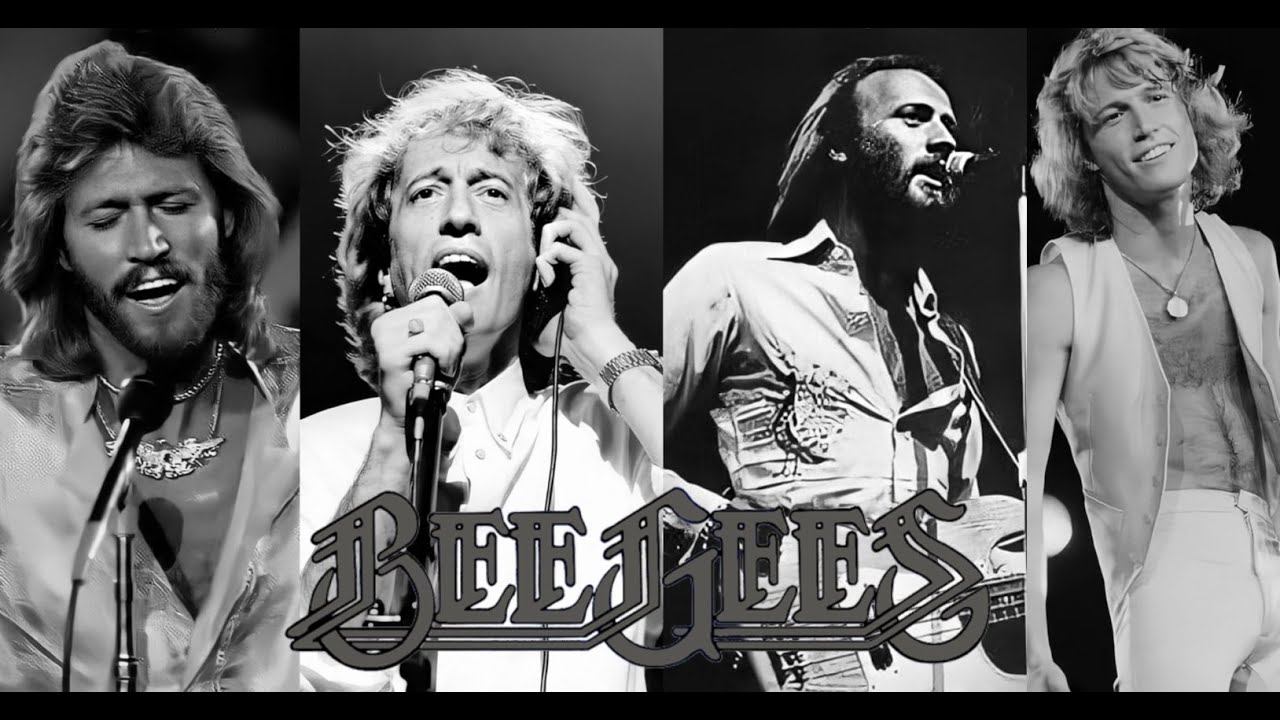
On Nights on Broadway, the Bee Gees turned city-night longing into after-dark drama—and in the 1975 studio, Barry Gibb found the falsetto that would redefine their future.
By the time Nights on Broadway arrived in 1975, the Bee Gees were no longer content to live on memory. The song, released as the second single from Main Course, climbed to No. 7 on the Billboard Hot 100, proving that the group’s American revival after Jive Talkin’ was not a passing spark. Yet the chart story, important as it is, tells only part of the truth. The deeper significance of Nights on Broadway lives inside the studio itself, where producer Arif Mardin heard something in Barry Gibb that even the band had not fully turned into a signature: a fierce, expressive falsetto that could slice through a record like neon through rain.
That is why this song matters so much in the history of pop. During the Main Course sessions at Criteria Studios in Miami, Mardin encouraged Barry to push higher and improvise more freely. What emerged, especially during the fade of Nights on Broadway, was that urgent, high cry that would soon become one of the most recognizable sounds in 1970s music. It did not arrive as a gimmick. It arrived as discovery. Barry had used his upper register before, but here it suddenly took on a new dramatic force. In that moment, the Bee Gees were not simply recording another single. They were stumbling into a new identity.
What makes the story even richer is that Nights on Broadway is not a bright, carefree record. It is sleek, shadowed, restless, and full of emotional pursuit. Written by Barry, Robin, and Maurice Gibb, the song carries the tension of someone moving through crowded rooms and city streets while chasing a love that never feels fully within reach. Broadway is more than a place in the lyric. It becomes a symbol of performance, illusion, temptation, and loneliness. There is excitement in the song, yes, but also distance. The city glows, yet something in the heart remains unresolved.
That emotional contradiction is exactly what gives the record its staying power. The groove is sophisticated and deeply shaped by American soul and R&B, while the vocal phrasing carries the melancholy that had always made the Bee Gees such distinctive songwriters. Barry’s lead never sounds merely stylish; it sounds haunted by desire. Around him, Robin and Maurice help build the harmony texture with that unmistakable family blend, giving the song both polish and ache. It is music made by artists who had already seen fame rise and fall and who now sounded wiser, leaner, and more focused.
Arif Mardin deserves enormous credit for that transformation. He was not just supervising a session; he was helping the group hear a road forward. Before Main Course, many listeners still associated the Bee Gees with their late-1960s and early-1970s ballads, records of remarkable beauty but from a different musical world. Mardin guided them toward a tighter rhythmic feel, a more contemporary attack, and a richer connection to funk and soul. With Nights on Broadway, that guidance found its perfect example. The arrangement glides, the rhythm section breathes, and then Barry’s falsetto enters like a revelation. Suddenly the record is no longer just elegant. It is electric.
There is something moving about knowing how much history sits inside those few soaring notes. When most people think of Barry Gibb’s falsetto now, they think of the songs that later dominated popular culture: Stayin’ Alive, Night Fever, You Should Be Dancing. But the seed of that era is here, inside the darker mood of Nights on Broadway. This song stands right at the threshold. One foot remains in the reflective craftsmanship that had defined the brothers for years; the other steps into the sharper, more kinetic sound that would soon make them global giants again. Few records let you hear transformation happening so clearly.
Listen closely today and the details become even more impressive. The bass line carries the song with quiet confidence. The guitar and keyboards create motion without clutter. The harmonies drift in and out like streetlights appearing through the haze. Then Barry rises, and the emotional temperature changes at once. What felt cool becomes exposed. What felt controlled becomes hungry. That is the genius of the performance. The falsetto is not there to decorate the track. It changes the emotional meaning of the track.
So Nights on Broadway remains far more than a strong 1975 hit. It is a breakthrough document from Main Course, a record of reinvention caught in real time. It shows how a great producer can alter the course of an artist’s life with one perceptive push. It shows how a band can evolve without losing its soul. And it reminds us that some of the biggest turns in music history do not begin with grand announcements. Sometimes they begin late in a studio, when one voice rises higher than before and everyone in the room understands, almost at once, that nothing will sound the same again.
For the Bee Gees, that moment was Nights on Broadway. For the rest of us, it is the sound of a door opening.
