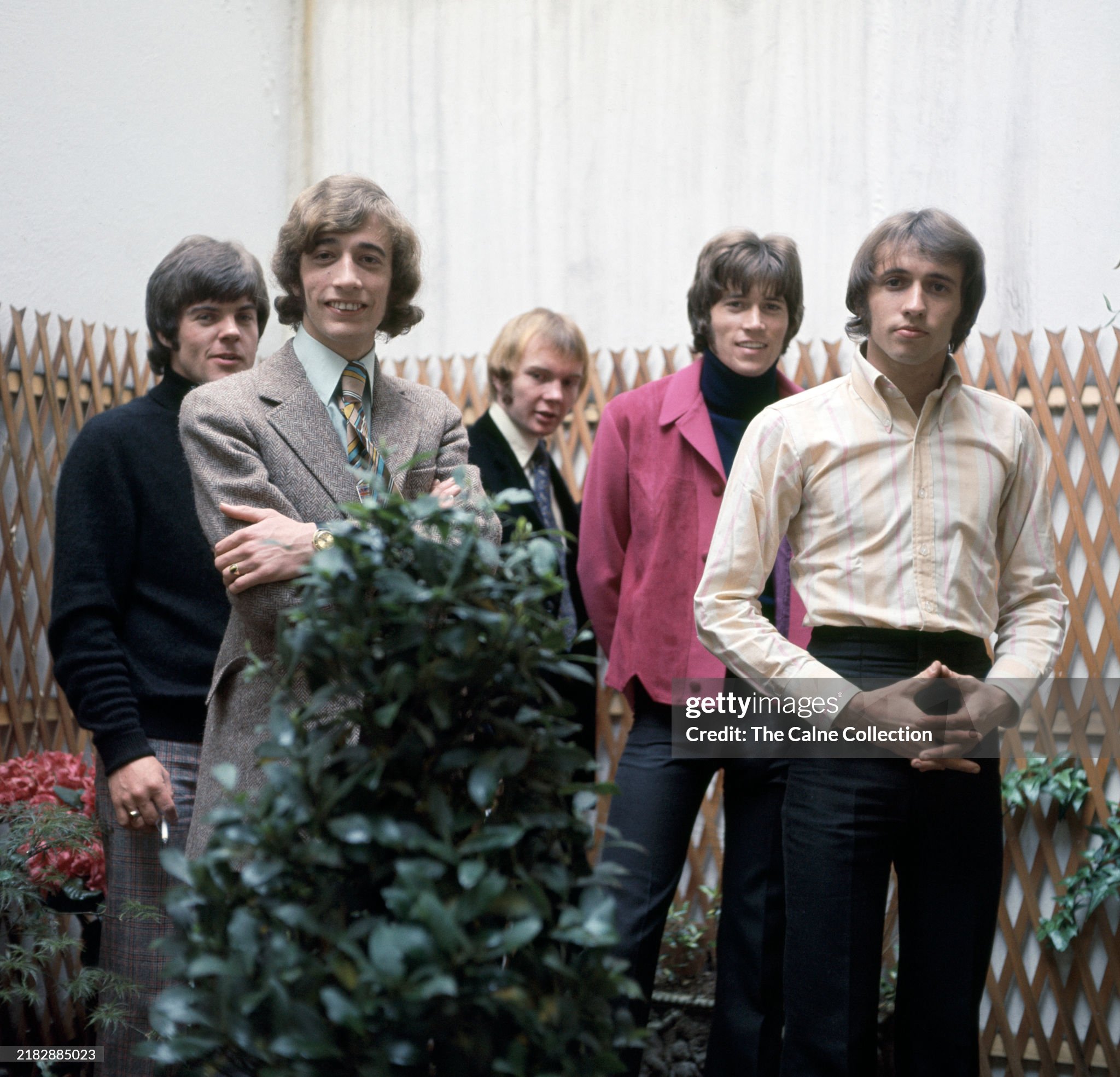
The Greatest Man In The World is one of the most revealing deep cuts in the Bee Gees catalog, a grand, ornate song from Odessa that shows just how far their imagination had grown before the group’s first great fracture.
Not every important Bee Gees song was a hit single. Some lived more quietly, tucked inside albums, waiting for listeners to find them years later and hear what the charts could never quite measure. The Greatest Man In The World belongs to that class of song. Released in 1969 on the ambitious double album Odessa, it did not chart as a standalone single in either Britain or America. But the album that carried it was no minor statement: Odessa reached No. 10 on the UK Albums Chart and No. 20 on the US Billboard 200. Those numbers matter, because they remind us that this was not some forgotten rehearsal-room fragment. It came from a moment when the Bee Gees were aiming higher than ever, artistically and emotionally.
By 1969, the group had already proven they could write majestic pop records with haunting melodies and emotional intelligence. Songs like Massachusetts, To Love Somebody, and I Started a Joke had given them a reputation for elegance and melancholy. But Odessa was something else entirely. It was lush, literary, eccentric, and unapologetically elaborate, shaped by orchestral arrangements and a strong sense of old-world drama. In that setting, The Greatest Man In The World feels less like a conventional pop track and more like a character study staged inside a dream.
What makes the song so compelling is its scale. The title sounds almost impossibly bold, yet the music does not swagger. It moves with the kind of stately sadness that the Bee Gees understood so well in that era. Even at their most ornate, they rarely confused grandeur with emptiness. There is always a wound in the room somewhere, always a tremor beneath the polish. That is part of what gives The Greatest Man In The World its staying power. It suggests greatness, but it also suggests burden, image, and the lonely distance between what the world sees and what a life really feels like from within.
The story behind the song is inseparable from the story behind Odessa itself. The album was recorded during a period of growing tension inside the group. Creative ambitions were rising, but so were internal strains, especially between Barry Gibb and Robin Gibb. Soon after the album’s release, that tension would erupt into a temporary split, with Robin leaving the group for a time. That knowledge gives songs from this period a special kind of ache. When we listen now, we are not just hearing ambition. We are hearing brothers trying to build something magnificent while the foundation was beginning to shake.
There is also the unmistakable touch of arranger Bill Shepherd, whose work was crucial to the Bee Gees sound in the late 1960s. On Odessa, Shepherd helped turn the Gibbs’ songwriting into something almost cinematic. That matters here, because The Greatest Man In The World is not powerful merely because of its lyrics or melody alone. Its emotional force comes from the whole atmosphere around it: the sweep, the pacing, the sense that the song is looking at its subject from a high window while still mourning something deeply human below.
As for meaning, this is one of those songs best approached with humility. The Bee Gees often wrote in ways that were direct on the surface yet mysteriously open underneath. The Greatest Man In The World can be heard as a meditation on public myth and private fragility. It does not feel like a simple celebration of a heroic figure. Instead, it seems to ask what greatness costs, and whether being placed on a pedestal has anything to do with being understood. That tension between glory and sadness was one of the group’s great strengths, and it lives strongly in this song.
In another sense, the track also reflects the wider spirit of late-1960s Bee Gees music. Before the disco era would make them global giants all over again, they were creating some of the most emotionally sophisticated baroque pop of their generation. That chapter sometimes gets overshadowed by their later success, but songs like The Greatest Man In The World remind us how rich that earlier period really was. This was a band unafraid of complexity, unafraid of theatricality, and unafraid to let sorrow sit inside beauty.
Perhaps that is why the song continues to resonate with listeners who return to it after years, even decades. It does not arrive with the instant familiarity of the famous radio staples. It asks for a little more patience, a little more listening. Yet what it gives back is substantial: a portrait of a band at full imaginative stretch, making music that felt almost too large for the fragile circumstances around it. There is something moving in that. You can hear the reach, the craft, the yearning, and maybe even the quiet awareness that moments like this do not last forever.
So while The Greatest Man In The World may not have its own chart history to boast of, it carries another kind of importance. It stands as one of the songs that explains why the late-1960s Bee Gees still matter so much. Not simply because they wrote hits, but because they wrote music with shadows in it, music that could be tender and immense at the same time. On Odessa, they were chasing something almost impossibly grand. In this song, for a few unforgettable minutes, they came remarkably close to catching it.
