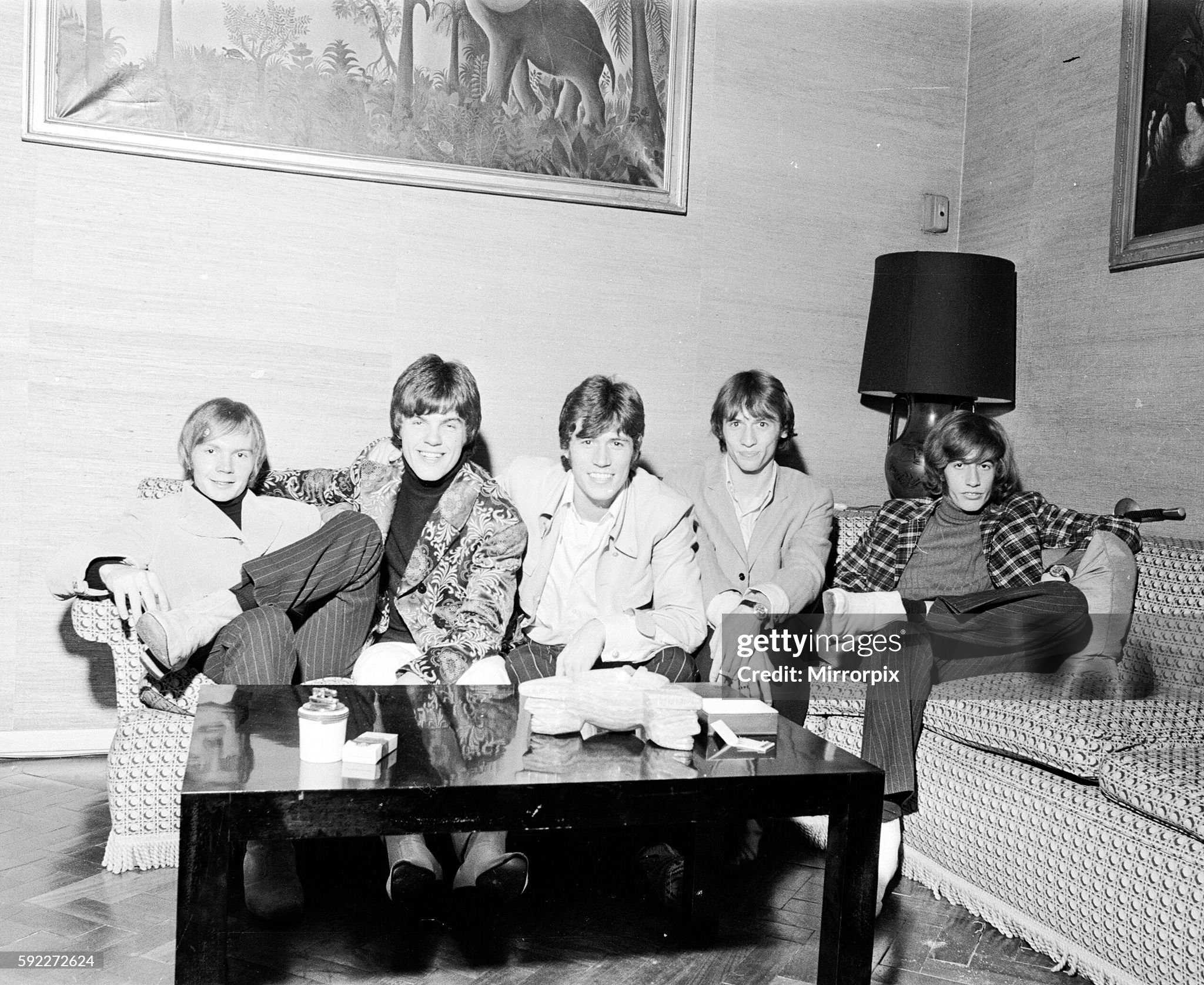
Bee Gees gave Our Love (Don’t Throw It All Away) the sound of a relationship hanging by a thread, where tenderness arrives only after pride has nearly done its damage.
There are songs that arrive like a grand statement, and then there are songs that seem to step quietly into the room, sit beside you, and say the one thing you were not ready to hear. Our Love (Don’t Throw It All Away) belongs to that second kind. In the catalog of the Bee Gees, it is often overshadowed by the towering success of the late 1970s hits, but that is exactly why it deserves to be heard again with fresh attention. This was not one of the group’s big headline singles in the United States. Instead, the Bee Gees included their own version on Spirits Having Flown in 1979, the album that reached No. 1 on the Billboard 200 and also topped the UK album chart. By the time their version appeared, the song had already proved its strength in another form: an earlier recording by their younger brother Andy Gibb had climbed to No. 9 on the Billboard Hot 100 in 1978.
That alone gives the song a fascinating place in the family story of the Gibbs. It was written by Barry Gibb and Blue Weaver, a key musical collaborator in the Bee Gees’ mid-to-late 1970s period. Weaver’s melodic sensitivity and Barry’s instinct for emotional directness met beautifully here. The result was not a dramatic breakup anthem, not a bitter accusation, and not a polished disco declaration. It was something more fragile: a plea. A hand held out in the final moments before love is carelessly lost.
What makes the Bee Gees version so moving is the way it lives between regret and hope. The title itself says everything: Our Love (Don’t Throw It All Away). There is no swagger in it, no attempt to win by force. It is the language of someone who realizes, perhaps a little late, that love is not invincible simply because it once felt strong. The song understands a painful truth that many great adult pop records understand: people rarely destroy love in one dramatic instant. More often, they let it erode through distance, impatience, wounded pride, and things left unsaid.
Musically, the track is a reminder that the Bee Gees were never only about rhythm, fashion, or an era. Yes, Spirits Having Flown came at the height of their commercial power, following the cultural force of Saturday Night Fever. Yes, the group was then closely identified with the sleek, modern pulse of late-1970s pop. But this song reveals another side of them entirely. Its power comes from softness, from breath between phrases, from harmonies that do not rush to impress. The arrangement gives the lyric room to ache. That is one reason the record has lasted so well for listeners who value feeling over spectacle.
There is also something deeply touching about how the song traveled through the Gibb family circle. Andy Gibb’s hit version introduced many listeners to the composition, and deservedly so. It was polished, memorable, and emotionally direct. But when the Bee Gees recorded it themselves, the song seemed to return to its source carrying a little more weariness, a little more reflection. Their version feels less like a youthful appeal and more like a seasoned recognition of what can be lost when love is taken for granted. That subtle shift gives the song its long afterglow.
In lyrical terms, this is one of those songs that says very little and yet says enough. It does not hide behind complicated poetry. Instead, it depends on a universal fear: that something precious can be broken not because it was false, but because it was neglected. That emotional simplicity is one of the reasons the song continues to resonate. Nearly everyone who has lived through the slow cooling of a relationship understands the helplessness inside that title. The words do not sound theatrical. They sound lived in.
Placed within Spirits Having Flown, the song also serves as an important reminder of the album’s emotional range. That record gave the Bee Gees three consecutive U.S. No. 1 singles with Too Much Heaven, Tragedy, and Love You Inside Out. Yet beyond those major chart landmarks, the album held quieter treasures. Our Love (Don’t Throw It All Away) is one of them. It may not have dominated radio in the same way, but it carried a depth that many hit singles never reach. It asks for patience. It rewards memory.
And perhaps that is why the song feels richer with time. What once may have sounded like a lovely album cut now feels like a small masterclass in emotional restraint. The Bee Gees knew how to write for drama, but they also knew how to write for the private hour, the room gone still, the moment after an argument when both people understand what is really at stake. In that space, Our Love (Don’t Throw It All Away) becomes more than a song. It becomes a quiet warning, and a quiet prayer.
For listeners who return to the Bee Gees looking for more than the most famous choruses, this recording is a beautiful place to linger. It shows how much grace they could bring to vulnerability, how carefully they could shape sorrow without turning it into self-pity. And it leaves behind one of the gentlest truths in their songbook: sometimes the most heartbreaking line is not about love ending, but about knowing it did not have to.
