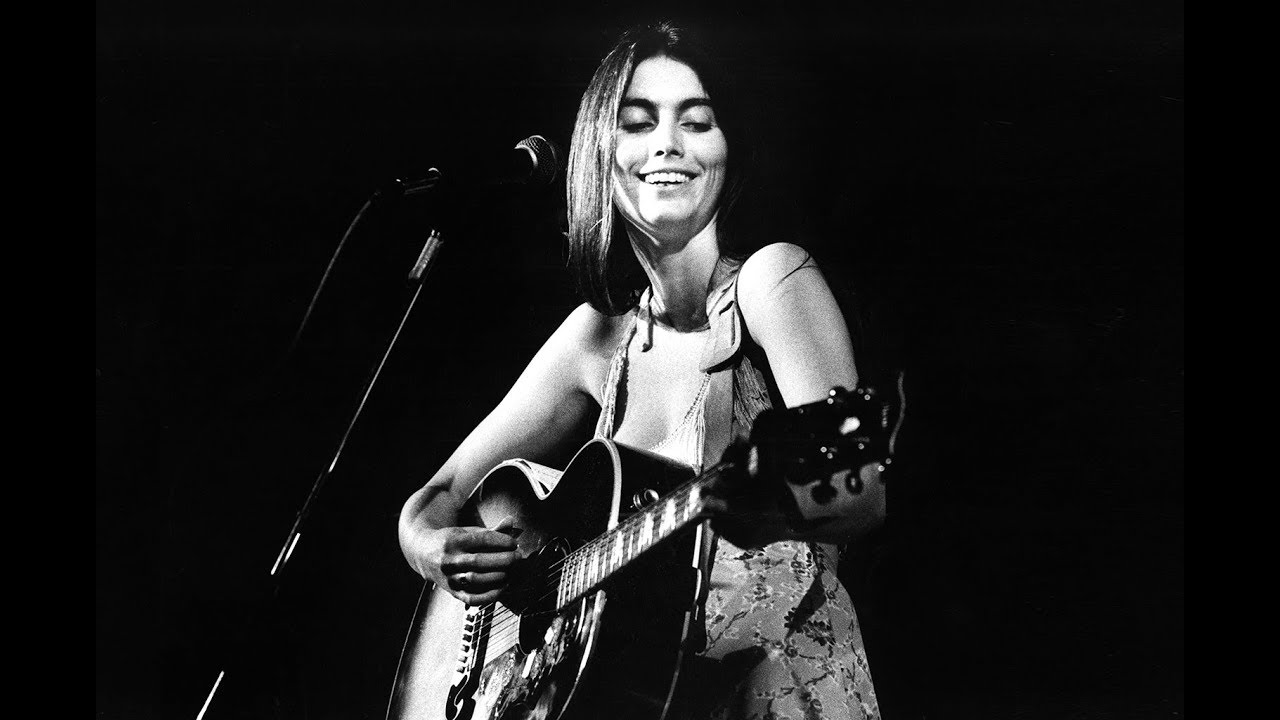
On The Maker, Emmylou Harris did far more than sing a remarkable song. On Wrecking Ball, she and Daniel Lanois turned it into a twilight hymn about longing, distance, and the quiet search for grace.
When Emmylou Harris released Wrecking Ball in 1995, it was immediately clear that this was not just another strong record from a beloved artist. It felt like a reinvention, but a deeply human one. The album reached No. 16 on Billboard’s Top Country Albums and No. 73 on the Billboard 200, and in time it won the Grammy for Best Contemporary Folk Album. Yet numbers only tell part of the story. The deeper truth is that Wrecking Ball opened a new emotional landscape for Harris, and few tracks reveal that transformation more completely than The Maker.
The song itself was not born with Emmylou Harris. Daniel Lanois wrote and first recorded The Maker for his 1989 album Acadie. In his hands, it already carried a mysterious spiritual weight, less a doctrinal statement than a restless conversation with the beyond. It is a song of searching rather than certainty, a song that never sounds interested in tidy answers. That was always part of its power. But when Harris stepped into it on Wrecking Ball, something changed. The song did not lose its mystery. If anything, it became even more moving because her voice gave that mystery a human face.
What makes this version so unforgettable is the setting Lanois built around her. He did not produce The Maker as a conventional country track, nor as straight gospel, nor as simple folk. Instead, he created a vast, dusky atmosphere around Harris’s voice, full of drifting echo, soft-edged guitar textures, and a rhythm that feels more like a pulse than a performance. The arrangement seems to arrive from a long distance away, as if the song were crossing open land just after sunset. That is why it so often feels like a twilight hymn. Its spirituality comes not from grand proclamation, but from space, shadow, and reverent restraint.
And then there is the voice. By 1995, Emmylou Harris was no longer singing from the bright heights of youth alone. Her instrument still held its unmistakable purity, but there was more weather in it now, more memory, more dusk. On The Maker, she does not sound like someone trying to impress the room. She sounds like someone standing still long enough to hear her own soul answer back. That distinction matters. In lesser hands, the song could have become ethereal for its own sake, a wash of atmosphere with no center. Harris keeps it grounded. Her phrasing is patient, almost devotional, and every line feels carried rather than pushed.
The heart of The Maker lies in its yearning. It is spiritual without becoming narrow, sacred without becoming formal. The song’s language reaches toward river, darkness, distance, and the human need to be seen in the eyes of something greater. That phrase alone gives the song its ache. It is not merely about faith as comfort. It is about faith as longing, faith as the place where uncertainty and hope sit side by side. Daniel Lanois understood that from the beginning, but Emmylou Harris brought another dimension to it: tenderness. She made the searching sound lived-in.
This is also why The Maker sits so naturally inside Wrecking Ball as a whole. The album is filled with songs that seem to hover between earthly weariness and spiritual reach. Whether Harris was singing material from Neil Young, Jimi Hendrix, Julie Miller, or Lucinda Williams, the record kept returning to that same haunted borderland where sorrow, beauty, and endurance meet. The Maker may be one of the clearest expressions of that vision. It does not merely fit the album. It helps define it.
There was also something quietly daring about this choice in 1995. Emmylou Harris had long been revered for country-rock elegance, traditional depth, and peerless interpretive grace. But Wrecking Ball showed that reverence for roots did not have to mean artistic stillness. With Lanois as producer, she entered a more atmospheric, modern, and emotionally diffuse sound world without ever losing the soul of her music. That balance is difficult to achieve. Many reinventions feel strategic. This one felt inevitable, as though Harris had arrived at a room in the house of American music that had been waiting for her all along.
Calling The Maker a twilight hymn is not just a pretty phrase. It is an exact description of how this recording moves. A hymn gathers people into a moment of reflection. Twilight blurs the hard lines of the day. Put those together, and you have the essence of this version: a song suspended between light and shadow, public performance and private prayer, earthbound weariness and spiritual lift. Daniel Lanois gave it the air. Emmylou Harris gave it the soul.
That is why this recording continues to linger long after it ends. It does not chase climax. It does not demand attention with force. It simply stays with the listener, like the last color in the sky before night fully arrives. In an era crowded with louder gestures, The Maker on Wrecking Ball offered something rarer: reverence without stiffness, beauty without polish, and a vision of spirituality that felt intimate, weathered, and true.
