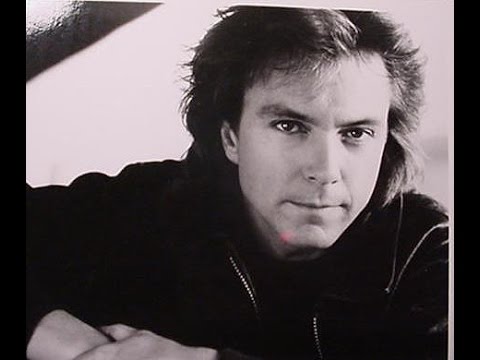
On Somebody to Love, David Cassidy sounded less like a memory from the wall and more like an adult artist asking what survives after the spotlight changes.
Somebody to Love, co-written by David Cassidy with Sue Shifrin, belongs to his 1992 Scotti Brothers release Didn’t You Used to Be…, an album whose title alone seemed to understand the strange burden Cassidy carried. By then, he was no longer simply the bright-faced television star who had helped turn The Partridge Family into a pop-cultural phenomenon. He was an experienced performer, songwriter, stage presence, and survivor of a kind of fame that had arrived early, loudly, and with very little room for adulthood.
That is why Somebody to Love deserves to be heard as more than another track in a familiar catalog. It sits inside a career moment shaped by reassessment. The early 1990s were not especially gentle to former teen idols. Popular music had changed its clothes several times over; the glossy optimism of early-1970s television pop had become a distant memory, and performers associated with that era often had to work harder to be heard without the noise of their own image drowning them out. Cassidy knew that problem better than most. His name could summon screams, posters, lunchboxes, and the massive success of I Think I Love You, but those memories could also become a cage.
The title Didn’t You Used to Be… feels almost like an interruption overheard in public: half-recognition, half-dismissal. It suggests the awkward moment when a person is reduced to a past-tense version of himself. In that context, Somebody to Love takes on a quieter significance. The phrase may be familiar in popular music history, and it has been used by other artists in very different songs, but Cassidy and Shifrin’s composition belongs to a specific adult chapter. It is not about pretending the past never happened. It is about standing in the present with the past still visible and asking to be met there.
The co-writing credit with Sue Shifrin matters, too. Shifrin was a seasoned songwriter and, at the time, Cassidy’s wife, which gives the collaboration a public fact with a private edge. Without inventing a diary behind the lyric, one can still hear the importance of authorship here. This was not Cassidy merely being handed a nostalgic vehicle. He was participating in the shaping of the song, putting his name to material during a phase when his artistic identity needed to be argued for, not assumed. That alone changes the way the recording lands.
Musically, Somebody to Love belongs to an adult pop-rock world far removed from the bubble-bright arrangements that first made Cassidy a household name. The value of that shift is not that it erases the earlier work; it is that it lets another side of him come forward. The voice carries more life experience, and the surrounding style gives that voice a different kind of room. There is less emphasis on teen-idol sparkle and more on directness, craft, and emotional credibility. The song’s power comes from that tension: the public already thinks it knows the singer, yet the singer is still trying to tell the public who he has become.
That tension followed Cassidy for much of his life. His early success was real, not manufactured in the trivial sense critics sometimes imply. The records connected because the performances had warmth, melodic instinct, and a sincere pop appeal. But the scale of his fame made it difficult for later listeners to separate the musician from the machinery around him. Somebody to Love offers a useful corrective because it asks us to listen from the other end of the story. Instead of beginning with the frenzy and judging everything afterward as an echo, it begins with the adult artist and lets the earlier fame become part of the emotional background.
In that way, the song fits beautifully inside a broader reconsideration of Cassidy’s career. He was not only a symbol of youthful celebrity; he was also a working singer who kept returning to performance, theater, recording, and songwriting long after the first wave of hysteria had passed. The 1992 Scotti Brothers release captures him in a complicated space, neither fully detached from his past nor willing to be trapped by it. Somebody to Love becomes a small but telling example of that struggle: a song about connection, delivered by a man whose relationship with the public had always been unusually intense.
What makes the track linger is not some grand reinvention claim. It is the modest honesty of hearing Cassidy inside a more mature frame, working with a collaborator close to his life, and refusing to let the old photograph be the final word. The question suggested by Didn’t You Used to Be… can sound cruel if left unanswered. Somebody to Love answers it not with spectacle, but with presence. Yes, he used to be that boy on the screen, that voice on the radio, that face surrounded by impossible attention. But he was also still here, still singing, still writing, still asking for the simple dignity of being heard in the present tense.
