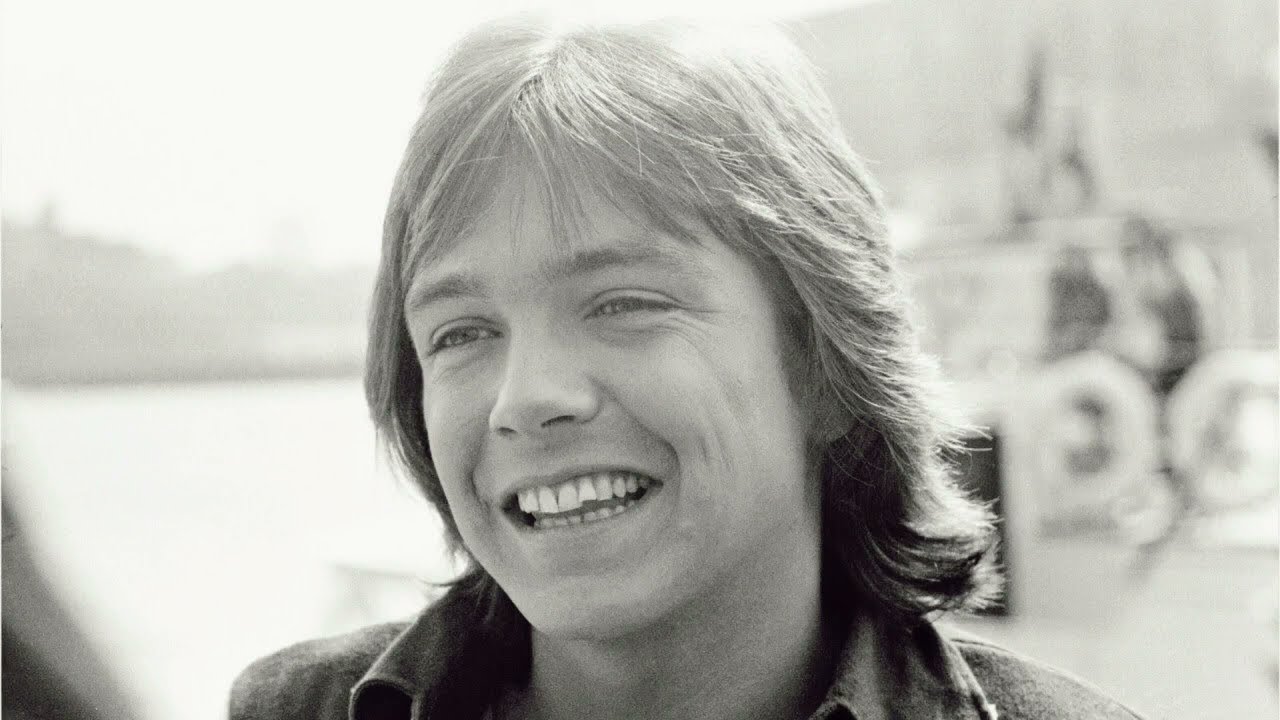
By the time The Partridge Family reached It’s One of Those Nights (Yes Love), the sparkle was still there, but the voice at the center had begun to sound older, steadier, and quietly more knowing.
Released in 1972 and associated with the Shopping Bag era, It’s One of Those Nights (Yes Love) arrived at an interesting point in the story of The Partridge Family. The group was still tied to the bright television image that had made them a pop phenomenon, but by then the sound around them had shifted. The early rush of bubblegum innocence was giving way to something smoother and slightly more adult, and that change can be heard most clearly in David Cassidy’s vocal. This is one of those records where the arrangement remains polished and radio-friendly, yet the singing tells a more complicated story. Cassidy no longer sounds like a boy caught in the speed of sudden fame. He sounds like a young man learning how to hold a song instead of simply racing through it.
That matters because The Partridge Family had always lived in a curious space between fiction and reality. The television series gave America a cheerful family band, but the records had to do more than extend a storyline. They had to compete on the radio. On the strongest singles, that happened because there was a genuine pop instinct at work: hooks, harmony, discipline, and a lead voice that could carry sweetness without becoming weightless. By 1972, though, there was another dimension in Cassidy’s singing. On It’s One of Those Nights (Yes Love), he leans into the phrasing with more patience. He leaves just enough room around the words for them to feel felt, not merely delivered.
The song itself is built with the kind of clean, accessible craft that defined so much early-70s pop. It moves lightly, but it does not feel flimsy. The rhythm has an easy forward glide, the backing vocals answer and reinforce the title phrase, and the production keeps everything bright without turning brittle. What gives it staying power is the balance between surface charm and vocal control. Cassidy does not oversell the romantic mood. He does something more effective. He lets the melody rise naturally, lets the softness sit in the line, and trusts the listener to hear the emotion without being instructed how to feel it.
That is where the idea of vocal maturity becomes especially important. A younger performance might have treated the song as pure exuberance, all sparkle and open-throated assurance. Cassidy, instead, gives it contour. There is a touch more grain in the voice than on the earliest hits, a little more calm in the upper register, and a sense that he understands how to shade a lyric rather than simply beam it outward. It is not a dramatic reinvention, and that is exactly why it is interesting. Pop growth often happens in small increments. A held syllable, a more relaxed entrance, a cleaner sense of timing between lead and chorus, and suddenly the singer seems to have stepped into a different emotional light.
Placed within Shopping Bag, the track also reflects the broader mood of that period in the group’s catalog. The title of the album suggests bright packaging and consumer-era fun, but some of the music from this phase hints at transition. The world was changing, the teen-pop climate was changing, and so were the expectations placed on young stars who had come to fame almost overnight. It’s One of Those Nights (Yes Love) does not announce that transition with heaviness. It simply carries it in the texture of the performance. You hear a singer still working within the polished architecture of commercial pop, but doing so with greater nuance than the format usually receives credit for.
There is also something revealing in the emotional scale of the record. It does not aim for grand confession. It stays smaller than that, and in staying smaller, it becomes more believable. The pleasure of the song comes from its restraint. The chorus lifts, the arrangement gleams, and the vocal remains centered. That combination gives the record a quiet durability. It reminds us that maturity in pop is not always about darker themes or louder declarations. Sometimes it is simply the difference between sounding eager and sounding aware.
For listeners returning to The Partridge Family after many years, this track can come as a surprise. Not because it abandons the group’s familiar appeal, but because it refines it. The sweetness is still present, the melodic ease is still intact, yet the center of gravity has shifted. In 1972, on a song that might seem light at first glance, David Cassidy offered one of the clearest signs that his voice was maturing faster than the packaging around him. That is why It’s One of Those Nights (Yes Love) still lingers. Beneath the bright finish, it catches a performer standing between teen-pop glow and adult poise, and for a few minutes, you can hear both at once.
