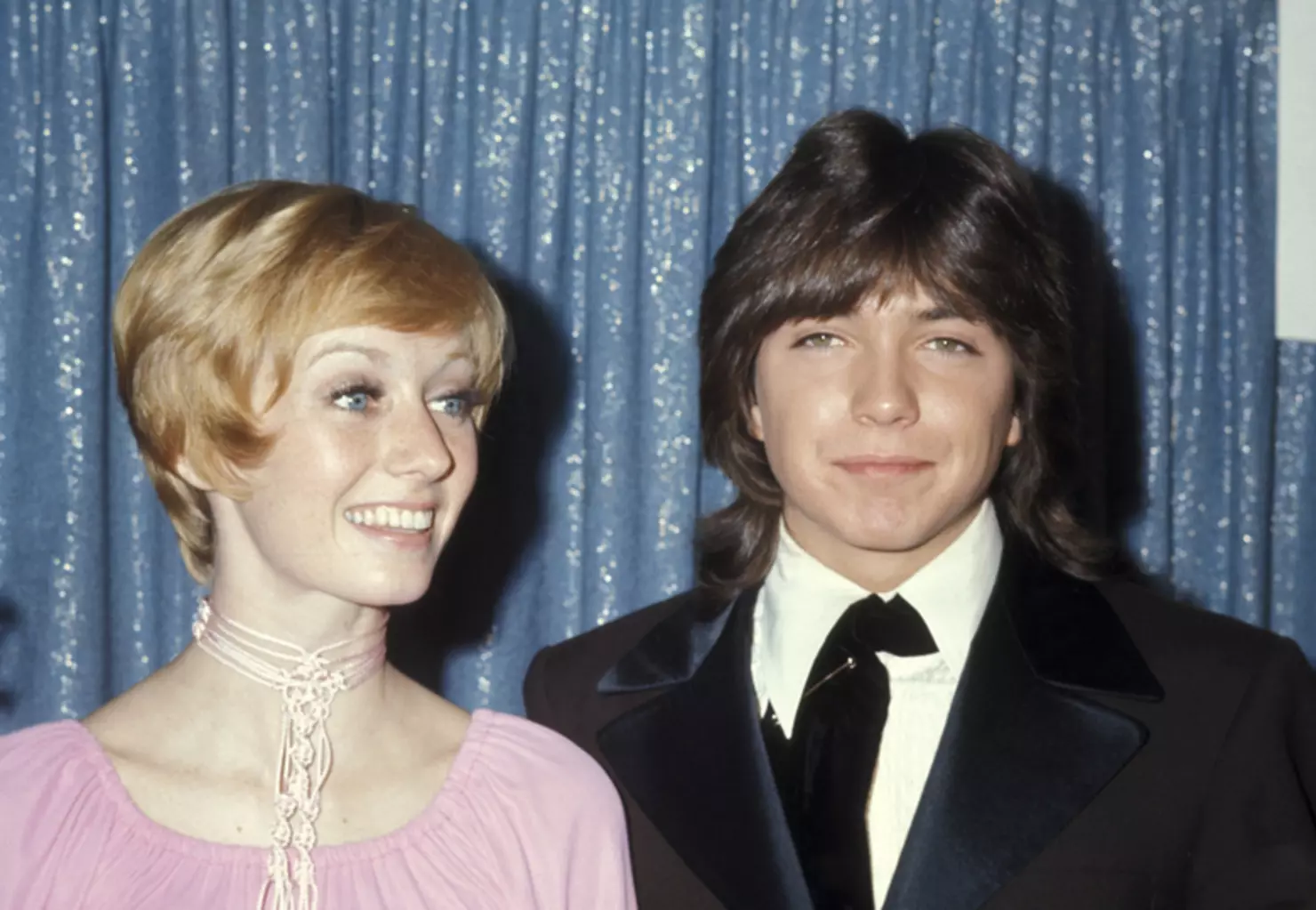
Hold On Me captures David Cassidy in a softer, more human light—far from the screaming headlines, close to the fragile wishes that shaped Dreams Are Nuthin’ More Than Wishes.
There is something especially moving about returning to a song like “Hold On Me” now, with time behind us and the noise of old pop hysteria long since settled. Released in 1973 as part of David Cassidy‘s album Dreams Are Nuthin’ More Than Wishes, the track belongs to a moment when Cassidy was trying to live inside two worlds at once: the public world that knew him as a dazzling young star, and the private artistic world where feeling mattered more than image. That tension gives the song its lasting pull.
One important fact should be placed near the top. “Hold On Me” was not one of Cassidy’s major chart singles, so it does not carry a separate headline peak on the major pop charts in the way some of his better-known releases did. Its chart story is really the story of the 1973 album Dreams Are Nuthin’ More Than Wishes and of Cassidy’s extraordinary commercial visibility during that era. In other words, this is not remembered because it dominated radio in the obvious way; it endures because it reveals something quieter, and perhaps more truthful, in his catalog.
That is part of what makes the song so rewarding. The great hits often arrive already wrapped in memory: the chorus everyone knows, the chart triumph, the television appearances, the rush of instant recognition. But album tracks like “Hold On Me” ask more of the listener. They do not burst through the door. They remain in the room. They gather meaning slowly. And with David Cassidy, that slower intimacy matters, because his fame was so large, so sudden, and so often reduced to posters, magazine covers, and the roar of audiences who saw only the surface.
By 1973, Cassidy was already carrying the weight of enormous visibility through The Partridge Family and his solo career. Yet Dreams Are Nuthin’ More Than Wishes suggested a more reflective side of him, even in its title. It is a beautiful, almost aching phrase: dreams are not grand declarations here, but wishes—private, vulnerable, hopeful things. Set beside that album title, “Hold On Me” feels like a confession from inside the storm. The song lives in the emotional territory of attachment, uncertainty, and longing. It has the sound of someone trying to understand how deeply another person has entered his inner life.
What makes the performance so affecting is its restraint. Cassidy does not need to oversing material like this. The power comes from the tone: tender, searching, a little exposed. The arrangement carries the polished warmth of early-1970s pop, but beneath that smooth surface there is a sincere ache. Listening now, one hears a young artist reaching beyond the machinery of teen stardom toward something more durable. Not a reinvention yet, perhaps, but a glimpse of one.
That may be why “Hold On Me” feels different from the songs that made the loudest public impact. It does not ask to be treated as a pop event. It asks to be heard as a mood, almost as a private page left open. In that sense, it tells us something important about David Cassidy himself. For all the frenzy surrounding him in those years, there was always a voice in his recordings that wanted to be taken seriously—not only admired, not only adored, but understood. Songs like this let that desire come through.
The emotional meaning of “Hold On Me” rests in that contrast between vulnerability and polish. It speaks to the old human truth that affection can feel both comforting and unsettling. To be held emotionally by someone else can be a blessing, but it can also leave a person exposed, uncertain, dependent on a feeling he cannot fully control. Cassidy’s performance seems to understand that contradiction. He sings not as a distant idol, but as someone caught inside the confusion of tenderness.
And perhaps that is why the song has aged so gracefully. The louder markers of fame belong to their era, but emotional honesty travels well across the decades. When people return to deep cuts from artists once treated mainly as pop phenomena, they often discover the same thing: the less celebrated songs sometimes contain the clearest portrait. In “Hold On Me”, we hear not just the star of 1973, but the young man trying to make sense of closeness, expectation, and the quiet cost of being watched by the world.
Within the larger frame of Dreams Are Nuthin’ More Than Wishes, the song also deepens the album’s title theme. Wishes are fragile things. They are not declarations of certainty; they are hopes whispered against disappointment. “Hold On Me” fits that emotional landscape beautifully. It is gentle without being slight, romantic without becoming sugary, and thoughtful in a way that rewards listeners who come to it later in life, after the posters are gone and what remains is the voice.
In the end, that may be the best way to remember it. Not as the most famous David Cassidy recording, and not as the song that conquered the charts, but as one of those revealing album moments that let us hear the distance between celebrity and sincerity. That distance can be heartbreaking. It can also be where the real artist lives. On “Hold On Me”, from Dreams Are Nuthin’ More Than Wishes, that artist is suddenly very close.
