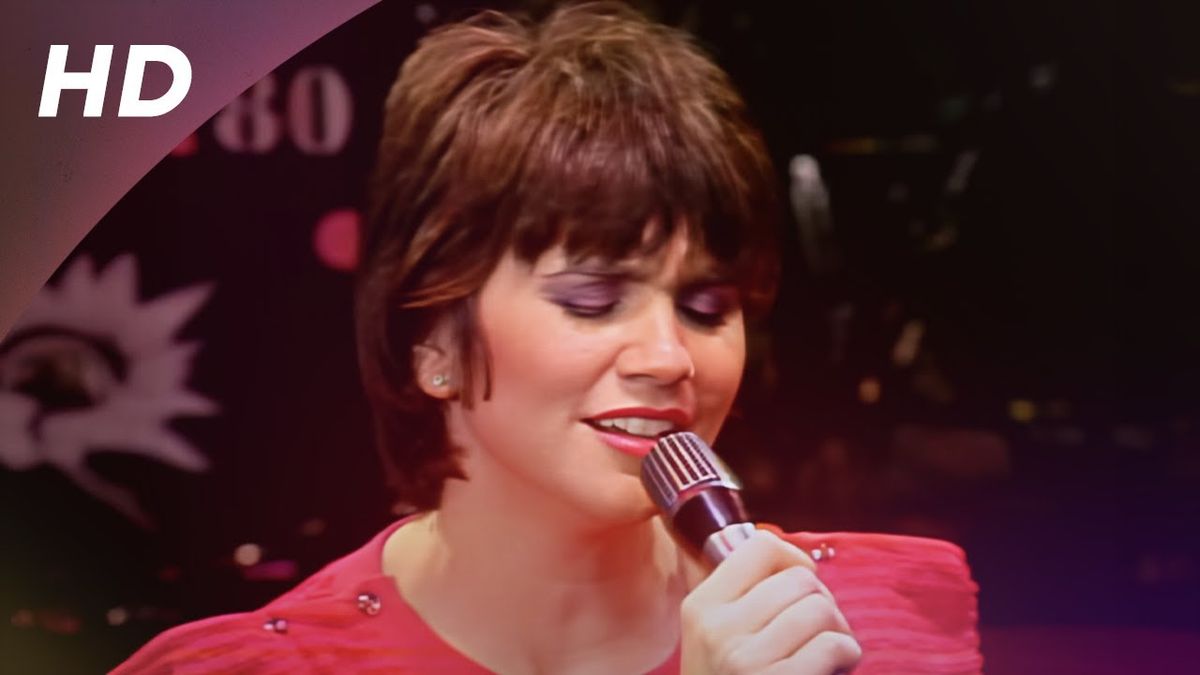
On Mad Love, Linda Ronstadt did not borrow new wave as a costume; she used Talking in the Dark to make longing sound sharper, faster, and more exposed.
Linda Ronstadt recorded her cover of Elvis Costello’s Talking in the Dark for the 1980 album Mad Love, a record that caught her at a fascinating point of motion. By then, Ronstadt was already one of the most admired interpretive singers in American popular music, known for moving across country-rock, folk, oldies, ballads, and rock with a voice that could make borrowed material feel personally occupied. But Mad Love sounded different. It was leaner, quicker on its feet, more wired to the nervous energy coming from late-1970s and early-1980s guitar pop. Bringing an Elvis Costello song into that frame was not simply a fashionable choice. It was a signal that Ronstadt was listening closely to the new language forming around her.
The album, produced by Peter Asher, arrived after a run of enormous success that included records such as Heart Like a Wheel, Simple Dreams, and Living in the USA. Ronstadt did not need to prove that she could sing. That had long been settled. What made Mad Love intriguing was the question of what kind of singer she could become when the arrangements tightened, the guitars grew brighter, and the emotional temperature moved from open-hearted confession to quick, urban restlessness. Talking in the Dark, written by Elvis Costello, gave her one of the album’s most concentrated tests: a compact song that does not ask for grand display, only precision, bite, and the ability to suggest feeling without spelling everything out.
Costello’s writing often thrives on compression. His songs can feel as if a full emotional argument has been folded into a few sharp turns of phrase. In Ronstadt’s hands, Talking in the Dark becomes less a replica of his edge than a translation of it. She does not imitate his clipped vocal personality. Instead, she brings her own clarity to the song’s tension. Her voice, famously strong and rounded, moves through the new wave texture with unexpected discipline. She trims the sweetness without losing warmth. She lets the song stay narrow and alert, as if the whole thing is happening in a room where something important is being said too quietly.
That contrast is part of what still makes the track interesting. Ronstadt’s gift had often been associated with emotional openness: the big ache, the clean high note, the chorus that opens like a window. Talking in the Dark asks for a different kind of power. The drama is not in the size of the vocal but in the restraint. The arrangement keeps the song moving with a taut pop-rock pulse, leaving little room for decorative lingering. Ronstadt responds by singing with a directness that feels almost architectural. Every line has shape. Every phrase seems placed rather than poured out.
On Mad Love, she covered more than one Costello-associated song, including Girls Talk and Party Girl, and the album also drew from the Los Angeles new wave scene through material connected to The Cretones. That mix mattered. It placed Ronstadt, a star often linked with the Laurel Canyon and country-rock worlds, in conversation with younger, sharper-edged songwriting. The result was not pure punk, not pure new wave, and not a rejection of her past. It was something more revealing: a mainstream artist testing how far her interpretive instincts could travel without losing their center.
That is why Talking in the Dark works as more than a curiosity in her catalog. It shows Ronstadt treating new wave not as a surface style but as an emotional discipline. The song’s nervous rhythm and concise structure change the way her voice lands. Instead of filling the space with grandeur, she respects the pressure inside the arrangement. She sounds alert, adult, slightly guarded, and fully present. It is a reminder that interpretive singing is not only about making a song beautiful. Sometimes it is about understanding the shape of someone else’s tension and finding your own way to stand inside it.
Heard now, Talking in the Dark carries the charge of an artist refusing to remain still. Ronstadt had built her reputation partly by recognizing strong songs before they settled into fixed public memory. On Mad Love, she reached toward contemporary rock not to chase novelty, but to keep her own music awake. The Elvis Costello connection gives the track its spark, but Ronstadt gives it its human balance: the impatience, the control, the flicker of vulnerability behind the clean attack.
It remains one of those album cuts that can change the way a listener hears a familiar singer. Not because it overturns everything known about Linda Ronstadt, but because it confirms something deeper about her artistry. She did not need every song to flatter the most obvious parts of her voice. She could step into a tighter room, under a brighter and less forgiving light, and still make the song breathe. In Talking in the Dark, the darkness is not dramatic scenery. It is the small, charged space where style, risk, and feeling meet.
