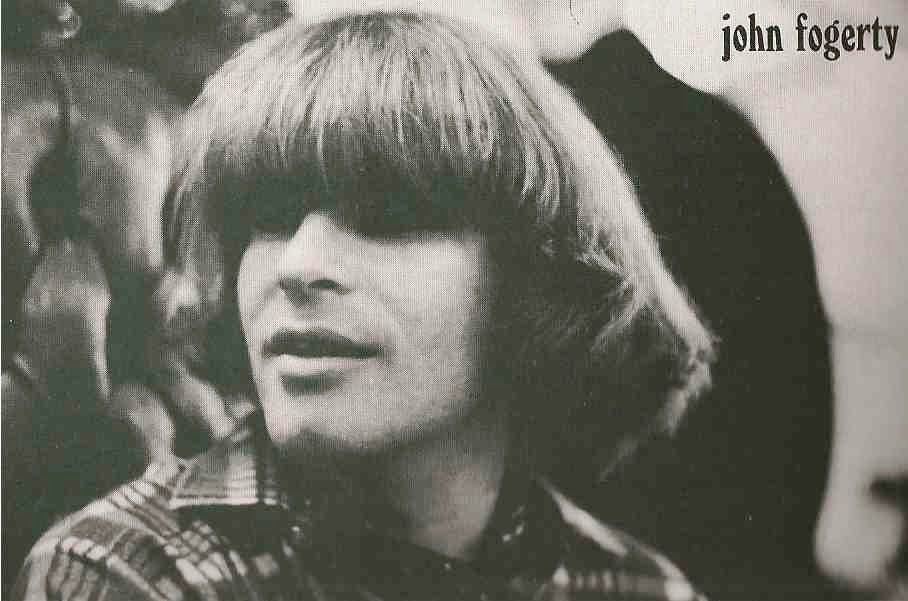
On Bad Bad Boy, John Fogerty turns a playful strut into a roots tribute, bringing the snap and swagger of 1950s rock into the hard-won confidence of Blue Moon Swamp.
Released in 1997 on Blue Moon Swamp, John Fogerty’s Bad Bad Boy belongs to one of the most important comeback chapters of his solo career. The album arrived after a long gap between new studio records, following Eye of the Zombie in 1986, and it would go on to win the Grammy Award for Best Rock Album. But beyond awards and timelines, Blue Moon Swamp mattered because it found Fogerty speaking again in the musical languages that had shaped him most deeply: blues, country, swamp rhythm, rockabilly, and the bright, rough-edged joy of early rock and roll.
Bad Bad Boy is one of the album’s most direct love letters to that older fire. It does not try to disguise its affection for classic 1950s styling. Instead, it leans into the compact pleasures of that era: the clipped phrase, the bouncing pulse, the wink in the title, the feeling that a song can be mischievous without becoming heavy. Fogerty had long understood how to make roots music feel alive rather than preserved behind glass, and here he treats the past not as a museum but as a working engine.
That distinction is important. By 1997, rock music had already passed through punk, arena excess, new wave, heavy metal, grunge, and alternative radio. A return to the spirit of early rock and roll could easily have sounded like costume work. Fogerty avoids that trap because the sound is part of his musical bloodstream. Long before Blue Moon Swamp, his songs with Creedence Clearwater Revival had carried the sensation of older American music moving through a modern electric band. He wrote in the late 1960s as if the river, the roadside bar, the gospel shout, and the dancehall backbeat were still within reach. On Bad Bad Boy, that same instinct comes through in a lighter, more playful form.
The title itself carries the grin of early rock and roll. A “bad boy” in this world is not necessarily a villain; he is a figure of motion, rhythm, nerve, and youthful trouble. The phrase belongs to the same broad emotional neighborhood as the rebels, dancers, fast cars, and Friday-night characters who populated so many early rock records. Fogerty does not have to over-explain him. He simply gives the phrase enough musical bounce for the listener to recognize the attitude immediately.
What makes the track feel affectionate rather than merely imitative is Fogerty’s sense of proportion. Early rock and roll often worked because it knew how little it needed. A tough riff, a sharp beat, a vocal with bite, and a lyric that left room for the body to respond could be enough. Bad Bad Boy honors that economy. It is not built to overwhelm; it is built to move. The song’s pleasure comes from the way it recalls a time when rock was still close to rhythm and blues, country swing, and rockabilly snap, before the genre became a monument to itself.
Within Blue Moon Swamp, the track also helps reveal the album’s larger design. Fogerty was not simply returning after years away with a set of polished songs. He was mapping the roots of his own musical imagination. Other songs on the album move through different corners of Americana, but Bad Bad Boy brings the early rock-and-roll impulse to the surface with particular clarity. It is the sound of an artist acknowledging one of his first sparks and finding that it still throws heat.
There is a quiet courage in that kind of return. Fogerty could have chased the dominant production trends of the late 1990s. He could have tried to modernize himself through fashionable textures. Instead, he made an album that trusted older forms because he knew how much life remained inside them. Bad Bad Boy makes that trust audible. It says that the short, swinging, mischievous rock-and-roll record still had something to say when played with conviction.
He does not treat 1950s rock as innocence lost or as a sepia memory. He treats it as a living style, full of pulse and personality. That is why the song remains so easy to enjoy: it does not ask the listener to admire it from a distance. It invites movement. It invites the old reflex of tapping a foot before the mind has finished naming the influence. In that sense, Bad Bad Boy is less a backward glance than a reminder of what Fogerty always understood — that roots music survives when someone loves it enough to make it breathe again.
Heard today, the track feels like a small but revealing key to Blue Moon Swamp. It shows Fogerty not as a man trapped by his past, but as a craftsman returning to the source with a grin, a guitar, and a rhythm sturdy enough to carry memory forward. The boy in the song may be “bad,” but the feeling behind it is generous: a salute to the first flash of rock and roll, and to the enduring pleasure of a record that knows exactly where its heartbeat comes from.
