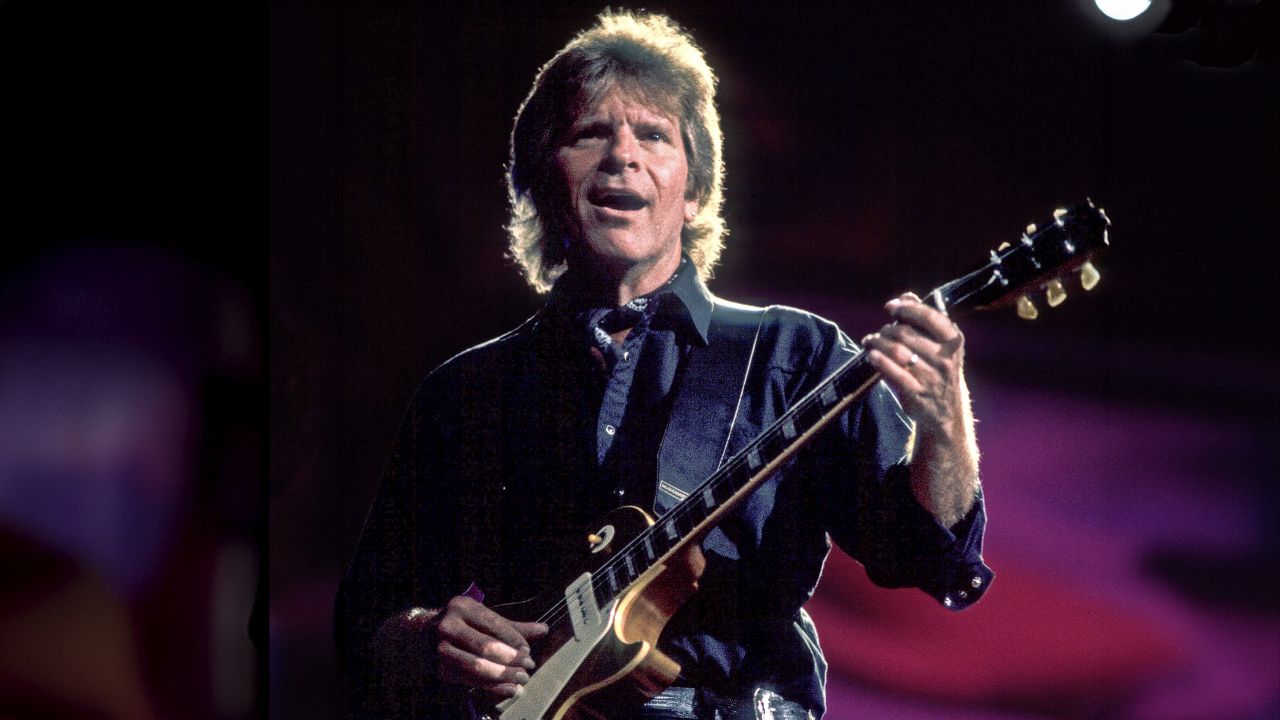
Before Hoodoo disappeared into rock-and-roll rumor, John Fogerty left one sharp, uneasy clue on the flip side of a 1976 single.
In 1976, John Fogerty released “You Got the Magic” on Asylum Records, with “Evil Thing” tucked away as its B-side. On paper, it was just another single from a former Creedence Clearwater Revival frontman trying to move through the difficult middle years of a solo career. In hindsight, it feels more like a fragment from a door that was quickly shut. Both songs were connected to Hoodoo, the solo album Fogerty recorded after his 1975 self-titled LP, only to have the project famously scrapped before release.
That makes “Evil Thing” more than a footnote. It is one of the few officially released pieces from a record that has lived for decades in the strange space between fact and folklore. Fans know the broad outline: Fogerty had already carried an enormous musical identity out of Creedence, a band whose swampy, concise, American-sounding rock had made him one of the most recognizable voices and writers of the late 1960s and early 1970s. But the years after CCR were not simple. The sound that had once seemed effortless now came wrapped in expectation, legal tension, label pressure, and the impossible question of how an artist follows a voice that the public thinks it already owns.
“Evil Thing” carries some of that pressure in its very existence. As a B-side, it did not arrive with the ceremony of an album centerpiece. It was not framed as a grand statement. Yet because Hoodoo was never released, the track became a rare official glimpse of a chapter that Fogerty ultimately chose not to present to the world. The song’s title alone suggests a darker edge, and its placement beside “You Got the Magic” creates a telling contrast: magic on one side, evil on the other, possibility and unease sharing the same small piece of vinyl.
The abandoned Hoodoo album has long fascinated listeners because it marks a period when Fogerty’s confidence as a hitmaker seemed to collide with his own demanding standards. After years of being the driving creative force behind Creedence, he was not simply trying to release songs; he was trying to decide what deserved to stand under his name. The single did not become a major commercial turning point, and the album was pulled from the release path. Accounts around the project have often noted that Fogerty and Asylum ultimately decided not to issue it, and the unreleased material later circulated unofficially among collectors in imperfect forms. That shadowy afterlife only deepened the curiosity.
What makes “Evil Thing” compelling is not that it reveals everything. It does the opposite. It reveals just enough to make the missing album feel real. You can hear the ghost of a working artist inside it: not the mythic swamp-rock figure frozen in Creedence memory, but a songwriter in motion, testing sounds, chasing instincts, trying to find a way forward after the machinery of fame had become heavy. B-sides often have a special honesty because they are not asked to carry the whole public image. They can sound a little stranger, rougher, more private. In the case of “Evil Thing”, that modest placement became part of its lasting charge.
Fogerty would eventually return in a major way with Centerfield in 1985, an album that reintroduced him to a broad audience and restored his presence as a solo artist. But the silence between the shelved Hoodoo project and that comeback gave songs like “Evil Thing” an unusual weight. They became markers in the gap, proof that the story had not simply stopped, even if the official release schedule did. The track sits at the edge of a long pause, where ambition, doubt, memory, and control all seem to meet.
Today, hearing John Fogerty’s “Evil Thing” means listening with two histories at once. There is the song itself, brief and concrete, pressed onto the B-side of a 1976 single. Then there is the larger absence around it: Hoodoo, the album that nearly entered the catalog but instead became one of the great unresolved corners of Fogerty’s career. That absence changes the sound. It makes every officially released trace feel more valuable, not because it solves the mystery, but because it preserves the feeling of a road almost taken.
Some records become famous because everyone heard them. Others endure because they vanished at the wrong moment and left behind only a few pieces for listeners to hold. “Evil Thing” belongs to that second kind of history: a B-side with the gravity of an unfinished chapter, still asking what might have happened if Hoodoo had been allowed to speak.
