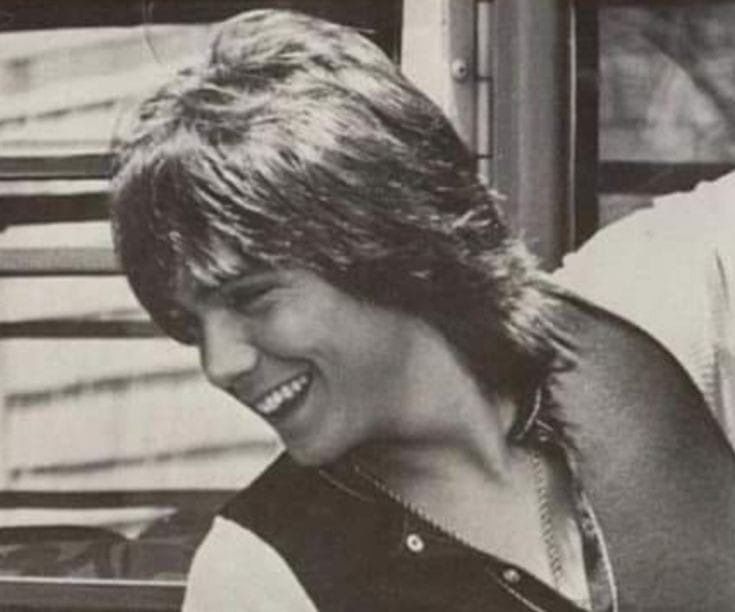
In It’s Over, David Cassidy sounded less like a former idol than an artist measuring what remained after the applause changed shape.
It’s Over appeared as an album track on David Cassidy’s 1992 album Didn’t You Used to Be…, and its authorship matters: the song was co-written by Cassidy with Ken Gold. That detail gives the track a different weight from a borrowed ballad or a polished comeback single. It places Cassidy inside the material, not merely in front of it, and it helps explain why the song can feel like more than a relationship ending. Heard in the context of the album, It’s Over becomes part of a larger career reassessment, one that asks listeners to set aside the old photograph long enough to hear the adult singer standing in its shadow.
By 1992, Cassidy had already lived several public lives. To many, he would always be connected to The Partridge Family and the rush of early-1970s pop fame that turned I Think I Love You into a defining cultural memory. That kind of fame can be generous at first, then strangely unforgiving. It preserves youth, but it also traps the artist inside it. Cassidy’s later recordings often had to compete not only with changing musical tastes, but with the public’s fixed idea of who he had been. The title Didn’t You Used to Be… carries that tension almost too plainly: the unfinished question, the half-recognition, the faint cruelty of being remembered before being heard.
That is why It’s Over lands with more force than its modest placement in the track list might suggest. It is not remembered as the obvious headline of Cassidy’s career, and it was not the kind of song that reshaped the pop landscape. Its power is quieter. It sits in the in-between space where album tracks often reveal what singles cannot: the emotional temperature of an artist at a particular moment. In this case, the moment is early-1990s adult pop, with its polished surfaces, controlled dynamics, and preference for confession shaped by craft rather than theatrical collapse. Cassidy works within that frame, but the resonance comes from the life the listener brings to his voice.
The title phrase itself is stark. It’s Over can be the final sentence of a love affair, the last word after too many explanations, or the point where denial finally loses its grip. But in Cassidy’s case, the words also invite a second reading. They seem to hover near the career he had been assigned by memory: the idea that the serious artist was already finished because the teen idol had been so visible. The song does not need to announce that meaning. It simply allows it to gather around the performance. A breakup lyric, in his hands, can sound like a man taking inventory of endings he did not entirely choose.
Co-writing the song with Ken Gold gives that reading additional texture. Songs are not diaries, and it would be careless to treat every line as literal autobiography. Still, authorship changes the listening experience. Cassidy was not just interpreting someone else’s grief from a distance; he had a hand in shaping the emotional language. The result is a track that feels connected to the album’s broader question of identity. Who gets to decide when an artist is finished? The charts? The audience’s memory? The old posters? Or can a singer return, not by pretending the past never happened, but by singing through it with a more complicated voice?
There is an appealing restraint in the way It’s Over asks to be heard. It does not try to bulldoze the listener with grandeur. Its early-1990s production setting gives the song a clean, radio-shaped frame, but Cassidy’s value is in the human scale of the vocal. He had a voice that could carry brightness, but here the interest is in what happens when brightness is tempered by experience. The phrasing suggests someone who knows that endings rarely arrive as one dramatic explosion. More often, they arrive as recognition: a door that has already closed, a room that has already emptied, a sentence that only confirms what the heart has been avoiding.
That restraint matters because Cassidy’s story has often been told in extremes: sudden fame, overwhelming attention, the burden of being adored too young, and later attempts to be taken seriously beyond the image that made him famous. It’s Over offers a smaller, more revealing point of entry. It does not ask listeners to forget the pop phenomenon. It asks them to hear the man who survived being reduced to one. On Didn’t You Used to Be…, the very title of the album acknowledges how the world can turn a human being into a before-and-after joke. Within that frame, It’s Over sounds less like defeat than a refusal to remain frozen in someone else’s version of the past.
Career reassessment often begins with the songs that were not overplayed. The familiar hits can become sealed rooms, preserved by repetition. Album tracks leave more air around them. They allow a listener to return without the heavy furniture of nostalgia already arranged. In It’s Over, Cassidy does not have to compete with the glare of his most famous era. He can be heard in a more adult register, not because the song rejects pop craft, but because it uses that craft to make space for ambiguity. The ending in the lyric is clear; the meaning around it is not. That is what keeps the track alive as a point of rediscovery.
Listening now, the most moving thing about It’s Over may be how unforced it feels as a document of transition. It does not demand vindication. It does not beg to be understood. It simply stands there, a 1992 album track co-written with Ken Gold, carrying the weight of an artist who had spent much of his life being recognized before being reconsidered. The phrase It’s Over might close a chapter, but in Cassidy’s catalog it also opens a question: what if the music made after the screams faded is where the fuller story begins?
