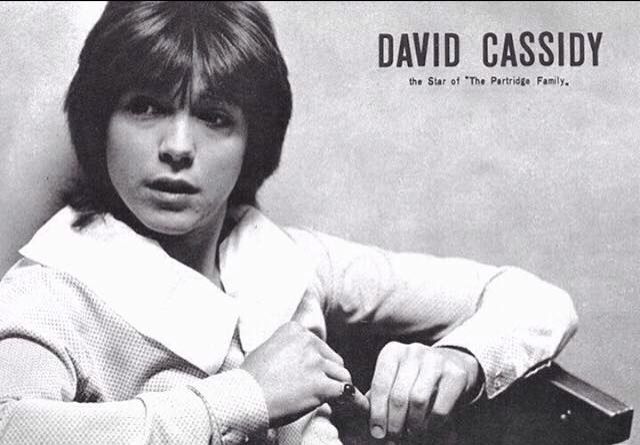
On You Were the One, David Cassidy did not run from the echo of his early fame; he let it return as part of a quieter, grown-up comeback.
David Cassidy released Old Trick New Dog in 1998 as an independent album, and one of its most meaningful songs, You Were the One, carried a link back to the very beginning of the fame that had once overwhelmed him. The song was notably co-written with Tony Romeo, the songwriter closely associated with Cassidy’s 1970s breakthrough through The Partridge Family era and, most famously, the writer of I Think I Love You. That connection gives You Were the One a special emotional charge: it is not simply a later-career track by a former teen idol, but a conversation between two different points in the same life.
By 1998, Cassidy’s public story had already become complicated. To millions, he remained fixed in the bright television colors of The Partridge Family, the young singer whose face was on bedroom walls and whose voice turned scripted pop into a real cultural memory. But the life of a teen idol can become a kind of beautiful trap. The applause is enormous, yet it often freezes the artist at the age when the audience first loved him. Cassidy spent much of his adult career trying to be heard beyond that frame: as a stage performer, a recording artist, a musician with his own instincts, and a man who understood both the blessing and the cost of early adoration.
That is what makes Old Trick New Dog such an evocative title. It sounds playful on the surface, almost self-mocking, but beneath it sits a sharper idea. Cassidy was acknowledging the past without surrendering to it. He knew that the old image would always follow him, yet the album presented him as an artist still in motion, still willing to write, sing, and test what his voice could mean after the screams had faded into memory. Independent releases often carry that kind of vulnerability. Without the machinery of a major pop moment pressing everything into spectacle, a song can feel more personal, more direct, and sometimes more revealing.
You Were the One benefits from that atmosphere. Heard in the context of Old Trick New Dog, the song feels less like an attempt to chase a vanished chart era and more like a late conversation with the melody-driven pop craft that had shaped Cassidy’s early years. The presence of Tony Romeo matters because it brings history into the room. Romeo’s earlier work helped place Cassidy’s voice at the center of one of the most recognizable pop phenomena of the early 1970s. When their names appear together again on a 1998 song, the collaboration carries an unavoidable sense of return, but not a simple one.
In the 1970s, the Cassidy-Romeo connection belonged to a world of television soundstages, polished hooks, fan magazines, and radio-ready immediacy. By the time of You Were the One, the emotional weather had changed. Cassidy was no longer the untouched young face of a mass-produced dream. He was an adult performer with decades behind him, a singer whose voice inevitably held experience. That shift changes how a love song lands. The title itself, You Were the One, suggests memory rather than first discovery. It carries the feeling of looking back, of naming someone or something after the fact, with the knowledge that life has already moved through joy, confusion, distance, and consequence.
There is a quiet poignancy in hearing Cassidy work within that kind of frame. His greatest commercial fame had been tied to songs that often sounded immediate and innocent, songs built for the thrilling speed of young feeling. A later recording like You Were the One asks for a different kind of attention. It is not about the frenzy around the singer. It is about the singer still standing there after the frenzy, using familiar pop language to reach for something steadier. The comeback is not presented as a grand reinvention or a denial of the past. It is more modest, and perhaps more moving: the same artist, older now, taking an old musical relationship and finding out whether it can still speak.
That is why the Romeo credit gives the track its deeper resonance. It is easy to treat pop collaborators as footnotes, but songwriting partnerships and recurring creative names often form the invisible architecture of a career. For Cassidy, whose early fame was filtered through television, producers, writers, and a carefully managed public image, returning to a name like Tony Romeo on an independent late-1990s project quietly complicates the story. It suggests continuity rather than escape. It shows an artist not pretending the past did not happen, but choosing which parts of it were still worth carrying forward.
Old Trick New Dog did not need to compete with the scale of Cassidy’s early 1970s phenomenon to matter. In fact, its importance lies partly in its smaller frame. It belongs to the kind of comeback story that does not arrive with fireworks, but with persistence. A singer once surrounded by impossible public expectation returns with a song that reconnects him to one of the writers from the era that made him famous. The glamour is quieter, the stakes are more human, and the reward is not domination but recognition: the recognition that a career is not only made of peaks, but of returns, revisions, and the courage to be heard again.
For listeners who know Cassidy only through the bright rush of I Think I Love You, You Were the One offers a more reflective doorway. It lets the past remain visible, but it does not let nostalgia flatten the man behind it. The song stands as a late chapter in a life that had been both adored and misread, a reminder that pop history is full of artists trying to outlive the version of themselves that the world first embraced. In that sense, David Cassidy was not just revisiting an old trick. He was showing that even an old echo can carry a new ache when it returns in an older voice.
