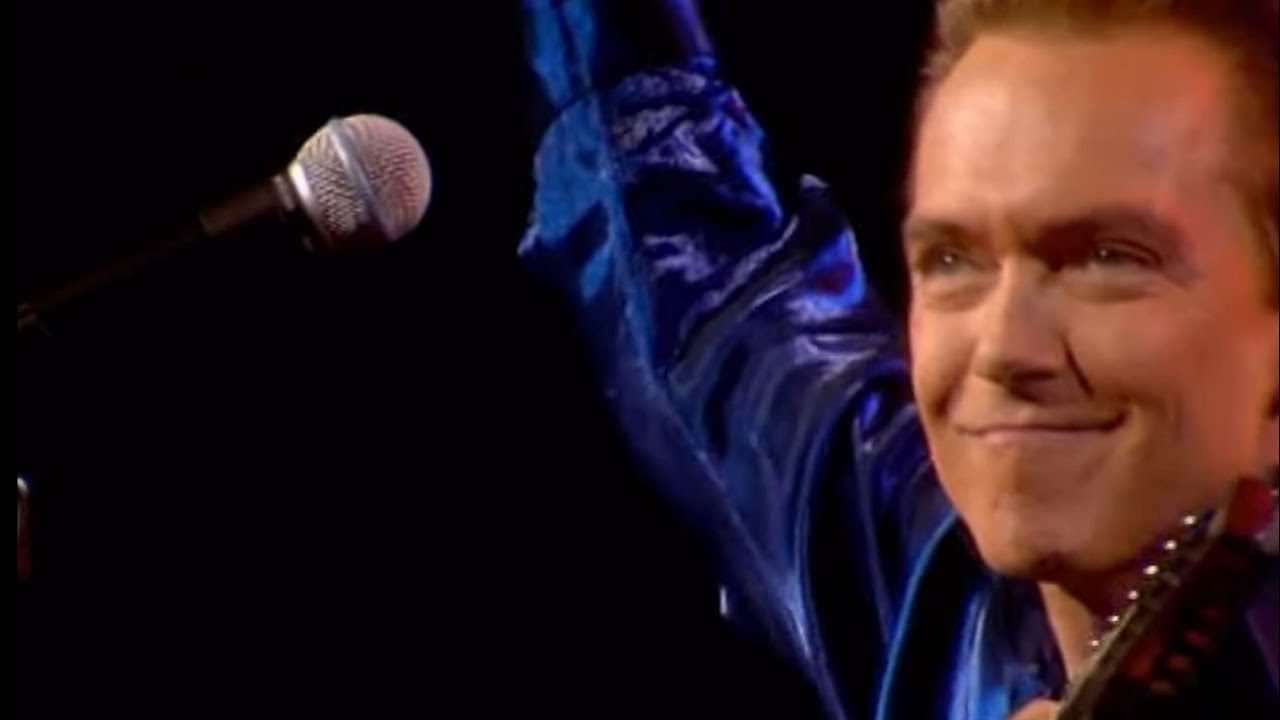
On “Labor of Love”, David Cassidy does not chase the teenage roar that once surrounded him; he sings like a man trying to be heard in his own time.
“Labor of Love” comes from David Cassidy’s 1990 self-titled comeback album, released on Enigma Records, a record that arrived long after the first rush of television fame had settled into pop-culture memory. By then, Cassidy was no longer simply the young face from The Partridge Family or the singer whose early-1970s fame had been measured in screams, posters, and impossible expectations. The 1990 album asked a harder question: what happens when a former teen idol returns not as a symbol of youth, but as an adult artist asking to be heard again?
That question gives “Labor of Love” its quiet charge. The title itself carries a useful double meaning. On the surface, it belongs to the language of devotion, patience, and romantic effort. But inside the frame of Cassidy’s 1990 comeback, it also suggests the work of rebuilding a musical identity. This was not a return built on nostalgia alone. It came in an era of bright studio polish, adult-pop radio, and carefully shaped rock production, and Cassidy had to step into that landscape with a voice everyone thought they already knew.
The album’s most visible radio moment was “Lyin’ to Myself”, which helped return Cassidy to mainstream attention in the United States. But “Labor of Love” offers another way into the comeback story. It is less about the obvious announcement of return and more about the emotional texture underneath it. The song sits within a record that treats Cassidy as a grown performer, not a preserved image. There is no need to imitate the soft-focus innocence of the early 1970s. Instead, the sound belongs to the turn of the decade: clean, melodic, earnest, and shaped for listeners who were accustomed to pop songs with a radio sheen but still wanted a human voice at the center.
What makes the track interesting is the tension between craft and memory. Cassidy’s voice had always carried a natural brightness, but by 1990 that brightness came with history attached to it. Every phrase could be heard through the long echo of earlier fame. For some listeners, the name David Cassidy immediately summoned a television band, a famous bus, and the cultural machinery that turned a young performer into a phenomenon. Yet “Labor of Love” asks for a different kind of attention. It asks the listener not to see the old poster first, but to hear the man standing behind the microphone years later.
That is why the song works best when approached not as a relic of a comeback campaign, but as a small act of persistence. There is dignity in a recording that does not pretend the past has disappeared, but also refuses to let the past do all the talking. Cassidy’s 1990 work on Enigma Records arrived with the built-in challenge that shadows many artists who become famous very young: the audience remembers the image more vividly than the labor. The public can freeze a singer at the exact age when fame first found him, while the singer continues to grow, struggle, adapt, and search for a new musical language.
“Labor of Love” belongs to that search. Its emotional force is not in theatrical confession, but in the way it fits into a larger act of reintroduction. The production may carry the unmistakable shape of its period, but beneath that surface is a familiar problem faced by many performers who outlive their first wave of fame: how to be sincere when people expect a costume, how to sound present when the world keeps replaying an earlier version of you.
In that sense, the song is not merely an album track from a 1990 release. It is part of Cassidy’s argument for continuity. The young star and the adult singer were not separate people, even if the industry often treated them that way. The same voice that had once been surrounded by fan noise was now placed inside a cleaner, more mature pop-rock setting, where restraint mattered more than frenzy. The comeback did not erase the old story; it complicated it.
Listening to “Labor of Love” today, the most affecting quality may be that sense of effort without complaint. Cassidy was not trying to make the listener forget where he came from. He was trying to make room for what came after. The song’s place on the 1990 self-titled album gives it a particular emotional weight: it captures an artist stepping back into the public ear with polish, patience, and a measure of vulnerability, knowing that recognition is easier to lose than to regain.
Comebacks are often described as grand returns, but many of them are built from quieter moments: a studio take, a measured vocal, a song that does not announce itself as history while still carrying history inside it. David Cassidy’s “Labor of Love” is one of those moments. It reminds us that returning to music after the glare of early fame is not only a career move. Sometimes it is exactly what the title says: work, devotion, and the hope that a familiar name can still hold a new voice.
