
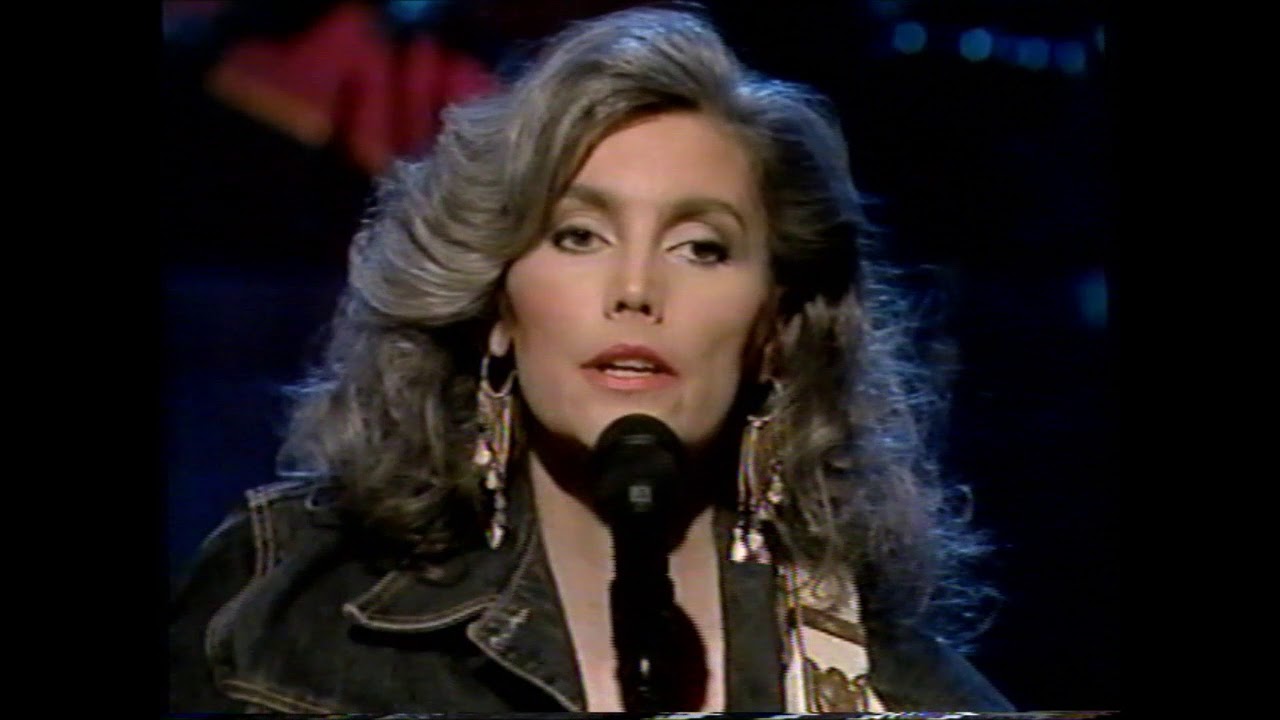
Emmylou Harris turns Bury Me Beneath the Willow into more than an old folk lament; she makes it feel like a memory carried across generations, where love, betrayal, and mourning live in the same breath.
There are songs that arrive as entertainment, and there are songs that seem to rise from the ground itself. Bury Me Beneath the Willow belongs to the second kind. In the voice of Emmylou Harris, it does not feel borrowed or revived for effect. It feels remembered. That is one of the quiet miracles of her art: she could take an old mountain sorrow and sing it with such grace that it seemed both ancient and painfully present.
One important fact should be stated early. Emmylou Harris’ Bury Me Beneath the Willow was not one of her commercial Billboard country singles, so it does not carry a separate chart peak in the way hits such as “Beneath Still Waters” or “Two More Bottles of Wine” did. That absence is telling. This was never the kind of song built for radio competition or crossover polish. Its value lies elsewhere: in heritage, feeling, and the way Harris kept early country and Appalachian music alive for later generations who might otherwise have drifted far from it.
The song itself reaches back to the earliest roots of recorded country music. It is closely tied to The Carter Family and their 1927 recording “Bury Me Under the Weeping Willow”, one of the foundational records of the genre’s first commercial era. Even in title variations such as Bury Me Beneath the Willow, the emotional core remains the same: a heartbroken narrator asks to be buried under the willow so the faithless lover can sit and weep there. It is a devastating image, but also a beautifully simple one. In old folk music, grief was rarely dressed in complicated language. It was spoken plainly, and that plainness often made it hit even harder.
That is exactly where Emmylou Harris has always been at her best. She never needed to force emotion or overstate pain. Her singing could be tender without becoming fragile, and sorrowful without turning theatrical. When she approaches a song like Bury Me Beneath the Willow, she understands that the lyric already carries its own weight. The singer’s job is not to decorate it, but to honor it. Harris does that with the kind of reverence that marked so much of her finest work, especially when she leaned toward old-time country, bluegrass, and folk traditions.
The meaning of the song is heartbreak, of course, but it is a heartbreak shaped by an older moral world. This is not a modern breakup song filled with blame, argument, or self-justification. It is grief turned inward. The singer does not rage so much as accept the wound and ask that nature keep the memory. The willow tree matters here. In folk imagery, the willow has long stood for mourning, forsaken love, and tears that never fully dry. So when Emmylou Harris sings this material, she is stepping into a symbolic language that older country music listeners know almost instinctively. The willow is not just scenery; it is the song’s emotional shelter.
What made Harris such a vital interpreter of songs like this was her relationship to tradition. She was never a museum curator singing old music behind glass. She gave traditional songs motion, breath, and contemporary emotional reach. Across albums such as Blue Kentucky Girl and Roses in the Snow, she proved again and again that the oldest sounds in American music could still feel urgent. She did not modernize them by stripping away their character. She modernized them by trusting that the human truth inside them had not expired.
That is why Bury Me Beneath the Willow still lingers. Beneath its spare language lies a whole philosophy of love and loss. The song understands that some wounds are not dramatic in the public sense; they are quiet, private, and enduring. A person is left behind, and the world continues. Trees sway. Seasons pass. Memory remains. Harris has always known how to sing that kind of loneliness. Her voice can sound like consolation one moment and resignation the next, which is exactly what this song requires.
There is also something profoundly important about the fact that songs like this survived at all. By the time Emmylou Harris was recording and performing roots material, mainstream country had already begun moving through several waves of slicker production and broader commercial appeal. Yet she kept turning back toward the wellspring. She reminded listeners that country music did not begin with charts, and it does not live by charts alone. It began in family harmonies, old ballads, church songs, and front-porch laments. Bury Me Beneath the Willow stands in that lineage, and Harris sings it not as nostalgia for nostalgia’s sake, but as living inheritance.
In the end, that may be the deepest beauty of her rendition. It does not ask to be trendy, and it does not try to impress with size or spectacle. It simply tells the truth slowly. And sometimes that is what lasts the longest. With Emmylou Harris, an old traditional song becomes a mirror for anyone who has ever sat with disappointment long after the noise has passed. That is why Bury Me Beneath the Willow still feels so powerful: because it sounds less like performance than like memory, and less like memory than like a feeling many people have carried all their lives.
