
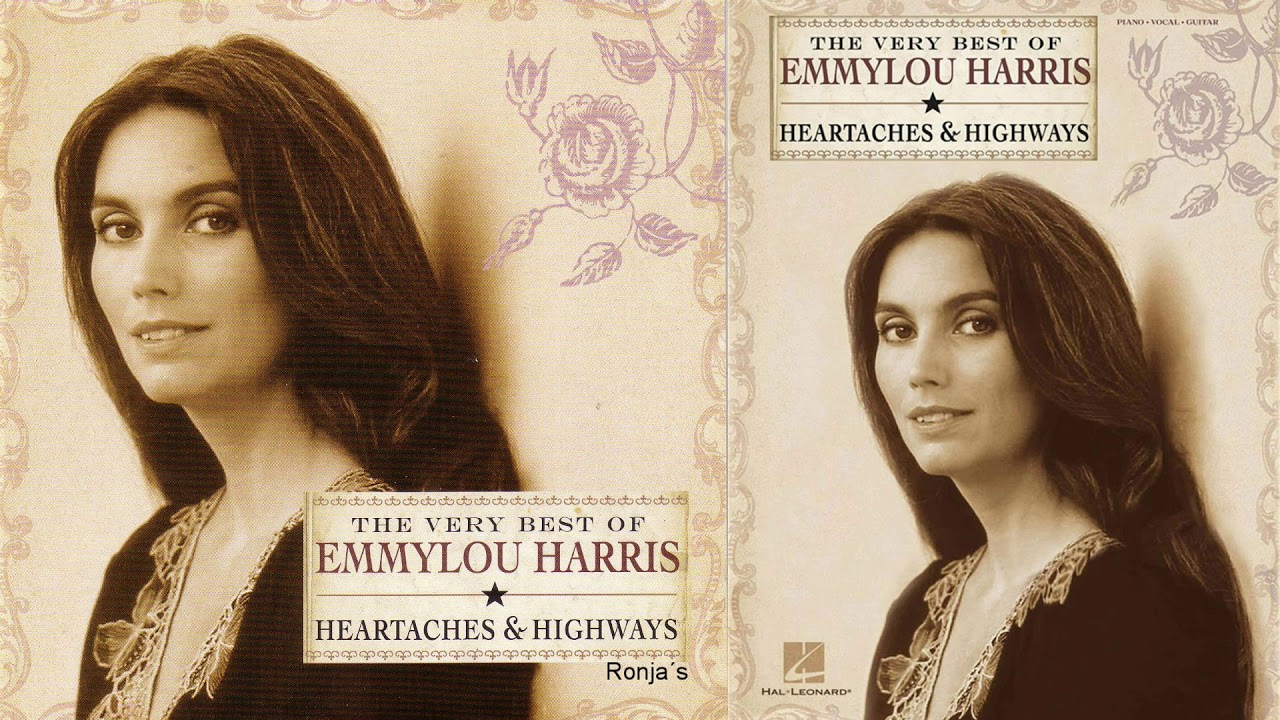
In Ooh Las Vegas, Emmylou Harris sings about bright lights and easy promises, but what lingers is something deeper: temptation, motion, and the quiet loneliness hidden inside excitement.
Emmylou Harris recorded Ooh Las Vegas for her 1975 album Elite Hotel, a landmark record that reached No. 1 on Billboard’s Top Country Albums chart and confirmed that she was not simply carrying country music forward, but reshaping its emotional language. The song itself was never the most radio-dominant title from that album, especially beside major Harris hits such as One of These Days and Sweet Dreams, yet it became one of those album tracks that listeners returned to again and again. It had energy, sparkle, and a kind of smiling ache that fit Harris perfectly.
That matters, because Ooh Las Vegas is not just a catchy country-rock number. It is also part of the long artistic thread connecting Emmylou Harris to Gram Parsons, whose influence on her early solo career is impossible to separate from her rise. The song was written by Gram Parsons and Ric Grech, and Harris, who had sung with Parsons and absorbed so much from his vision of cosmic American music, gave the tune one of its most memorable recordings. In her hands, it became more than a clever song about a famous city. It became a small emotional drama set beneath neon.
What makes Harris’s version so enduring is the balance she finds between movement and meaning. On the surface, the record feels breezy. The tempo skips along, the arrangement has that bright country-rock lift, and the chorus has the kind of open-road swing that makes it easy to hum. But listen closely and the song is not really celebrating Las Vegas in any simple way. Like many great songs about glamour, it understands that glitter can be a disguise. The city stands for appetite, risk, escape, and illusion. It is a place where everything is lit up, and yet very little feels steady.
That tension gives the song its real life. The phrase Ooh Las Vegas sounds playful at first, almost flirtatious, but Harris sings it with just enough distance to let the listener hear another truth underneath. This is not innocent wonder. It is fascination mixed with caution. The song recognizes how easily people can be pulled toward whatever sparkles in the distance, whether that means money, romance, freedom, reinvention, or simply the fantasy of becoming someone else for a night. That is why the song still feels so alive decades later. It understands temptation without pretending temptation is harmless.
There is also something unmistakably important about where this song sits in Harris’s career. By the time Elite Hotel arrived, she had already shown that she could move effortlessly between hard country, folk tenderness, and West Coast country-rock. But on this album, and especially on songs like Ooh Las Vegas, she sounded completely in command of that blend. The production, guided by Brian Ahern, gave her room to be elegant without becoming distant, lively without losing emotional intelligence. She could deliver a line with grace and still let a shadow fall across it. Few singers have ever done that better.
Another reason the track endures is that Harris never treated songs as museum pieces. Even when singing material tied to Gram Parsons, she did not approach it like a fragile relic. She brought discipline, beauty, and structure to music that might otherwise have remained part of a legend rather than a living repertoire. In that sense, Ooh Las Vegas is one of the songs that helped preserve Parsons’s songwriting for a wider audience while also becoming fully, unmistakably hers. That was one of Harris’s great gifts: she could honor a song’s past without surrendering her own voice inside it.
Lyrically, the song works because it does not overstate itself. It does not need heavy language to make its point. The image of Las Vegas does the work. Everybody understands what the city represents: luck, danger, velocity, late-night hope, and the possibility of waking up with less than you had when the evening began. Harris sings from within that atmosphere, not above it. She never turns the song into moral lecture or melodrama. She simply lets the setting reveal the feeling. That restraint is part of why the performance has aged so well.
And perhaps that is the real secret of Ooh Las Vegas. It sounds like motion, but it is really about instability. It sounds like fun, but it is haunted by consequence. It sounds bright, but it leaves a long afterglow of uncertainty. That complexity belongs to the finest work in Emmylou Harris’s catalog. She could take a song that first seemed light on its feet and show that it carried memory, longing, and a little weariness in its pockets.
For listeners who love the deep emotional grain of 1970s country-rock, Ooh Las Vegas remains one of those revealing recordings: not the loudest statement, not the biggest commercial event, but one of the clearest examples of why Emmylou Harris mattered so much. She did not merely sing songs beautifully. She uncovered the uneasy heart beating inside them. In Ooh Las Vegas, the lights are dazzling, the rhythm is inviting, and still, somehow, you can already feel the morning coming.
