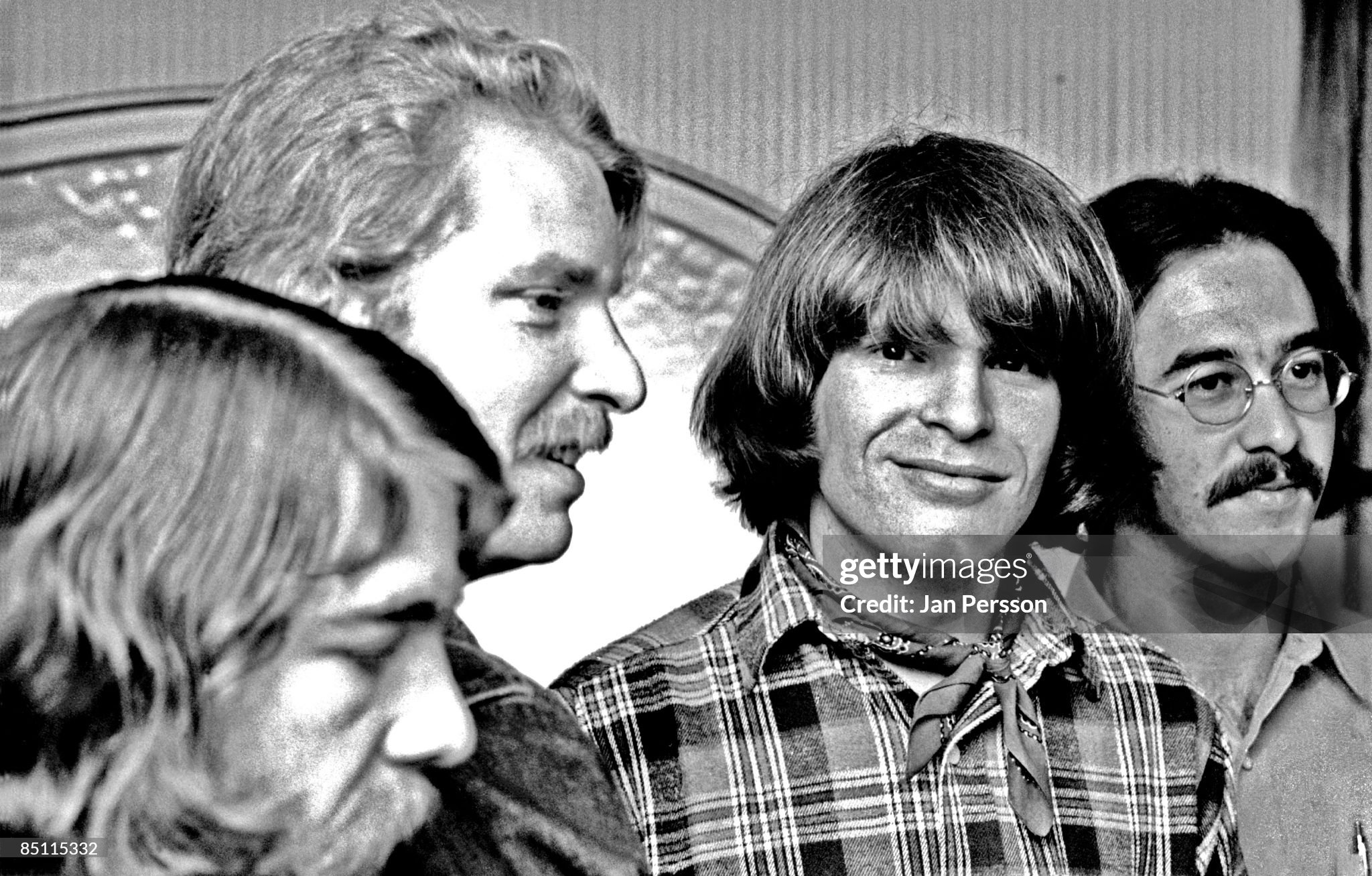
A tiny track with a huge purpose, Poorboy Shuffle shows how Creedence Clearwater Revival could turn a fleeting album moment into pure atmosphere, roots feeling, and working-class soul.
Some songs arrive like thunder. Poorboy Shuffle arrives like a side-door breeze, and that is precisely why it matters. Issued on Creedence Clearwater Revival‘s November 1969 album Willy and the Poor Boys, the track was never released as a stand-alone single, so it did not chart on the Billboard Hot 100 by itself. But the album did, climbing to No. 3 on the Billboard 200 at a time when the group seemed almost unstoppable. That same season, the single pairing of Fortunate Son and Down on the Corner also reached No. 3, and it would have been easy for a small cut like Poorboy Shuffle to disappear in the shadow of those giants. Instead, it has endured as one of those deceptively slight moments that reveal how carefully CCR built an album.
In plain musical terms, Poorboy Shuffle is not a grand statement. It is brief, loose-limbed, earthy, and more like a scene-setter than a heroic centerpiece. It carries the feel of old American jukebox music, something half remembered from a back porch, a corner store, or a Saturday night room where the floorboards were never quite still. That was part of John Fogerty‘s gift. He understood that records were not only collections of songs; they were worlds. And on Willy and the Poor Boys, he and the band shaped a whole atmosphere of street-corner charm, barroom wit, and working-class pride.
The song’s title matters. Poorboy Shuffle sounds like the sort of tune a local band might toss off between crowd-pleasers, and that is exactly its charm. Willy and the Poor Boys was wrapped in the image of a humble, rough-and-ready neighborhood outfit rather than a polished arena machine. Even when Creedence Clearwater Revival were one of the biggest bands in the country, they kept returning to older forms: blues, rockabilly, swamp rhythm, country feeling, and the lean snap of early rock and roll. Poorboy Shuffle helps hold that aesthetic together. It is not there to compete with the hits. It is there to make the album feel lived in.
If one looks for a deeper meaning, it is less in lyric than in mood. Poorboy Shuffle embodies the humility that runs through much of CCR’s best work: ordinary people, plainspoken style, no ornamental excess. The title alone carries echoes of scarcity, resilience, and motion. A poor boy does not stand still for long; he keeps moving, keeps making something out of little, keeps finding rhythm where life has offered no luxury. In that sense, the track becomes a miniature thesis for the album’s emotional world. It is music stripped close to the bone, proud of its rough edges, and unashamed of its simplicity.
One reason longtime listeners treasure pieces like this is that they remind us how albums once breathed. Before playlists scattered everything into isolated tracks, a record such as Willy and the Poor Boys had pacing, texture, and contrast. After stronger statements and before the next turn in mood, a small shuffle like this creates room. It lets the record smile for a moment. It lets the band sound human, unforced, almost as if they are in the room with you rather than posing for history. That was never a small achievement. CCR made concise music, but their concision was intelligent. They knew when to drive hard, and they knew when to step back and let atmosphere do the talking.
The historical context only makes Poorboy Shuffle more impressive. In 1969, Creedence Clearwater Revival released three albums: Bayou Country, Green River, and Willy and the Poor Boys. Few bands in rock history have matched that kind of focused productivity while maintaining such a high level. In a year crowded with major cultural noise, CCR sounded rooted, direct, and stubbornly American in the widest musical sense. Their recordings did not depend on studio excess or fashionable complexity. Even a modest album track could suggest a whole landscape. That is what Poorboy Shuffle does so well. It feels like a scrap of local color, but it carries the same artistic discipline as the bigger songs.
There is also something moving about how a piece this small continues to invite affection. People often remember a band through the obvious monuments, and CCR certainly had those. But over time, listeners return to the corners of a record for different reasons. They come back for texture, for personality, for the moments that were never trying too hard. Poorboy Shuffle may not be the first Creedence Clearwater Revival track named in conversation, yet it quietly explains why the band mattered. They could make a hit, yes. But they could also make a passing moment feel true. And sometimes truth enters not with a roar, but with a shuffle, a grin, and the sound of a great band refusing to waste even a single inch of an album.
