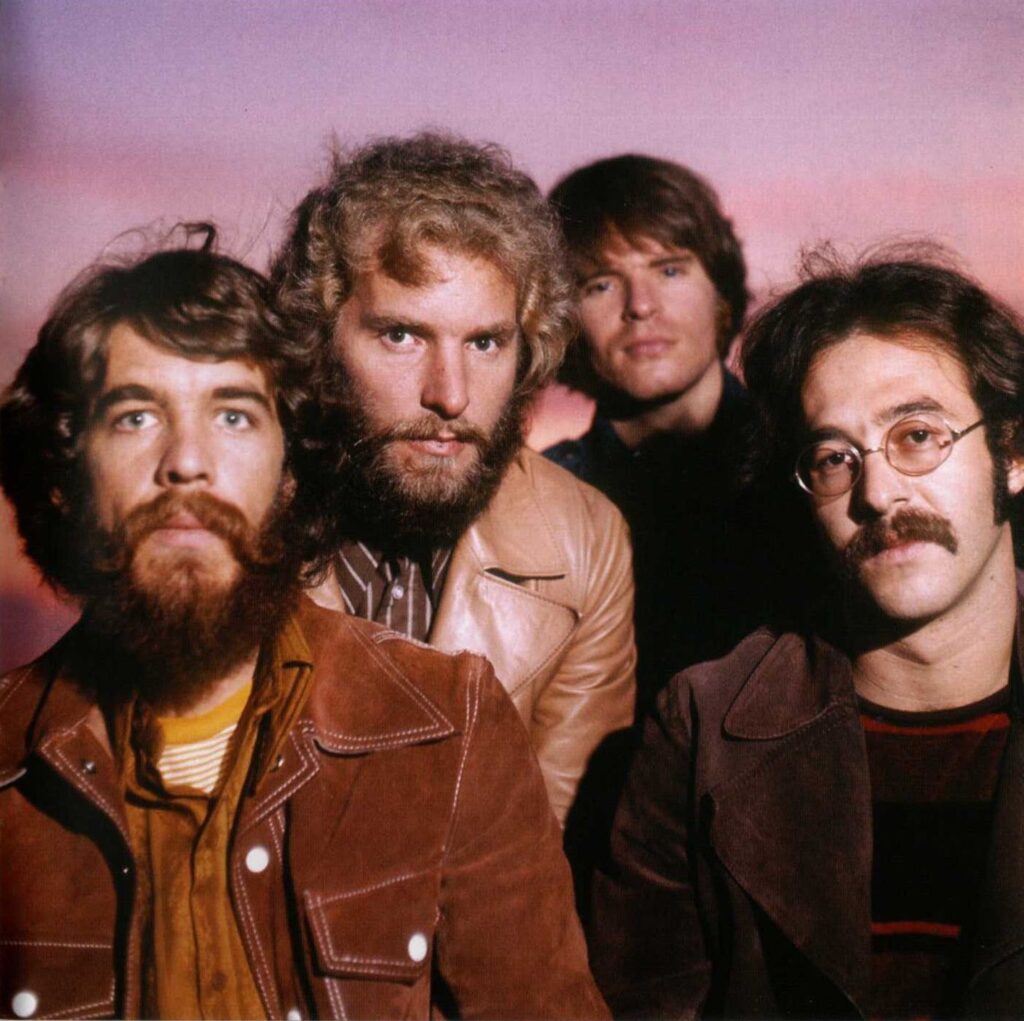

Before Creedence Clearwater Revival had a name, Brown-Eyed Girl preserved John Fogerty and The Golliwogs in that last unfinished moment when a garage band was learning how to sound timeless.
There is something deeply revealing about hearing John Fogerty just before history turns in his favor. Brown-Eyed Girl, released in 1967 by The Golliwogs, comes from the band’s final garage-band phase before the change to Creedence Clearwater Revival. That alone makes it worth attention. At the time of release, the single did not break into the Billboard Hot 100, and it passed without the kind of national chart impact that would soon follow when the same musicians reintroduced themselves under a better name. But records like this often matter precisely because they were not yet burdened by fame. They let us hear the becoming.
By 1967, the group had already spent years trying to survive the ordinary frustrations of young American bands: changing tastes, label pressure, interrupted momentum, and the indignity of recording under a name they did not choose. Before they were The Golliwogs, they had been the Blue Velvets. The Golliwogs name was imposed during their time with Fantasy Records, and by the late 1960s it felt increasingly out of step with the stronger musical identity forming inside the band. That is part of what makes Brown-Eyed Girl so interesting. It is not simply an obscure 45 from a forgotten chapter. It is a document from the very end of one identity and the beginning of another.
Musically, the song still carries the compact, punchy frame of mid-1960s garage rock, but the roughness is already being organized by Fogerty’s instincts. The beat is tighter than casual garage-band noise, the guitar attack is more disciplined, and the whole arrangement suggests someone thinking beyond imitation. Earlier American bands of the period often leaned hard into British Invasion manners, but here you can hear a different gravity pulling at the music. The edges are still youthful, still a little raw, yet the record already prefers drive over decoration. That would become one of Fogerty’s great strengths: saying more with less, pushing a song forward until it feels inevitable.
The meaning of Brown-Eyed Girl is not mysterious in the way later Fogerty songs could be. It is a direct romantic song, built around image, attraction, and the immediate emotional pull of one unforgettable face. But that simplicity is part of its charm. Fogerty did not need ornate language to create momentum. Even in this early phase, he understood how a plainspoken lyric could feel alive if the rhythm underneath it kept moving. The song does not yet carry the mythic American landscapes of Proud Mary or the ominous shadows of Bad Moon Rising. Instead, it offers something more youthful and more local: a snapshot of desire before the grander storytelling arrived.
What makes the record especially fascinating is the year itself. In 1967, California rock was exploding outward into color, psychedelia, and studio experimentation. All around them, bands were stretching songs into stranger shapes. John Fogerty, by contrast, was beginning to move in almost the opposite direction. He was searching for a harder, leaner, more American directness. That instinct would become central to Creedence Clearwater Revival. Listening now, Brown-Eyed Girl sounds like a young band caught between eras: still standing in the garage-rock world that formed them, already reaching toward the swampy minimalism and working-band toughness that would soon set them apart.
That is why this late pre-CCR single matters more than its chart history suggests. It may not have become a hit, and it never gained the cultural weight of the records that followed, but it tells a more intimate story. It lets us hear Fogerty before the image was fixed, before the legend became neat and inevitable. A year later, the group would shed the old name, cut Suzie Q, and begin the astonishing rise that led to Proud Mary, Green River, Down on the Corner, and so much more. In that larger story, Brown-Eyed Girl stands as one of the last windows into the workshop before the breakthrough.
There is also a certain tenderness in hearing a record like this now. Because it did not dominate radio and did not become a classic-rock staple, it still carries the feeling of a private discovery. It reminds us that great artists are not born all at once. They arrive in fragments, in trial runs, in nearly overlooked singles cut under the wrong name. John Fogerty was not yet the fully formed writer who would soon distill American memory into three-minute masterpieces, but the instincts were already there: economy, grit, melody, and a refusal to waste a line or a beat.
So when Brown-Eyed Girl plays today, it should not be heard merely as a curiosity from before CCR. It should be heard as the sound of a band about to cross a line they could not yet fully see. The national charts ignored it. History almost did too. But in its lean structure and youthful urgency, this 1967 single carries something moving and unmistakable: the last echo of The Golliwogs, and the first real shadow of Creedence Clearwater Revival.
