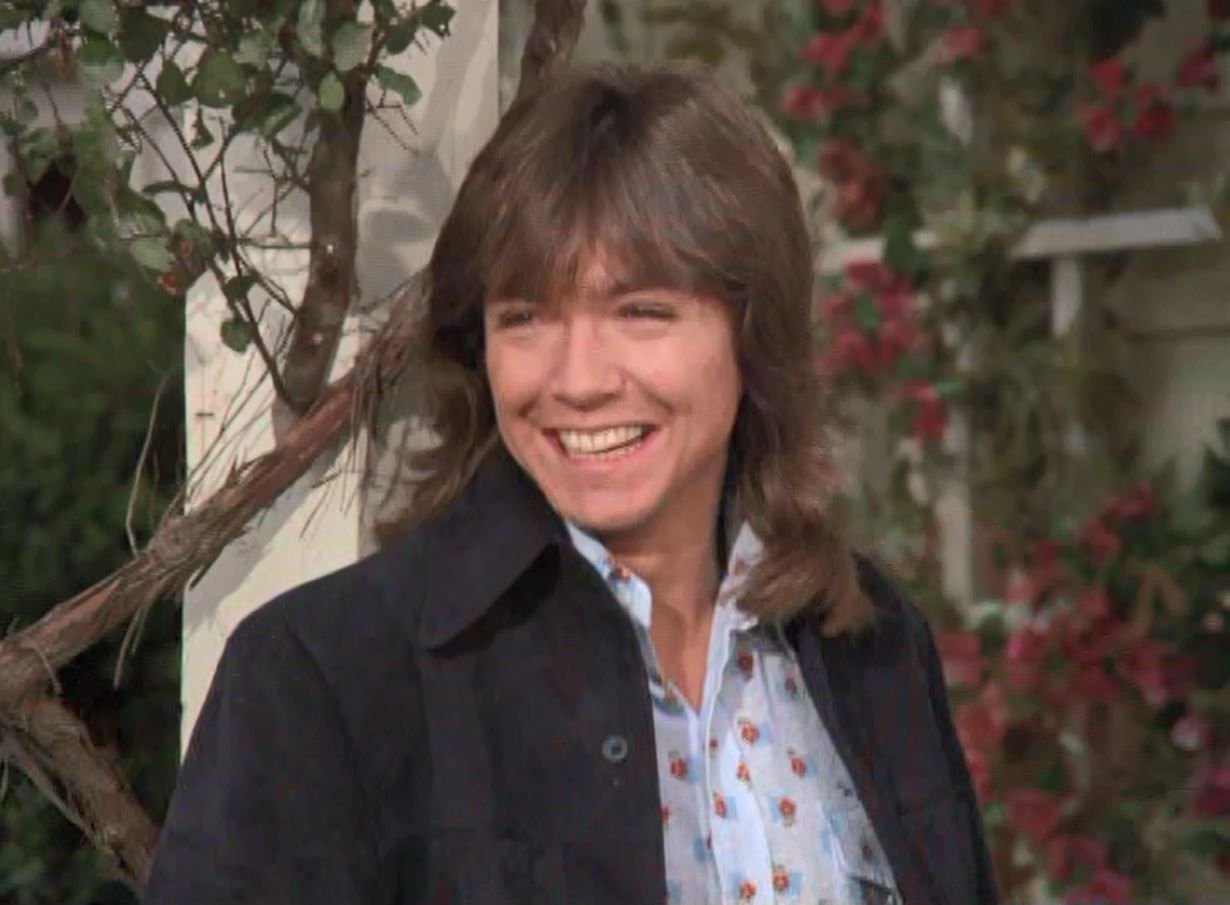
In The Partridge Family‘s “Am I Losing You”, David Cassidy leaves behind pure bubblegum brightness and sings one of 1972’s quietest questions as though he truly fears the answer.
One of the most revealing things about “Am I Losing You” is that it was never one of the headline-making hit singles that defined The Partridge Family‘s commercial peak. Unlike “I Think I Love You”, which went to No. 1 on the Billboard Hot 100 in 1970, or “Doesn’t Somebody Want to Be Wanted” and “I’ll Meet You Halfway”, both Top 10 favorites in 1971, this 1972 performance did not have its own major U.S. chart run as a standalone smash. That absence matters. It leaves the song freer, less overfamiliar, and somehow more exposed. Heard today, it feels less like a product of a television empire and more like a small, unexpectedly honest moment hidden inside it.
By 1972, David Cassidy was no longer simply the smiling center of a brightly colored family-pop fantasy on ABC. He was already carrying the weight of international fame, relentless touring, magazine-cover adoration, and the growing pressure that comes when a teen idol begins to outgrow the image that made him famous. That is part of why “Am I Losing You” lands so differently. The title itself is built around doubt, not declaration. It is not the confidence of young love, not the easy sweetness that powered so many early-70s pop hits. It is a question, and Cassidy sings it like a question that has been turning over in his mind long before the microphone came on.
That is the heart of the song’s meaning. “Am I Losing You” is not really about a dramatic ending. It lives in the quieter, more painful space just before certainty arrives. It is about sensing distance before there is proof, hearing hesitation before anyone speaks plainly, and feeling a relationship shift in ways that cannot yet be measured. In lesser hands, that kind of lyric can feel generic. In Cassidy’s vocal, it becomes personal. He does not oversell the ache. He does something harder and far more affecting: he holds back. That restraint gives the performance its adult weight. The uncertainty sounds real because he never turns it into a theatrical crisis.
Musically, the recording still belongs to the polished world of The Partridge Family and the hit-making craftsmanship surrounding the group. The production is smooth, melodic, radio-shaped, and emotionally accessible, very much in keeping with the Bell Records sound that producer Wes Farrell helped define. But within that polished frame, Cassidy’s vocal has a slightly different grain than the bright, eager sound many listeners first associate with him. By 1972, there was more texture in his voice, more shading in the phrasing, and more willingness to let uncertainty remain unresolved. He sounds less like the boy next door, more like a young man discovering that not every emotion can be cleaned up by the final chorus.
That is why this track feels so important in the later period of the The Partridge Family story. When the series first broke through, the appeal was immediate: catchy songs, a lovable family dynamic, and a contagious sense of pop optimism. But pop histories often flatten that whole era into one image: the bus, the smile, the posters, the frenzy. Songs like “Am I Losing You” remind us that there was more going on beneath the surface. Even within a carefully managed television-pop machine, there were moments when David Cassidy let a more complicated emotional life seep through. For listeners returning to the catalog now, that is often what makes the deeper cuts more rewarding than the obvious hits.
There is also something quietly poignant about hearing this kind of emotional ambiguity emerge from a performer who was so publicly identified with youthful certainty. Cassidy was marketed as a dream figure, a face onto which millions projected longing, innocence, and romance. Yet the best of his vocals often suggested fragility instead of perfection. In “Am I Losing You”, he does not sound invincible. He sounds alert, wounded, and unsure. That emotional shading gives the record a different kind of longevity. It does not survive merely because of nostalgia for the show. It survives because the feeling at its core remains recognizable across generations: the fear that someone is slipping away while the room still looks exactly the same.
That may be why the song can catch listeners off guard after all these years. If you come to it expecting only the shiny comfort of familiar television pop, you may miss how delicately it is sung. But if you listen closely, “Am I Losing You” becomes a showcase for one of David Cassidy‘s most human qualities as a vocalist: his ability to make uncertainty sound intimate rather than weak. He knew how to sing longing, yes, but he also knew how to sing doubt without breaking the song’s melodic grace. That is a rare skill, and it is one reason his best performances continue to reward closer listening.
So even without a big chart statistic attached to its name, “Am I Losing You” deserves its place in the conversation around The Partridge Family‘s 1972 work. It stands as a reminder that not every revealing performance comes wrapped in a No. 1 label. Some live in the corners of a catalog, waiting for time to strip away the old assumptions. Heard now, this song feels like one of those moments: a late-era David Cassidy vocal that let uncertainty remain visible, and in doing so, told a deeper truth than many bigger hits ever could.
