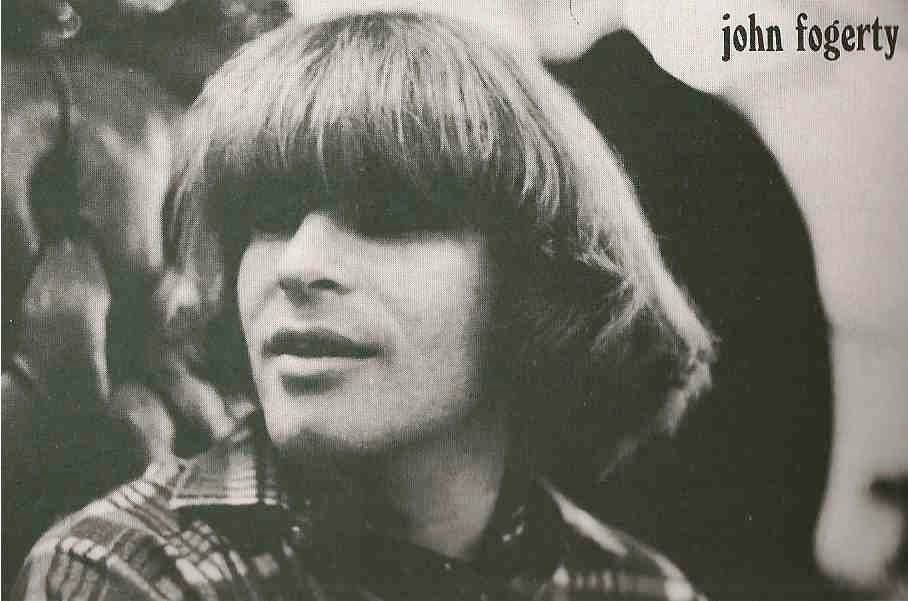
With “Lookin’ Out My Back Door”, Creedence Clearwater Revival caught one last chart summit in 1970 on the U.S. Cash Box survey, while the single’s pairing with “Long As I Can See the Light” gave the moment a deeper, more wistful soul.
There are chart milestones that feel like trophies, and then there are chart milestones that feel like snapshots taken just before the weather changes. “Lookin’ Out My Back Door”, written by John Fogerty and released by Creedence Clearwater Revival in the summer of 1970, belongs to that second kind. It came out as a single paired with “Long As I Can See the Light”, both drawn from the remarkable album Cosmo’s Factory. On the U.S. Cash Box chart, “Lookin’ Out My Back Door” rose to No. 1, making it the group’s final American chart-topper on that publication’s ranking. On the Billboard Hot 100, however, the coupled single peaked at No. 2, adding one more near-miss to a career that famously brushed the top again and again. That small chart distinction matters, because it tells us something about CCR itself: enormously loved, constantly heard, and somehow still touched by a faint air of unfinished business.
By 1970, Creedence Clearwater Revival had already become one of the defining American bands of its era. They moved with uncommon speed, issuing hit after hit without waste, without ornament, and without the kind of theatrical self-importance that weighed down so much rock music of the period. John Fogerty wrote with the economy of a great storyteller. A few lines, a memorable riff, a rhythm that felt like it had always existed somewhere in the country air, and suddenly a record seemed to belong to everybody. Cosmo’s Factory captured that power at full stretch, and this single showed two sides of it with almost perfect symmetry.
“Lookin’ Out My Back Door” is one of those records that sounds easy until you notice how expertly it is made. Its bounce is effortless, its hook immediate, its mood sunlit and loose. Yet the song has long carried a strange afterlife because listeners often assumed its surreal images must point toward something chemical or hazy. John Fogerty repeatedly pushed back on that idea. He described it instead as a playful, almost Dr. Seuss-like song inspired in part by his young son. Once you hear it through that lens, the whole piece changes. The elephants, tambourines, and flying spoonfuls stop sounding like coded adult signals and begin sounding like a father’s imagination turned into rhythm. That innocence is part of the record’s genius. It is not escaping reality so much as stepping away from heaviness for three minutes and looking out at a world still capable of wonder.
And yet the single was not only carefree. The brilliance of pairing it with “Long As I Can See the Light” is that the second song answers the first with gravity. Where “Lookin’ Out My Back Door” smiles, “Long As I Can See the Light” steadies itself. Where one drifts through vivid, almost childlike imagery, the other speaks with the quiet ache of a traveler promising to return. It is among the most moving performances in the CCR catalog, and one of John Fogerty’s finest vocals: restrained, tender, and deeply human. The arrangement has a gospel warmth to it, with a slow-burning dignity that lingers long after the record ends. Heard beside the hit side, it turns the single into something richer than a chart event. It becomes a small emotional journey, moving from delight to longing in the space of one 45.
That is why this release still feels so special. It was not simply a successful single from a successful band. It was a perfect distillation of what made Creedence Clearwater Revival different. They could deliver a song that sounded playful enough for the radio and, on the reverse side, offer something nearly prayerful. They could be earthy without being heavy, direct without being simple, and popular without losing character. Few groups have ever balanced accessibility and depth so gracefully.
The chart story only deepens the feeling. To say that “Lookin’ Out My Back Door” was CCR’s final U.S. No. 1 single is true if one is speaking of Cash Box, and that is an important part of the record’s history. But the Billboard result, where the coupled single stopped at No. 2, adds a touch of irony that almost seems written into the band’s legend. Creedence became one of the most durable and beloved groups in American rock while also becoming synonymous with the near miss at the very top of the main singles chart. In that sense, this 1970 single stands at a crossroads: triumph on one hand, wistfulness on the other.
There was also a broader historical weight around it. By the time this single was climbing the charts, Creedence Clearwater Revival had been working at a furious pace. The music was still strong, but the strain of that pace could not remain invisible forever. Listening now, there is something almost poignant in the brightness of “Lookin’ Out My Back Door”. It sounds so free, so open, so untroubled. And paired with “Long As I Can See the Light”, it now feels like a record standing between celebration and distance, between the easy confidence of a band at its peak and the quieter knowledge that no peak lasts forever.
That may be why the single continues to resonate decades later. Its achievement is not only that it climbed the charts. Its achievement is that it preserved a full emotional range inside a commercial release. It gave CCR one more major chart milestone, yes, but it also gave listeners two very different truths at once. One truth says the world is still full of odd beauty if you know how to look. The other says that no matter how far you roam, the heart keeps searching for a light that will lead you home. Few singles have ever carried both messages so naturally.
So when people look back on 1970 and remember “Lookin’ Out My Back Door”, they are remembering more than a catchy hit. They are remembering a moment when John Fogerty and Creedence Clearwater Revival turned a chart run into something more lasting than statistics. The song’s buoyant charm, the grace of “Long As I Can See the Light”, and the strange little wrinkle of the charts together form the kind of music story that grows more meaningful with time. Not merely a success, and not merely a farewell signpost, but a reminder that the finest records often carry joy and melancholy in the same sleeve.
