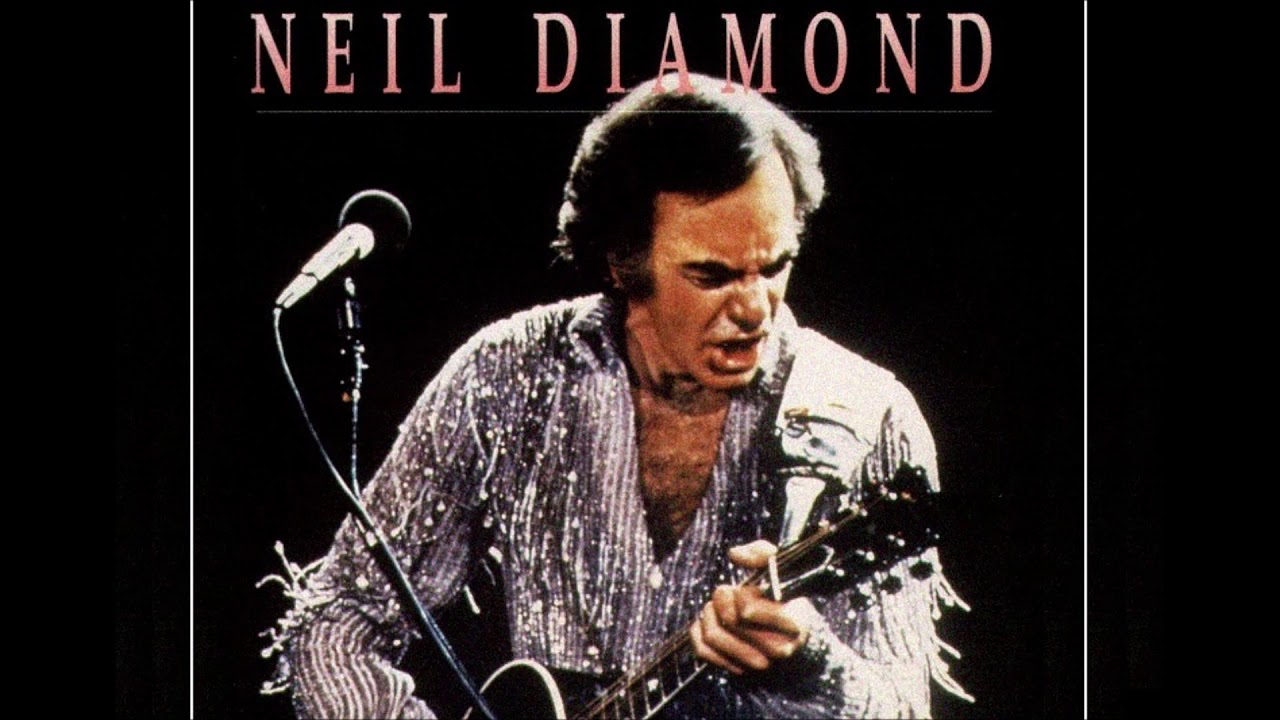
Before it found a second life in reggae, Red Red Wine was one of Neil Diamond‘s most tender Bang-era confessions, a soft and bruised song about trying to outdrink memory and failing.
Most people now approach Red Red Wine with the echo of its later reggae afterlife already in their ears. That is understandable; history has a way of rearranging memory. But if we return to Neil Diamond‘s original Bang-era recording from 1967, heard on the album Just for You, the song reveals a very different soul. Here there is no easy sway, no communal release, no bright rhythmic lift. Diamond’s version is intimate, almost inward-looking, and its sadness is not theatrical. It is the sadness of a room gone quiet after someone has left, the kind of silence that makes a simple object on a table feel suddenly important.
That original recording was only a modest chart entry compared with some of Diamond’s larger Bang-era hits. In the United States, Red Red Wine reached No. 62 on the Billboard Hot 100. So at the time, it was not one of the towering records that defined his early commercial story in the way songs like Solitary Man, Cherry, Cherry, or Kentucky Woman would. Yet chart size and emotional weight are not the same thing. Sometimes a song does not explode immediately because it is too private, too restrained, too bruised to announce itself in bold letters. That is very much the case here.
Just for You, released during Diamond’s fertile years with Bang Records, captured a young songwriter already showing that he could move beyond simple pop momentum into deeper emotional territory. In that setting, Red Red Wine feels like an important clue to the writer he would keep becoming. The lyric is disarmingly simple: the singer turns to wine in the hope that it will soften the memory of a lost love. But the brilliance of the song lies in its refusal to pretend that comfort is really coming. Even as the glass is lifted, the wound remains. The bottle is not a celebration here; it is a companion of last resort.
That is why Diamond’s performance matters so much. He does not oversing it. He lets the ache sit in the spaces between lines. His phrasing is gentle, almost conversational, but there is fatigue in it, and a trace of disbelief. The arrangement supports that mood beautifully. Rather than pushing the song outward, the production keeps it close to the chest. The melody drifts with a kind of weary grace, and the overall feel is less about pop polish than about emotional weather. It is the sound of someone trying to steady himself with ritual, knowing all the while that the ritual is not enough.
There is also something striking about the contrast between the title and the feeling of the record. A phrase like Red Red Wine could easily suggest warmth, romance, or carefree pleasure. Diamond flips that expectation. In his hands, red wine becomes a symbol of temporary relief, of self-persuasion, of the little stories people tell themselves in the late hours. That tension gives the song its enduring power. It is not really about drinking at all. It is about the stubbornness of memory, about how love can linger in the mind long after the practical world has moved on.
And that is what makes the song’s later history so fascinating. Long before later listeners associated Red Red Wine with a reggae pulse, Neil Diamond had written it as a hushed pop lament. Then the song began its long and remarkable journey through other voices and other styles, most famously through reggae reinterpretations that changed its public identity. That later success did not erase Diamond’s original; if anything, it made the contrast more revealing. The reggae versions opened the song outward, gave it motion, warmth, and a different kind of melancholy. Diamond’s recording, by comparison, remains the lonelier document, the one that still sounds like the first wound before time and genre reshaped the memory.
There is a lesson in that. Great songs are not fixed objects. They travel. They gather new shades of meaning as different generations take hold of them. Yet every now and then it is worth going back to the first doorway, to hear what was there before the public story grew larger. In the case of Red Red Wine, that return is deeply rewarding. You hear a young Neil Diamond not chasing grandeur, not reaching for a dramatic climax, but simply trusting a plainspoken lyric and a vulnerable melody. That trust gives the record its honesty.
For listeners who know only the song’s later fame, the Bang-era original can come as a surprise. It feels older in the best sense, not merely in date but in emotional discipline. It understands that heartbreak is often quiet. It understands that the saddest nights are not always the loudest ones. And it reminds us that some songs survive because they are adaptable, while others survive because there was already something true at the center. Red Red Wine has both gifts, but the truth came first. On Just for You, in 1967, Neil Diamond gave the song its first face: reflective, vulnerable, and unforgettable in its restraint.
