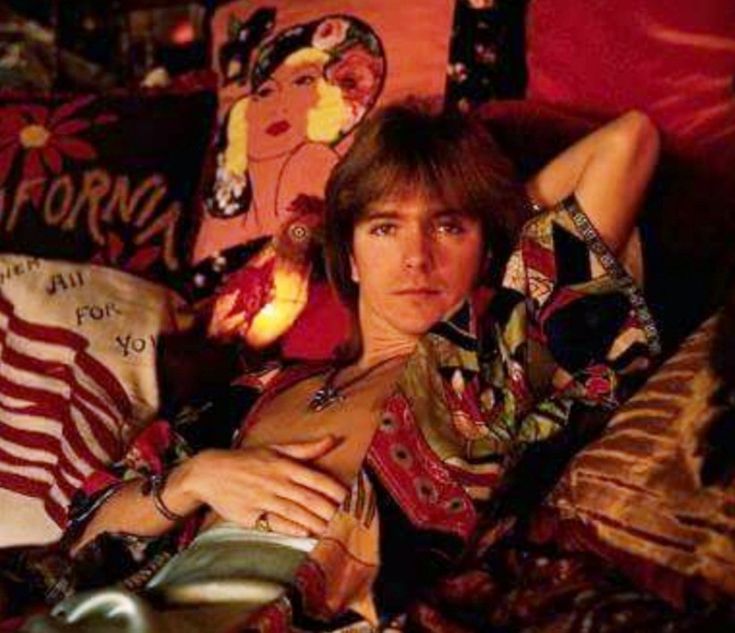
On Tenderly, David Cassidy stepped out of inherited fame and into a sleek 80s atmosphere where reinvention sounded calm, careful, and grown.
David Cassidy recorded Tenderly for Romance, his European-only 1985 album produced by Alan Tarney, at a moment when the public memory of him was still crowded with the bright noise of the early 1970s. For many listeners, Cassidy remained tied to The Partridge Family, fan magazines, packed arenas, and the high-pressure glare of teen-idol visibility. But Romance belonged to a different decade and a different kind of pop language: streamlined keyboards, disciplined studio surfaces, crisp rhythmic programming, and melodies designed to move through the cool air of mid-80s radio.
That context matters because Tenderly is not just another song in Cassidy’s catalog; it is part of a deliberate attempt to be heard in a new frame. By 1985, he was no longer the young face pinned to bedroom walls. He was a grown performer trying to find space inside a pop world reshaped by synthesizers, glossy production, and a more controlled kind of emotional drama. Under Alan Tarney, whose sleek pop instincts were also heard in work associated with artists such as Cliff Richard and a-ha, Cassidy’s voice was placed inside a sound that felt unmistakably of its time without abandoning melody.
The title Tenderly suggests softness, but the recording does not lean on old-fashioned sentiment. Its emotional force comes from restraint. The arrangement belongs to the polished synth-pop era: smooth textures, carefully arranged space, a sense of movement that feels more urban than theatrical. Instead of the loose, bright innocence many still associated with Cassidy’s earlier fame, the track offers a cooler surface and asks the listener to notice what happens beneath it. His voice does not need to oversell the feeling. It moves with measured intimacy, as if aware that adulthood often speaks more quietly than youth.
Romance is often remembered, when it is remembered at all, through the larger idea of Cassidy’s 80s comeback and the album’s most visible moments in Europe. But Tenderly reveals something subtler about that period. It shows an artist negotiating with memory. Cassidy could not simply outrun the past; few performers so strongly marked by early fame ever can. What he could do was step into a different musical architecture and let the contrast speak. The clean production does not erase who he had been. It makes the distance audible.
There is a particular kind of poignancy in hearing a former teen idol inside the digital polish of 1985. The decade prized sheen, precision, and reinvention. Pop music often sounded as if it had been built from chrome, glass, and carefully programmed heartbeat. For an artist like Cassidy, that setting could have felt like a costume. On Tenderly, however, it feels more like a carefully chosen room: modern enough to separate him from the past, intimate enough to let the vocal remain human.
The European-only nature of Romance also gives the album a slightly elusive place in his discography. It was not a broad American reset presented to the same public that had first made him famous. It lived more like a parallel chapter, one followed by fans who kept listening beyond the most familiar story. That makes Tenderly feel less like a public declaration and more like a private test of identity. It asks whether Cassidy could belong to the 80s without sounding as though he were chasing them too desperately.
What stands out now is not simply the production style, though that style is essential. It is the tension between surface and history. A polished synthesizer line can carry nostalgia of its own, but in Cassidy’s case the nostalgia is doubled: the listener hears the 80s sound and also hears the long echo of the early 70s fame that he was trying to move beyond. The song becomes a meeting point between two versions of public memory: the youthful figure people thought they knew, and the adult singer asking for a more complicated listen.
That is why Tenderly deserves more than a passing mention in the story of David Cassidy. It may not be the song casual listeners name first, but it captures an important artistic mood: the desire to be renewed without pretending the past never happened. In the controlled shine of Alan Tarney’s production, Cassidy found a way to sound vulnerable without collapsing into sentiment, modern without becoming anonymous. The track remains a small but revealing window into the difficult art of reinvention, when a familiar voice enters a new decade and tries, with quiet dignity, to be heard again.
