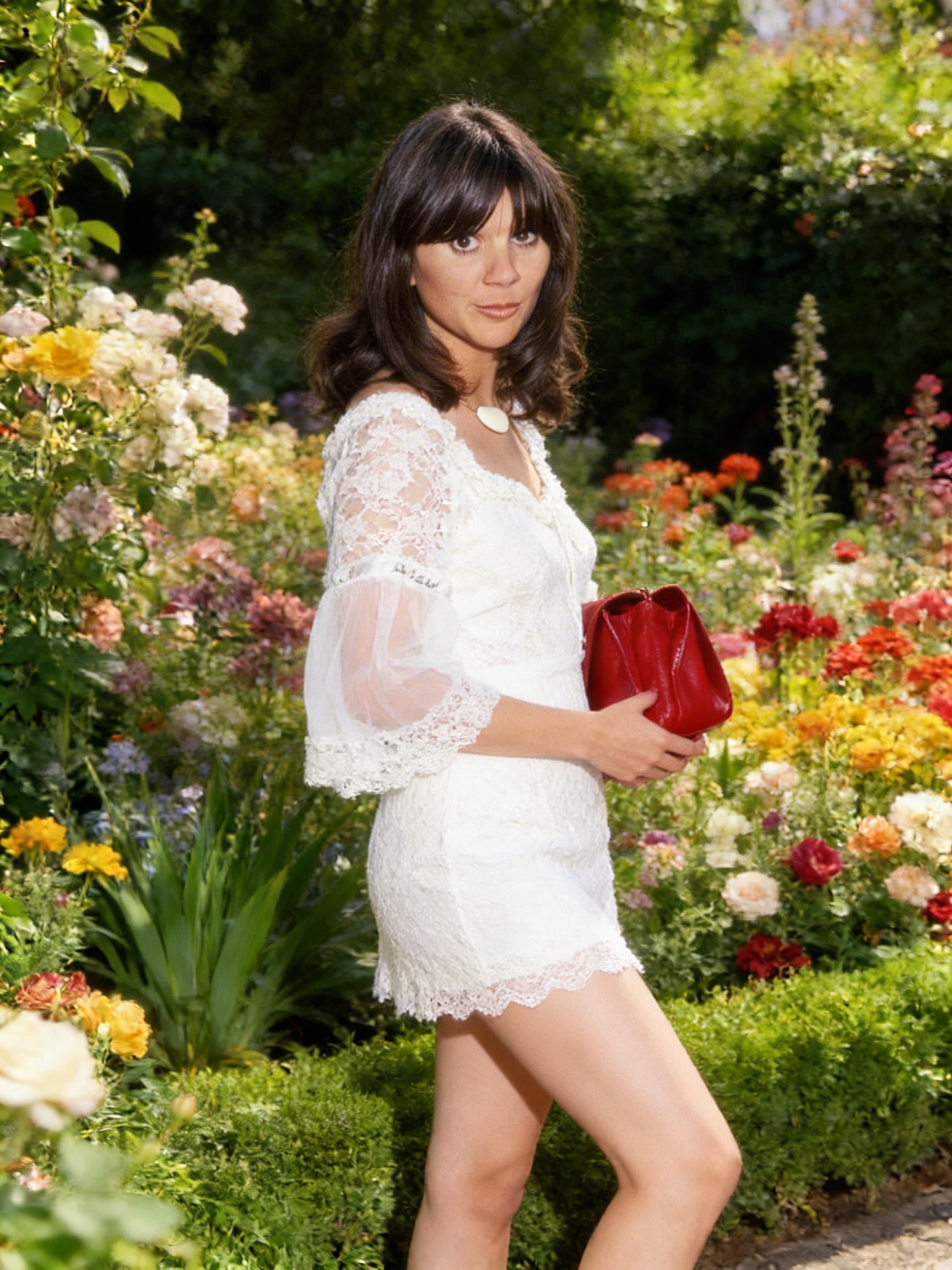
In Linda Ronstadt and Valerie Carter’s hands, an Everly Brothers vow became less like a pop confession and more like a lullaby meant to guard the room.
Linda Ronstadt recorded Devoted to You with Valerie Carter for her 1996 album Dedicated to the One I Love, a collection that reimagined familiar pop, rock, folk, and soul songs as music for children and families. That context matters. This was not simply Ronstadt covering the Everly Brothers. It was Ronstadt moving a beloved 1950s harmony song into a gentler domestic space, where devotion was not performed for a dance floor, a car radio, or a teenage jukebox, but offered almost as a nighttime blessing.
The original Devoted to You, written by Boudleaux Bryant, arrived in 1958 as part of the Everly Brothers’ golden run, paired with Bird Dog and carried by the close sibling harmony that made Don and Phil Everly sound as if two separate voices had found one shared breath. Their recording is tender, compact, and direct. It belongs to that late-1950s world where young love could sound both formal and fragile, where a promise of loyalty fit neatly inside two minutes and still felt enormous.
Ronstadt’s version with Valerie Carter understands that history, but it does not try to recreate it. On Dedicated to the One I Love, the song becomes smaller in the most meaningful sense. The arrangement softens the edges. The tempo feels unhurried. The emotional center shifts from romantic declaration to reassurance. The words may still say devotion, but the room around them has changed. A line that once sounded like a pledge between sweethearts now feels like something sung over a child drifting toward sleep, or to someone who needs to hear that love can be steady without being loud.
That was one of Ronstadt’s great gifts across her career: she could recognize the bones of a song and then find a new room for it to live in. She had already moved with rare fluency through country-rock, Mexican ranchera, traditional pop standards, folk ballads, and orchestral songcraft. By 1996, she was not chasing the center of the pop marketplace. She was drawing from a lifetime of listening and turning toward songs that could survive transformation. Dedicated to the One I Love won the Grammy Award for Best Musical Album for Children, but its emotional reach was wider than a simple children’s record label suggests. It was an album built on the idea that a good song can be handed down without being diminished.
Valerie Carter’s presence is essential to this particular reading. Carter, admired by musicians for her warm, supple voice and her work as a singer and songwriter, brings a complementary softness that lets Ronstadt’s voice settle rather than stand alone in the spotlight. Together, they do not imitate the Everlys’ brotherly blend. Their harmony has a different grain: feminine, sheltering, close to the ear. It is not about dazzling precision, though the singing is beautifully controlled. It is about trust. The voices seem to lean toward each other carefully, as if the song would lose its spell if pushed too hard.
What makes this reinterpretation especially affecting is the way it changes the scale of the lyric. Devoted to You is a simple song, almost disarmingly so. Its language does not require explanation. In a more dramatic setting, that simplicity might risk sounding slight. But as a lullaby, simplicity becomes the point. Children do not need ornate promises. Adults, at their most tired or afraid, may not need them either. The song’s repeated assurance becomes a form of emotional architecture: plain, steady, and strong enough to rest inside.
The Everly Brothers’ version remains the source, with all the clarity and youthful poise that made their recordings so influential on generations of harmony singers. Ronstadt and Carter’s interpretation does something different and quietly brave. It asks whether a song associated with early rock and roll romance can grow older without losing its innocence. The answer is in the hush of the performance. Rather than making the song grander, they make it more intimate. Rather than updating it with force, they let it breathe in a new setting.
Heard today, the 1996 recording carries an extra tenderness because it belongs to a phase of Ronstadt’s career when she was still refusing to stay in one category. She was not treating pop history as a museum. She was treating it as family memory, something to be sung again in another room, for another listener, under different circumstances. In Devoted to You, the promise is not made dramatic. It is made durable. That may be why the performance lingers: it reminds us that some songs do not need to be reinvented by being made bigger. Sometimes they are reborn by being sung more quietly.
