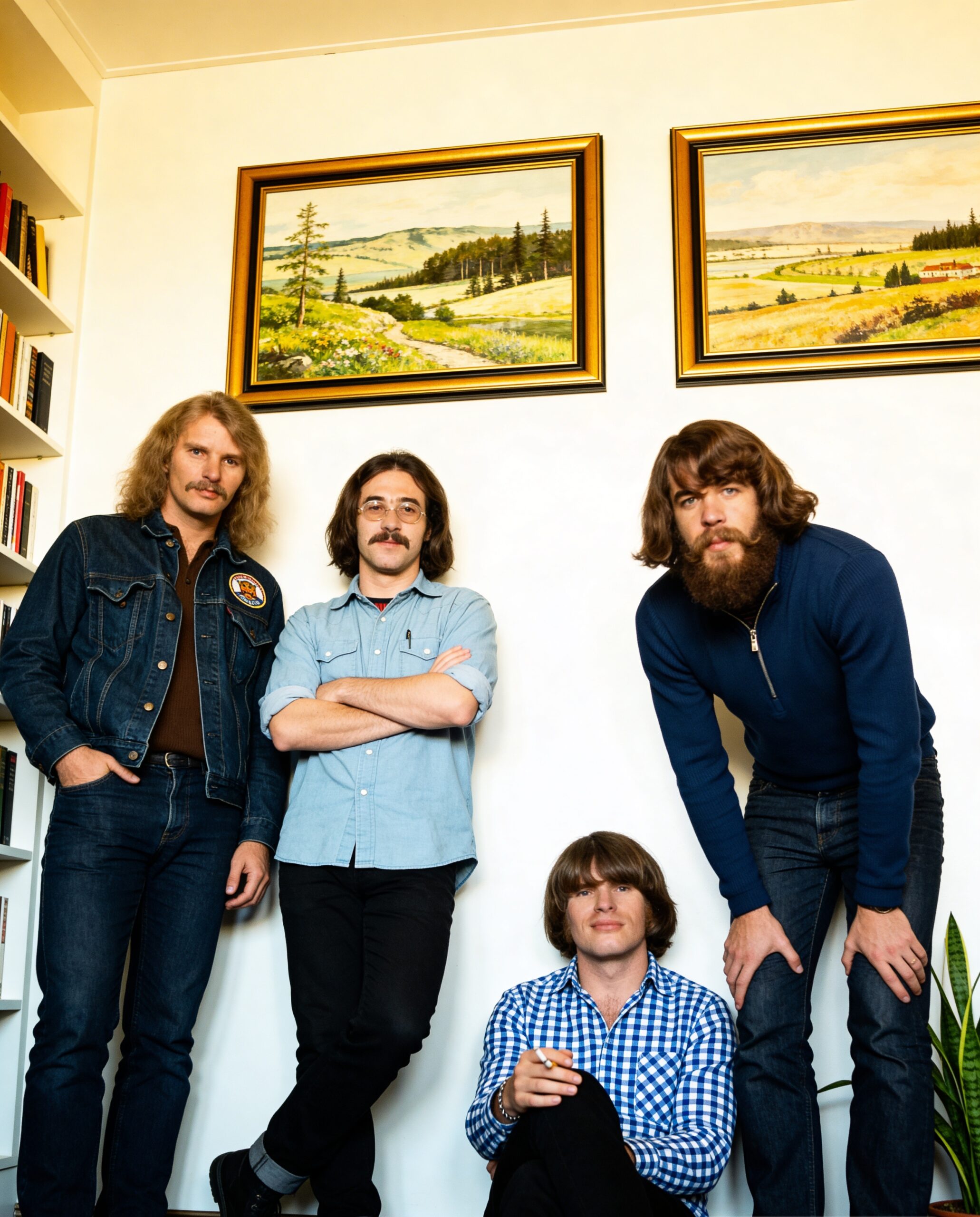
In Tombstone Shadow, Creedence Clearwater Revival turned a hard-driving swamp rocker into something more unsettling: a song about the feeling that trouble is already moving closer, even before it has a name.
Tombstone Shadow was never one of the big chart singles that carried Creedence Clearwater Revival across American radio in 1969, and that is part of its enduring mystery. The song appeared on Green River, the band’s landmark third studio album, which rose to No. 1 on the Billboard album chart in the late summer of 1969. Unlike Bad Moon Rising or Green River, Tombstone Shadow did not chart as a standalone hit, but it lived inside one of the strongest albums of the era, and over time it became one of those deeper cuts that loyal listeners return to when they want the darker, rougher edge of the band.
That matters, because Tombstone Shadow is not built like a simple radio song. It feels more like a warning. From the first bars, John Fogerty drives the track with a tense, stabbing guitar figure and a beat that never really relaxes. There is no softness in it, no room to settle in comfortably. Even before the words fully register, the atmosphere does. The song sounds like weather turning. It sounds like a man glancing over his shoulder. It sounds like bad luck dressed up as rhythm and blues.
Lyrically, Fogerty taps into an old American language of omens, fortune tellers, dread, and restless movement. The title itself is unforgettable. A tombstone is fixed, final, silent. A shadow is moving, uncertain, creeping. Put those two words together and the effect is immediate: fate has begun to follow you. This is one of the reasons the song stays in the mind long after it ends. It never tells the listener exactly what is coming. Instead, it gives us the sensation of impending trouble, and that may be more powerful than any literal narrative.
One of the song’s most striking details is the reference to a gypsy man in San Berdoo, Fogerty’s shorthand for San Bernardino. That line gives the song a very specific American roadside texture. Suddenly, this is not just abstract fear. It is fear encountered at a table somewhere, in a dusty town, in a half-mythic California landscape transformed by Creedence Clearwater Revival into something Southern, haunted, and strangely timeless. That was one of the band’s rare gifts. Though they were from El Cerrito, California, they could create a whole world of bayous, back roads, river towns, and storm fronts so vividly that it felt lived-in rather than borrowed.
Musically, Tombstone Shadow shows how disciplined and effective CCR could be at their peak. There is nothing excessive here. The groove is lean, clipped, and relentless. Doug Clifford keeps the drums tight and driving, Stu Cook anchors the track from below, and Tom Fogerty helps thicken the rhythm sound without crowding it. Over all of it, John Fogerty sings not like a man telling a campfire tale, but like someone trying to outrun the truth of it. That urgency is essential. If he had sung it too theatrically, the song might have become gimmicky. Instead, he sings with just enough grit and conviction to make the fear feel real.
There is also a larger 1969 shadow hanging over the song. America at that moment was a country full of noise, division, disillusionment, and nervous energy. Creedence Clearwater Revival never needed ornate psychedelic language to reflect that mood. They were often at their most powerful when they sounded plainspoken and direct. In Tombstone Shadow, the unease of the time comes through not as protest slogan or sermon, but as atmosphere. It is there in the tension of the riff, the superstition of the lyric, and the sense that danger can come from anywhere and at any time. That is why the song still feels vivid decades later. It is rooted in its era, but not trapped by it.
The version many listeners now encounter under the later Remastered 1985 labeling simply brings the edges into sharper focus. The remaster does not alter the soul of the performance; it reminds us how strong the original recording already was. The guitars bite a little more clearly, the rhythm section feels a little more pronounced, and the whole track breathes with that familiar CCR compact force. Yet no technical polish is really the reason the song lasts. What lasts is the feeling. That old chill. That old sense that the world can darken in the middle of an ordinary day.
If Bad Moon Rising gave Creedence Clearwater Revival one of their most famous prophecies, then Tombstone Shadow feels like its rougher cousin, less polished, more private, and perhaps more troubling. It does not ask to be admired from a distance. It pulls the listener into a narrow road of instinct, menace, and motion. And maybe that is why so many longtime fans treasure it. Beneath the great singles and the celebrated hits, this song reveals another truth about CCR: they were masters not only of hooks, but of atmosphere. They knew how to make a song feel like a storm front rolling in from somewhere you cannot quite see.
Some tracks become classics because everyone knows them. Others become lasting favorites because they seem to know something about us. Tombstone Shadow belongs to the second kind. It speaks to that uneasy human habit of sensing danger before it arrives, of reading signs in the wind, of hearing fate in ordinary noise. On Green River, surrounded by stronger commercial titles, it may have looked like an album cut. But in the heart, it plays like a warning that never really stopped echoing.
