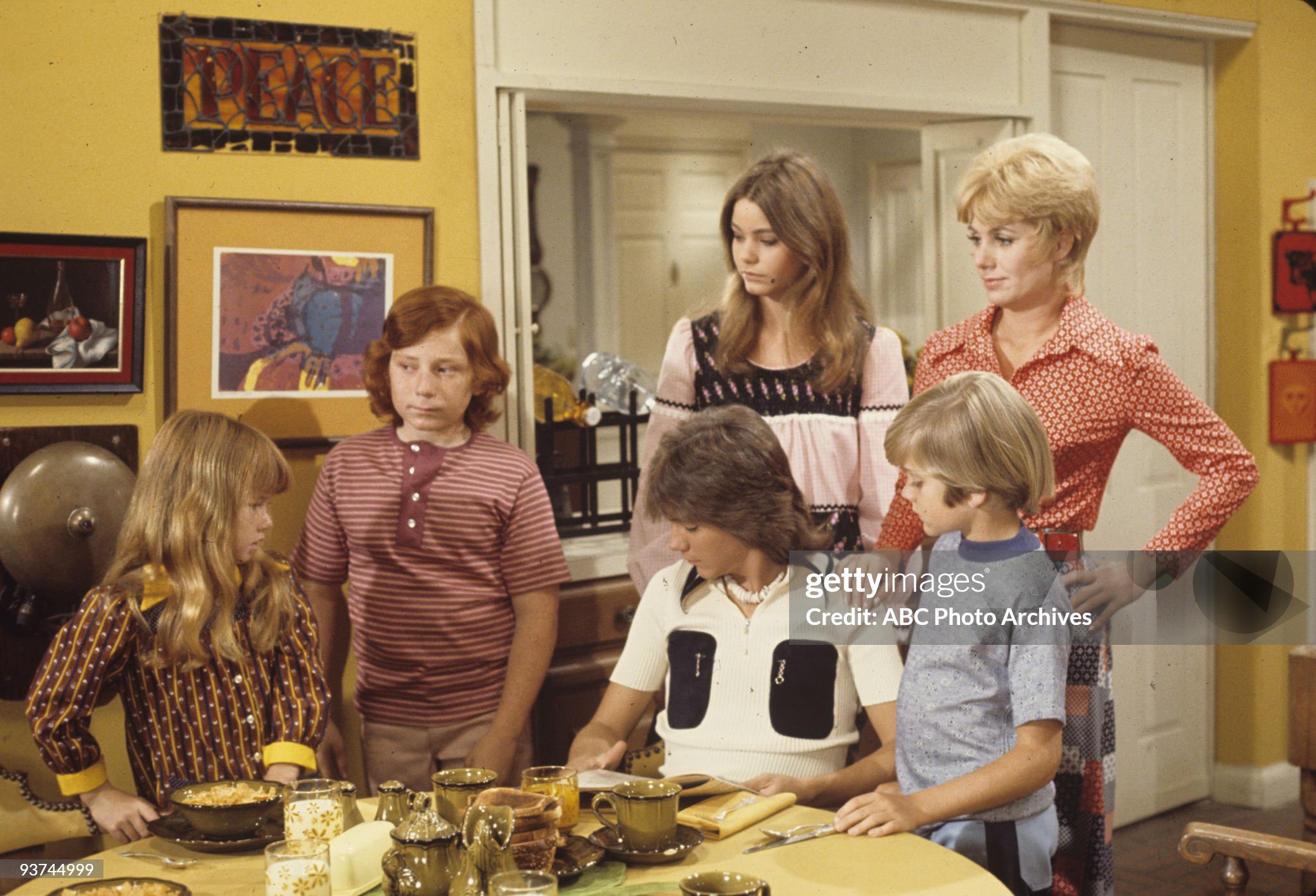
A bright television-pop album track becomes something more fragile when David Cassidy sings as if the shine has already begun to fade.
Released in 1972 on the Shopping Bag album, The Partridge Family recording of Something New Got Old sits in that revealing space between crafted pop entertainment and a more private kind of feeling. The group, born from the hit television series and guided through the Bell Records era by the polished pop instincts surrounding producer Wes Farrell, was often remembered for sunny hooks, family-show brightness, and the cultural rush around David Cassidy. But this particular track carries a softer sting. Anchored by Cassidy’s lead vocal, it turns the familiar Partridge sound toward disappointment, tenderness, and the small sadness of realizing that novelty does not protect love from wearing thin.
Shopping Bag arrived during a remarkably busy moment for The Partridge Family brand. The television series was still a fixture of early-1970s popular culture, Cassidy was becoming one of the most visible young performers in America, and the records continued to give fans carefully built songs that could live beyond the weekly screen. The album included brighter, more immediately recognizable pop pleasures, including It’s One of Those Nights, yet Something New Got Old belongs to the quieter emotional corners of the record. It does not need to announce itself as a major statement. Its power comes from the way it lets a polished arrangement carry a feeling that is more complicated than the surface first suggests.
The title itself is almost a miniature story. Something New Got Old sounds casual at first, almost like a neat pop phrase, but the emotional logic underneath is sharp. It captures that moment when excitement has passed, when a promise that once glittered begins to feel ordinary, and when the heart is left trying to explain how quickly wonder can become routine. In the hands of a less sensitive singer, the idea might have felt merely clever. Cassidy gives it weight by not overselling it. His voice stays clear, youthful, and melodic, but there is a tension inside the brightness. He sounds close to the song’s disappointment without making it heavy-handed.
That balance was one of Cassidy’s most important gifts within The Partridge Family recordings. The show made him famous as Keith Partridge, a fictional teen idol in a fictional family band, yet the voice on the records was unmistakably real. On a track like Something New Got Old, the distance between television image and musical feeling becomes especially interesting. The arrangement may belong to the clean, radio-friendly world of early-1970s pop, but the vocal suggests a young man learning how to put restraint around hurt. He does not sing as if he is collapsing under the lyric. He sings as if he has already tried to talk himself out of caring.
Musically, the song reflects the refined pop craftsmanship that made The Partridge Family catalog more durable than skeptics sometimes allowed. The production is tidy, the melody accessible, and the background textures support the lead without crowding it. Nothing feels designed to shock or overwhelm. Instead, the track works through contrast: a pleasant shape carrying an uneasy truth. That was a common secret of the best soft pop of the period. The songs could enter the room politely, dressed in harmonies and bright instrumentation, while quietly bringing along loneliness, doubt, or the ache of changing feelings.
For listeners who only remember The Partridge Family through the broad outline of lunchboxes, television reruns, and screaming concert crowds, Something New Got Old offers a more intimate point of entry. It reminds us that pop made for a mass audience can still hold emotional detail. The recording does not ask to be separated from its commercial world; it asks to be heard within it. That is part of what makes it interesting. The song comes from a machine built for charm and reach, yet Cassidy’s lead finds a human crease in the fabric.
There is also something revealing about hearing the phrase Something New Got Old in connection with Cassidy’s career at that moment. By 1972, fame had gathered around him with extraordinary speed. The public image was polished, youthful, and constantly renewed, but the songs often gave him room to suggest feelings that were less simple than the posters on bedroom walls. This track does not need to be read as biography to feel resonant. It is enough to hear how convincingly he inhabits the idea of something bright losing its first glow. The lyric’s theme and the singer’s circumstance seem to brush against each other, creating a quiet echo.
As an album cut, Something New Got Old may not carry the same public memory as the group’s biggest singles, but that is exactly why it deserves another listen. The famous songs often carry the banner of an era; the smaller tracks reveal its texture. Here, The Partridge Family sound is not simply cheerful decoration. It becomes a frame for bittersweet pop, where sweetness remains but certainty slips away. David Cassidy’s vocal keeps the song from becoming just another well-made piece of period craft. He gives it a pulse, a flicker of reluctance, a sense that the goodbye has not fully happened but the room already knows it is coming.
Decades later, Something New Got Old still feels valuable because it preserves a very specific emotional temperature: not devastation, not grand regret, but the subdued recognition that affection can lose its freshness before anyone is ready to admit it. In that modest, melodic space, Cassidy lets the listener hear the bruise under the polish. The song remains a small but telling reminder that even inside television pop, where everything was meant to look bright and easy, there were moments when a young voice could make a simple line feel lived in.
