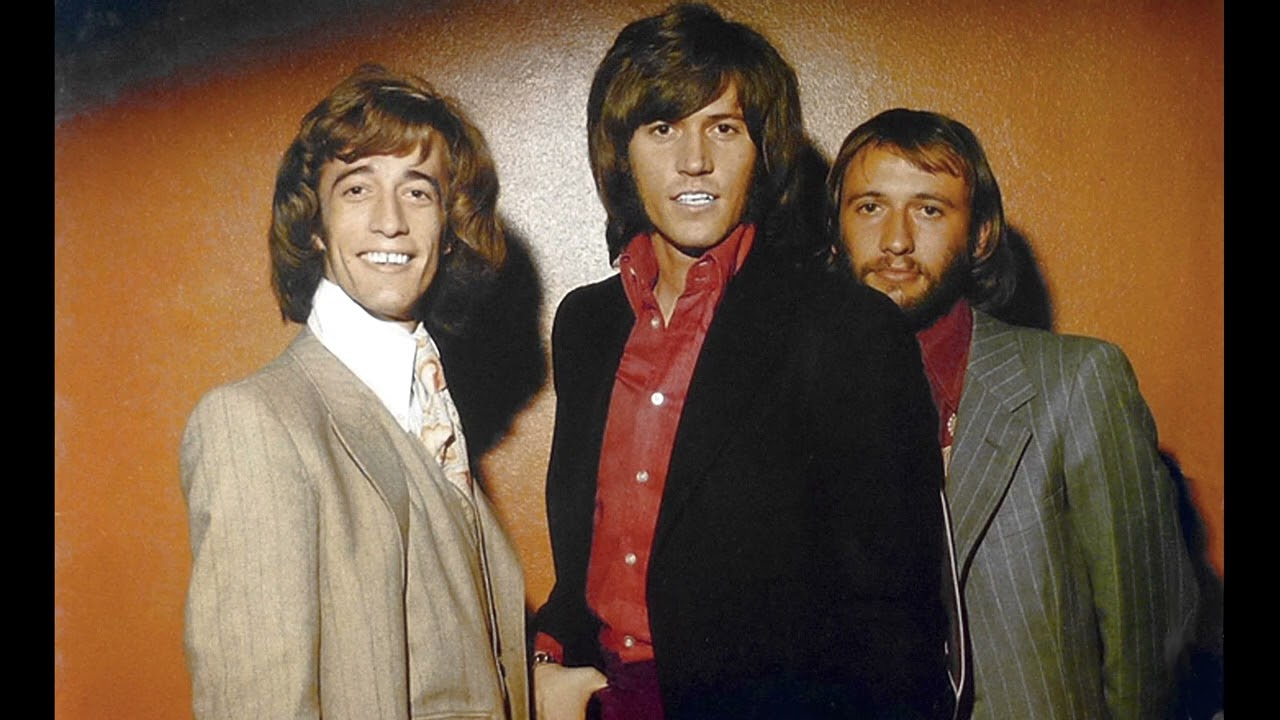
He’s a Liar was the moment the Bee Gees stopped letting the world define them by disco alone and answered back with a tougher, guitar-driven sound.
Released in 1981 as the lead single from Living Eyes, He’s a Liar arrived carrying far more than a new melody. It carried a correction, a challenge, and in some ways a quiet act of self-defense. By that point, the Bee Gees were still living under the enormous shadow of their late-1970s triumphs, especially the fever-bright image attached to Saturday Night Fever. To the wider public, they were still the kings of a dance era. But inside the studio, Barry, Robin, and Maurice Gibb were already trying to reclaim the full range of who they had always been: craftsmen, harmonists, songwriters, and musicians who could do far more than ride a beat beneath a mirrored ceiling.
That is what makes He’s a Liar so revealing. On the charts, it reached No. 30 on the Billboard Hot 100 in the United States, a respectable showing but a long way from the towering dominance they had known only a few years earlier. Yet chart position tells only part of the story. The more interesting truth is that this record was designed to sound different. It was the opening statement of Living Eyes, and the choice of sound was no accident. The band leaned into a more rock-oriented arrangement, cutting away from the disco association that had become both blessing and burden. The rhythm is firm, but it does not glide in the old way. The energy comes from tension, attack, and edge.
One of the clearest signs of that intention was the presence of Don Felder, best known as the guitarist from the Eagles. Bringing Felder into the orbit of He’s a Liar was more than a guest-credit detail. It signaled direction. His guitar helped give the track a sharper profile, one that placed the Bee Gees closer to early-1980s adult pop-rock than to the dance-floor identity that many listeners still expected from them. It was a clever and deliberate move. Felder’s sound carried credibility from another corner of American radio, another kind of emotional weather. With that one choice, the Gibbs made it clear that they were not trying to recreate 1978. They were trying to survive 1981.
The song itself fits that transition beautifully. Lyrically, He’s a Liar is a warning song, but it does not play like a simple lecture. There is urgency in it, almost a breathless insistence, as though truth has arrived a moment too late and someone is trying to stop the damage before it settles in. That emotional pressure gives the record much of its strength. It is not lush in the romantic way of some earlier Bee Gees material. It is tighter, more guarded, more alert. Even the phrasing feels edged with suspicion. In another era, that same lyrical idea might have been dressed in satin. Here, it comes wrapped in steelier colors.
And yet, for all the changes, the group never stops sounding like themselves. That is part of the quiet beauty of the record. Beneath the tougher surface, the harmonic architecture is unmistakably Bee Gees. Barry’s lead has urgency, but Robin and Maurice remain essential to the emotional shape of the performance. Their blend gives the song its ache, its inner movement, its human depth. This is why the track matters more than its commercial afterlife sometimes suggests. It is not a rejected experiment. It is a real Bee Gees record, deeply rooted in their gift for melody and vocal interplay, simply dressed in a different season.
The larger context matters too. By 1981, the backlash against disco had not merely cooled a trend; it had distorted the way people heard artists associated with it. Few major acts were more unfairly simplified by that shift than the Bee Gees. Their career had begun long before the disco boom, and their writing extended into ballads, orchestral pop, blue-eyed soul, and melancholy chamber-like confession. But public memory can be lazy, and enormous success often traps artists inside one chapter of their own story. He’s a Liar sounds like a band resisting that trap in real time.
The album Living Eyes as a whole pushed in that direction, favoring a polished early-1980s pop-rock language over the pulse that had made them unavoidable on dance radio. In that sense, He’s a Liar was the right lead single, even if it was not the blockbuster many might have hoped for. It announced the album’s intentions honestly. It told listeners that the Bee Gees were not interested in becoming a museum piece for a fading craze. They were still active, still searching, still capable of turning the page.
Listening now, there is something moving about that decision. Time has been kinder to records like this than the marketplace was. What once sounded like a difficult pivot now feels like evidence of character. He’s a Liar may not sit at the very top of the group’s most celebrated singles, but it reveals a great deal about their resilience. It catches the Bee Gees in a vulnerable but fascinating moment: famous enough to be trapped by expectation, gifted enough to fight their way past it. With Don Felder adding bite, with Living Eyes framing a new chapter, and with the brothers refusing to imitate their own past, the song stands today as one of the clearest snapshots of a band determined to be heard anew.
