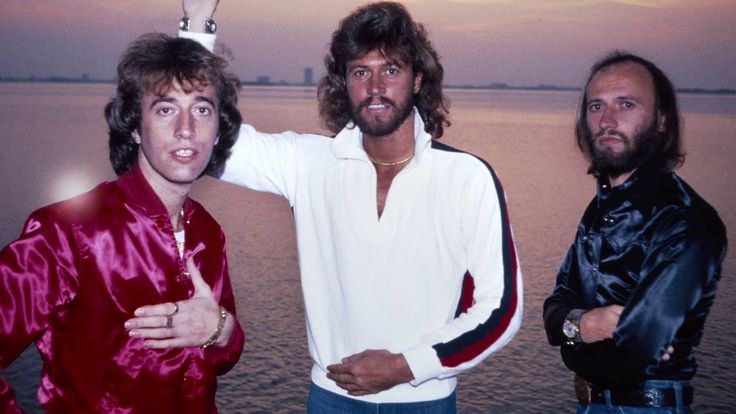
With One, the Bee Gees did not simply score another hit in 1989. They crossed the long American shadow of backlash and reminded listeners that their gift for melody, heartbreak, and harmony had never gone away.
When One arrived in 1989 as the title track and lead single from the Bee Gees album One, it carried more weight than an ordinary comeback song. In the United States, it climbed to No. 7 on the Billboard Hot 100, giving Barry, Robin, and Maurice Gibb their first American Top 10 single since Love You Inside Out reached the upper tier in 1979. That one fact tells the whole emotional story. A full decade had passed. In pop music, ten years can feel like another lifetime. For the Bee Gees, those years had been filled with worldwide success, critical reassessment, and continued songwriting brilliance, yet American radio still carried the memory of the disco backlash like a closed door.
That is what makes One so meaningful in the group’s history. It was not a novelty return, and it was not a desperate attempt to recreate Saturday Night Fever. If anything, the song succeeds because it does the opposite. It is measured, mature, polished, and emotionally inward. The pulse is contemporary for the late 1980s, with clean production and soft synth textures, but the soul of the record is unmistakably the work of the Gibb brothers. Barry’s lead carries warmth and control, while the familiar blend of voices behind him gives the song its true power. The arrangement does not rush. It lets the ache gather slowly, and that patience is part of why the song still feels dignified today.
The chart story matters because the Bee Gees had never truly stopped being important outside the United States. Their 1987 album E.S.P. had already restored them to major success in Europe and beyond, especially with You Win Again. But the American market was slower to come back around. For many U.S. programmers, the group remained tied to the overexposed disco era, even though their catalog had always been larger, richer, and more musically varied than that stereotype allowed. One broke through because it did not argue with the past. It simply reminded people, in the most graceful way possible, that the men who wrote How Deep Is Your Love, To Love Somebody, and Massachusetts were still writing songs of feeling and substance.
The emotional world of One is part of its lasting pull. The lyric moves through ideas of unity, longing, and separation with the kind of elegant simplicity the Bee Gees often did so well. It sounds like a love song, but it also feels larger than romance alone. The title itself carries a quiet depth: one heart, one voice, one chance, one life shared and tested by distance. Heard in the context of the brothers’ own history, the song gains another layer. The album came in the wake of younger brother Andy Gibb’s passing in 1988, and while listeners should be careful about reducing the song to one single biographical explanation, there is no question that the era around One was marked by family feeling, reflection, and loss. That gives the record a tenderness that listeners can sense even if they do not know every detail behind it.
What is especially moving is that the comeback arrived without swagger. There is no chest-thumping declaration in One. The record is too wise for that. Instead, the song sounds like three brothers standing inside their craft with complete faith in what they do best. The melody is strong, the hook is immediate, and the harmonies are arranged with a restraint that makes the emotion land harder. By 1989, pop was changing fast. The charts were full of new production styles, fresh faces, and a younger rhythm. Yet One found its space because real songwriting still mattered. The record fit adult contemporary radio, certainly, but it also reached the wider pop chart because it was simply undeniable.
There is something almost poetic about the way the title track of One became the song that restored the Bee Gees to the American Top 10. After years of being treated by some corners of U.S. radio as if they belonged to a finished chapter, the brothers returned with a song about connection, singular devotion, and emotional endurance. In that sense, the title feels symbolic. The three brothers were still one musical identity. The songwriting instinct was still one unbroken thread. And the audience, at least for that moment, became one with them again.
Today, One may not be the first Bee Gees song casual listeners name, but among those who follow the group’s full story, it stands as one of the most important records of their later career. Not because it was louder than their earlier classics, but because it proved they could still reach the American mainstream on their own terms. It did not erase the cruelty of the backlash years, and it did not need to. What it did was far more elegant. It restored balance. It let the public hear the brothers not as a symbol of a bygone craze, but as what they had always been: master songwriters, master harmonists, and artists capable of surviving fashion, misunderstanding, and time itself.
That is why One endures as a true comeback record. It sounds like experience distilled into melody. It sounds like grace under pressure. And in the long, complicated history of the Bee Gees, it remains one of those rare singles whose chart position means more than commerce. No. 7 on the Billboard Hot 100 was not just a number. It was a door opening again.
