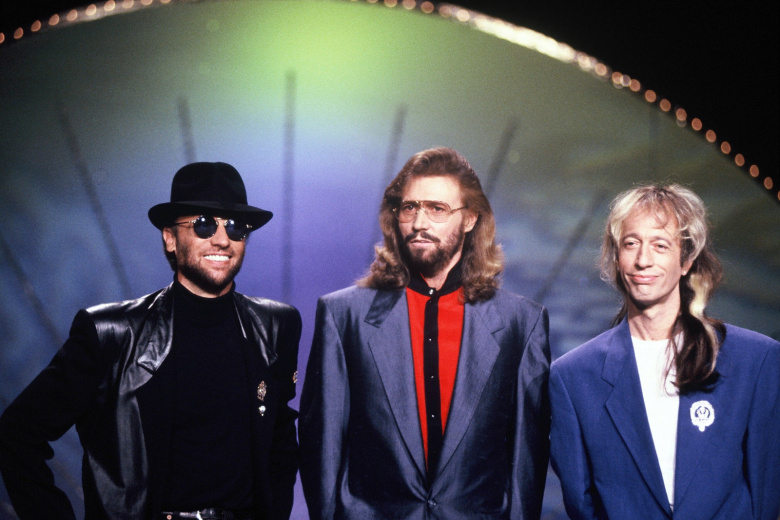
Recorded in a moment of uncertainty, Don’t Forget to Remember showed how the Bee Gees could turn absence into tenderness, and transition into one of the most quietly lasting records of 1969.
There is something especially moving about Don’t Forget to Remember when you hear it in its proper setting. Released in 1969, the song rose to No. 2 on the UK Singles Chart, and on the surface it seemed almost disarmingly simple: a gentle, country-leaning pop ballad carried by melody, grace, and restraint. But behind that warm, easy exterior was a group passing through one of its most unsettled chapters. Robin Gibb had temporarily left the Bee Gees, and this recording emerged from the period in which Barry Gibb and Maurice Gibb were trying to steady both the band and themselves.
That context matters, because it changes the emotional weather of the song. Written by Barry and Maurice, Don’t Forget to Remember belongs to the Cucumber Castle era, the strange and revealing interval when the group continued without Robin’s voice in the room. The split had grown out of tensions that had surfaced around the Odessa period, when artistic differences and bruised feelings pulled the brothers in separate directions. Robin pursued a solo path for a time, and suddenly the familiar Bee Gees blend, that unmistakable three-part identity, was no longer intact. What remained was not the collapse of the band, but a different version of it, leaner, quieter, and in some ways more exposed.
That is exactly what makes this record so fascinating. Rather than trying to imitate the full dramatic shimmer of the earlier Bee Gees sound, Barry and Maurice leaned into intimacy. Barry takes the lead with a voice that sounds direct, tender, and almost conversational, while Maurice’s contribution as co-writer and musician helps shape the record’s balance and softness. The arrangement does not push. It does not plead too loudly. It simply lets the sadness breathe. There is acoustic warmth in it, a soft country-pop current, and a sense of emotional maturity that feels very different from the ornate melancholy of some of the group’s late-1960s masterpieces.
That country flavor is part of the song’s lasting charm. The Bee Gees are often discussed through the grand sweep of their career, from baroque pop to the dazzling dominance of the disco years, but Don’t Forget to Remember reminds us how naturally they could inhabit a more rural, plainspoken style. It is melodic without being sugary, sentimental without losing dignity. The song carries the ache of separation, yet never turns bitter. Instead, it asks for something smaller and, in a way, more human: if love has gone, at least let memory remain. That emotional modesty is one of its deepest strengths.
Lyrically, the song is built around one of the oldest and most universal fears there is, not simply losing someone, but being erased from their heart. That is why it still lands so gently and so deeply. Don’t Forget to Remember is not written as a dramatic scene of accusation. It is a lingering appeal, filled with quiet acceptance and wounded hope. In that sense, the song feels almost wiser than many breakup records of its era. It understands that some endings do not arrive with noise. They arrive with silence, distance, and the aching wish that what mattered once will not vanish completely.
And of course, there is another layer that listeners have long felt, whether consciously or not. During Robin’s temporary departure, the song could be heard as more than a romantic ballad. It emerged from a moment when the Bee Gees themselves were living with separation, uncertainty, and the fear of what might be lost. That does not mean the lyric was literally about the group, but the emotional atmosphere surrounding the recording gives it an added resonance. A song about not being forgotten, made by a band trying to hold its identity together, carries a quiet irony that only deepens its beauty.
Its chart success proved that the public still responded strongly to the group, even in altered form. Reaching No. 2 in the UK, the single became one of the major British hits of that transitional year and confirmed that Barry and Maurice could still connect powerfully with listeners while the band’s internal picture remained incomplete. That matters in the larger Bee Gees story. This was not yet the later era of global dance-floor immortality. This was a more fragile chapter, when every successful record felt like both a reassurance and a question mark.
Today, Don’t Forget to Remember stands as one of the most revealing records in the Bee Gees catalog. Not because it is their loudest statement, or their most innovative arrangement, but because it captures a rare emotional truth. You can hear a group in transition and a pair of brothers finding a way forward through melody. You can hear Barry Gibb‘s gift for sincerity, Maurice Gibb‘s essential musical instinct, and the strange tenderness that sometimes appears when a famous harmony is temporarily broken.
For that reason, the song remains far more than a lovely period single. It is a document of resilience. It is a country-pop ballad wrapped around a private uncertainty. And it is one of those records that seems to grow more touching with time, because the circumstances behind it are now inseparable from the feeling in the grooves. When the Bee Gees later reunited in their classic form, this recording remained behind like a snapshot from the pause in between, soft-spoken, wounded, graceful, and impossible to dismiss.
