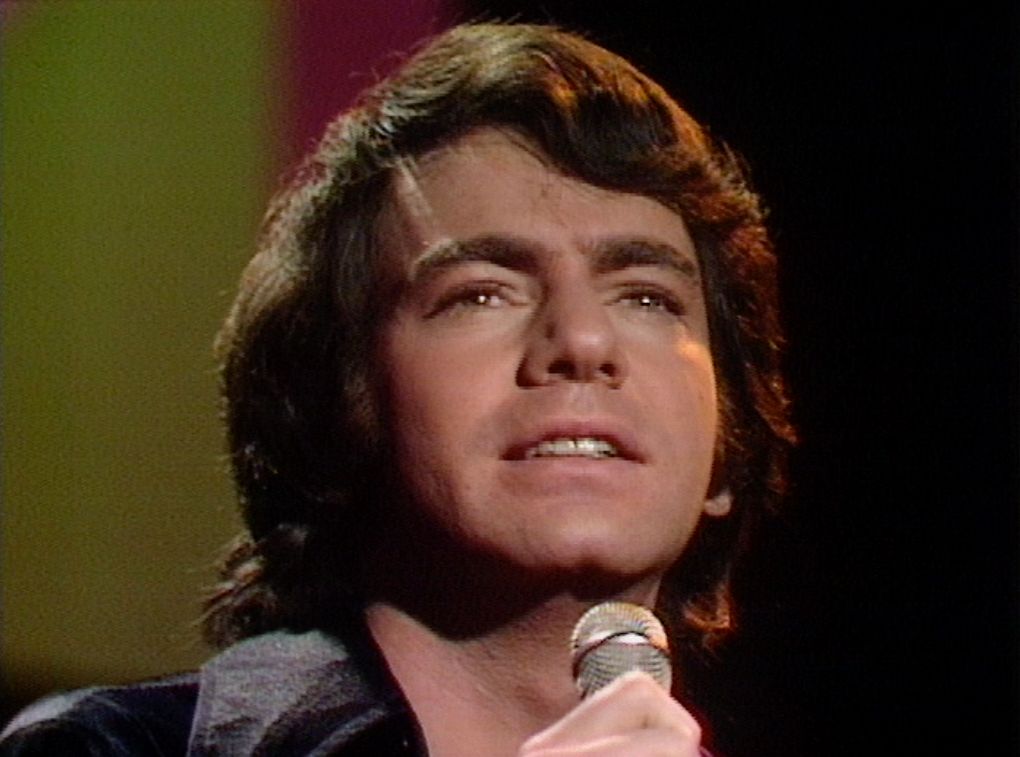
In the polished glow of 1982, Neil Diamond found a quieter shoreline on In Ensenada, where the Heartlight era turned inward instead of reaching for the spotlight.
Neil Diamond released In Ensenada in 1982 as an album track on Heartlight, a record that placed him in close creative conversation with Burt Bacharach and Carole Bayer Sager. That detail matters. This was not simply another cut tucked between better-known titles; it belonged to a particular moment in Diamond’s career, when his large-voiced storytelling met the refined, emotionally measured world of early-1980s adult pop. Co-written by Diamond, Bacharach, and Bayer Sager, In Ensenada carries the imprint of three writers who understood that a song could suggest a whole private history without spelling it out.
The album Heartlight arrived during a transitional stretch for popular music. The early eighties were becoming shinier, more visual, and more electronically polished, yet there remained a strong place on radio and record shelves for artists who could make a melody feel lived-in. Diamond had already entered the decade with renewed visibility through The Jazz Singer soundtrack and songs such as Love on the Rocks and America. By 1982, he was not trying to become a new artist so much as finding new rooms for the voice people already knew: that deep, grainy baritone, part showman and part solitary witness.
Heartlight is often remembered first for its title song, a major pop and adult contemporary success associated with the emotional atmosphere of the film E.T. the Extra-Terrestrial. But albums are rarely understood fully by their biggest single. Sometimes the quieter tracks reveal the temperature of the whole record more honestly. In Ensenada does that. Its title alone opens a door to place: Ensenada, the coastal city in Baja California, close enough to Southern California to feel reachable, distant enough to feel like escape. In Diamond’s hands, a place name often becomes more than geography. It becomes a room in memory.
The collaboration with Burt Bacharach and Carole Bayer Sager gives the song its particular emotional architecture. Bacharach, long admired for melodies that move with elegant unpredictability, had a gift for making sophistication sound natural. Bayer Sager brought a lyricist’s instinct for direct language that could still leave space around the feeling. Diamond, meanwhile, supplied a performer’s sense of scale: he knew when a line needed to be carried like a confession and when it needed to sit back, almost spoken into the air. On In Ensenada, those strengths meet in a way that feels less like a grand declaration than a reflective pause.
That pause is part of what makes the track valuable inside the Heartlight album. The record belongs to the smooth surfaces of its time, but Diamond’s best work has always depended on friction beneath the surface. He could write an anthem, but he was also drawn to loneliness, distance, exile, and the ache of being known by crowds while still searching for a private truth. In Ensenada fits into that deeper Diamond tradition. It does not need to announce itself as a centerpiece. It works more like a postcard found years later, its meaning changed by the hand that saved it.
Hearing the song in its 1982 setting also changes the way it lands. This was an era when the singer-songwriter generation was adapting to a different industry rhythm. Arrangements were becoming sleeker; ballads were often framed with studio polish; veteran performers were expected to sound contemporary without losing the emotional authority that had brought listeners to them in the first place. Diamond’s answer was not to abandon his theatrical instincts, but to soften the edges around them. On tracks like In Ensenada, he lets restraint become part of the drama.
There is something quietly cinematic about that approach. The song does not have to describe every detail for the listener to sense movement: a coastline, a room near water, the feeling of having traveled somewhere only to discover that the real distance is interior. That is where the Bacharach and Bayer Sager partnership becomes especially important. Their best songs often understood glamour as a surface under which uncertainty could tremble. Diamond, with his broad emotional grain, gives that uncertainty a human weight.
For listeners who come to Heartlight only through the familiar title track, In Ensenada offers a different kind of reward. It is not the open beam of the album’s hit single. It is the side light, the late-afternoon shade, the track that seems to ask less from the listener at first and then stays longer than expected. In the long arc of Neil Diamond’s catalog, that kind of song matters. It reminds us that his career was never built only on sing-along choruses or arena-sized emotion. It was also built on smaller scenes where memory, place, and voice meet without needing to resolve themselves.
That may be why In Ensenada still feels worth returning to. It belongs unmistakably to 1982, with the elegance and sheen of its period, yet its emotional center is older than any production style. A singer looks toward a place, or back from it, and the listener is left with the sense that travel has not solved anything. It has simply given longing a coastline. In that quiet space, Neil Diamond, Burt Bacharach, and Carole Bayer Sager created one of those album moments that does not demand attention, but rewards it patiently.
