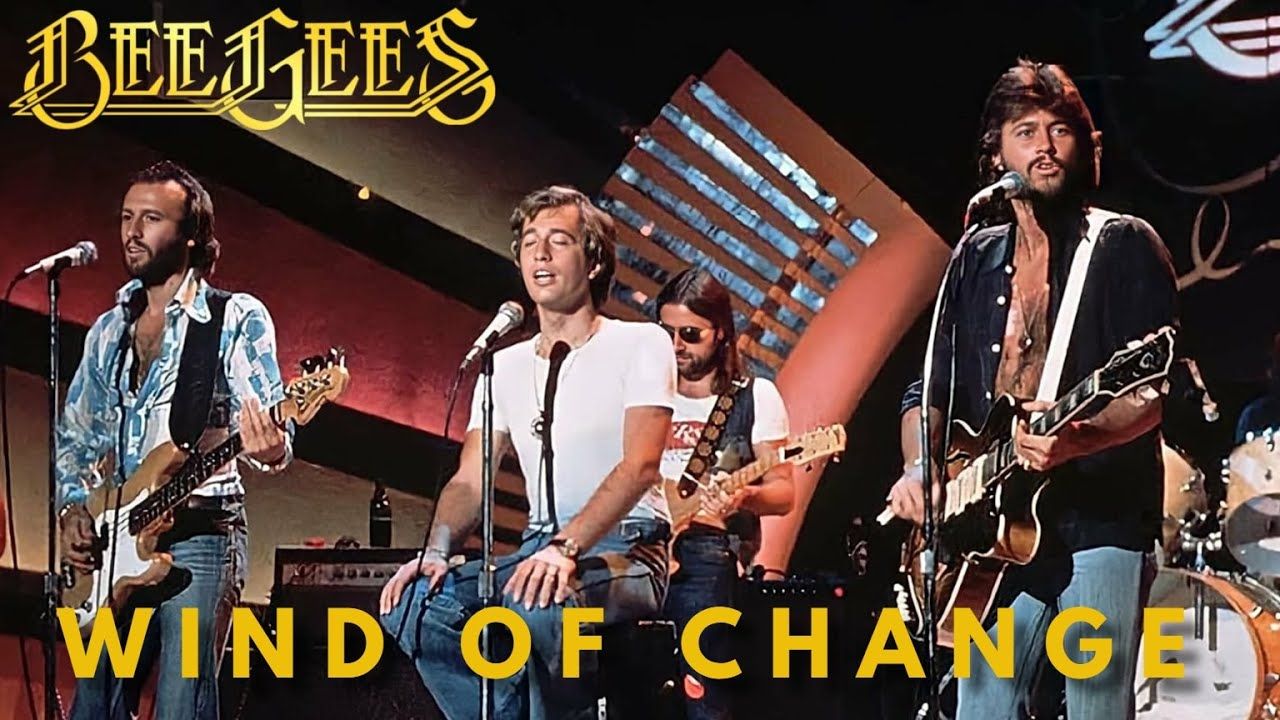
Before the world learned to hear the Bee Gees through dance-floor shimmer, In My Own Time caught three young brothers testing harmony against the colors of 1967.
In My Own Time appeared on Bee Gees’ 1st, the 1967 album that introduced Barry Gibb, Robin Gibb, and Maurice Gibb to a far wider international audience. The title of the album can be a little misleading: the brothers had already recorded in Australia, where they spent crucial early years sharpening their songwriting and group identity. But in Britain, under the guidance of manager Robert Stigwood and working in an era alive with studio experimentation, Bee Gees’ 1st became the record that opened the door. It contained the more widely remembered songs New York Mining Disaster 1941, To Love Somebody, and Holiday, yet buried within that same album was a shorter, sharper, wonderfully telling track: In My Own Time.
As an early deep cut, In My Own Time matters because it catches the Bee Gees before later fame narrowed public memory of what they could be. Long before falsetto choruses and satin-era grooves became part of their global image, the brothers were fascinated by the possibilities of psychedelic pop, baroque textures, brisk guitar figures, and tightly interlocked voices. On this track, their harmonies do not simply decorate the song; they drive it forward, giving the record its nervous brightness and youthful lift. The sound belongs unmistakably to 1967, a year when British pop seemed to be widening by the week, with bands discovering that a three-minute song could feel theatrical, strange, ornate, and immediate all at once.
The arrangement has a compact energy that separates it from the grander melancholy often associated with early Bee Gees ballads. There is a restless pulse underneath it, a sense of motion rather than reverie. The guitars carry a crisp, almost wiry attack, while the vocal blend gives the track its polish and personality. The brothers were already learning how to use harmony as architecture: one voice leaning into another, a phrase lifted by a shared vowel, a melody suddenly made larger because it seems to arrive from three emotional angles at once. In later years, that gift would become one of the most recognizable sounds in popular music. Here, it is still young, hungry, and slightly unruly.
What makes In My Own Time especially fascinating is how it sits between imitation, invention, and identity. The Bee Gees were absorbing the language of the mid-sixties around them: psychedelic accents, clever rhythmic turns, and the ornate pop sensibility that allowed harpsichord-like elegance, guitar bite, and surreal atmosphere to coexist. Yet even when the track reflects its moment, it does not feel anonymous. The Gibb brothers had a particular way of making even brisk material sound emotionally shaded. Their voices could suggest confidence and uncertainty in the same breath. On In My Own Time, the lyric title itself becomes a kind of statement: not a grand declaration, but a youthful insistence on pace, direction, and self-possession.
The song also reminds us that Bee Gees’ 1st was not merely a collection of singles with filler placed around them. It was a portrait of a band trying on possibilities. Some songs leaned toward chamber-pop sadness. Others moved through mystery, character sketches, or ornate melancholy. In My Own Time offered a different shade: concise, spirited, and rhythmically alert, with enough psychedelic flavor to place it firmly in its year but enough vocal personality to point toward what the Bee Gees alone could do. It is the kind of album track that rewards listeners who move past the familiar titles and stay for the corners of the record where a band reveals its workshop.
Hearing it now, decades removed from its original context, the track can feel like a photograph taken just before the subjects fully understood how large their story would become. The Bee Gees of 1967 were not yet fixed in the public imagination. They were young, ambitious, and unusually gifted, still standing near the crossroads of British pop, Australian memory, brotherly instinct, and studio-era possibility. In My Own Time does not carry the solemn emotional weight of their biggest ballads, nor the world-conquering confidence of their later hits. Its value lies elsewhere: in its spark, its craft, its sense of discovery.
That is why this early deep cut continues to glow for listeners who love the first Bee Gees era. It captures a band before certainty, before reinvention became a career-long habit, before the catalog hardened into famous chapters. In under a few minutes, Barry, Robin, and Maurice Gibb sound like young writers racing through the possibilities of their time, trusting that harmony could carry them somewhere new. The title almost feels prophetic now. They would become many things, and they would do it in their own time.
