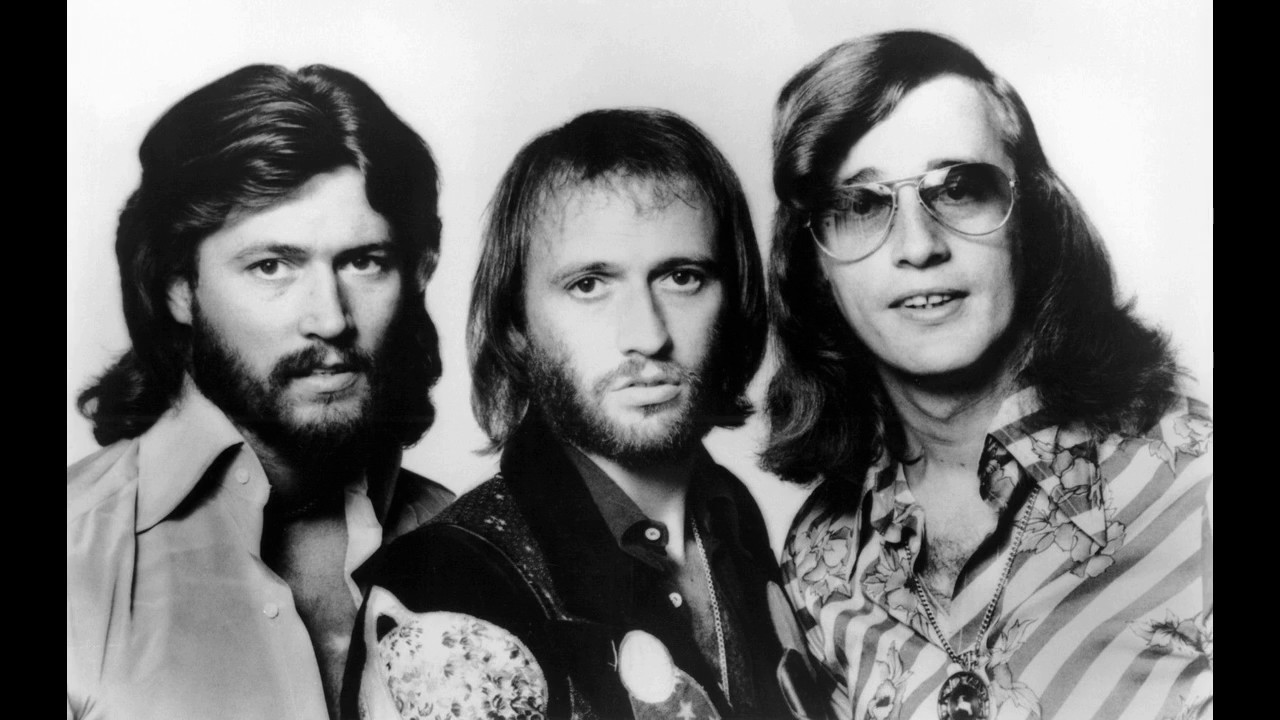
On the far side of “Spicks and Specks,” Robin Gibb’s voice was already reaching beyond Australia toward the grand pop horizons the Bee Gees would soon chase in Britain.
In 1966, Bee Gees released “I Am the World” as the B-side to “Spicks and Specks”, the single that gave the brothers their first major breakthrough in Australia. That placement matters. A B-side often carried the stray experiment, the mood piece, the song that was not expected to do the public work of the A-side. But in this case, the flip side sounds less like a leftover than a small flare sent ahead of the band’s next life. With Robin Gibb taking a dramatic lead vocal, “I Am the World” catches the Bee Gees at the edge of transformation, still tied to their Australian recording years but already imagining a larger pop canvas.
“Spicks and Specks” was the obvious front door. Written by Barry Gibb, it had a memorable piano-driven shape and a clear emotional center, and it became the song that finally gave the young group serious recognition after years of performing, writing, and recording in Australia. The Gibb brothers were still startlingly young, but they had already learned the discipline of the three-minute single: a hook, a mood, a feeling that could survive radio static and live in a listener’s memory. The A-side had that directness. It sounded like a breakthrough because it knew how to introduce itself.
“I Am the World”, by contrast, does something stranger and more revealing. Its title alone feels too large for the back of a single, almost defiantly out of scale. Yet that is exactly why it lingers. Robin does not approach the song as a modest companion piece. He sings as if the emotional room has suddenly expanded around him, his voice carrying that tremulous, declarative quality that would soon become one of the Bee Gees’ most distinctive instruments. Before international audiences came to know him through records such as “Massachusetts” and “I Started a Joke”, this B-side already held traces of the same unusual force: fragility sharpened into drama, innocence shadowed by grandeur.
The recording belongs to the Bee Gees’ pre-UK-breakthrough period, before their 1967 arrival in Britain placed them in the orbit of Robert Stigwood and a wider pop world. In Australia, they had been industrious and restless, moving through beat music, harmony pop, and early songwriterly experiments. What makes “I Am the World” compelling is not that it sounds fully formed in the way their later international singles would. It is compelling because it sounds as if a door has opened before the group has completely stepped through it. The arrangement remains compact, shaped by the resources and vocabulary of mid-sixties pop, but Robin’s vocal imagination makes it feel broader than its frame.
That vocal is the key. Robin Gibb’s singing was never merely pretty, and it was never easy to place. It could sound formal, almost old-world, while still cutting through a modern pop record. On “I Am the World”, he seems to lean into a kind of emotional overstatement that might have collapsed in a less committed performance. Instead, he makes the scale believable. The song’s sense of self-declaration, its reach toward something universal, becomes less like youthful exaggeration and more like a clue. The Bee Gees were not only looking for hits. They were looking for a language big enough to hold melodrama, harmony, loneliness, and theatrical feeling without apology.
Hearing the B-side beside “Spicks and Specks” changes the shape of the single. The A-side shows the Bee Gees finding a public foothold. The B-side shows them testing the emotional architecture they would later build upon. By the time the brothers began their British recording career in earnest, with songs such as “New York Mining Disaster 1941” and the material that filled Bee Gees’ 1st, their music would often carry a sense of scale unusual for such young writers. They had a gift for making compact pop records feel like small dramas. “I Am the World” suggests that instinct was already alive before the world fully noticed.
There is something especially fitting about this song living on the reverse side of a breakthrough. B-sides ask for a different kind of attention. They are discovered by listeners who turn the record over, by fans who want the whole artifact rather than only the advertised song. In that space, “I Am the World” becomes more than a curiosity. It is a glimpse of Robin Gibb before his voice became internationally familiar, and of the Bee Gees before their ambitions were matched by a global stage. The song does not need to be polished into later greatness to matter. Its value lies in its reach, in the feeling that the brothers were already hearing something vast in their heads and trying to make a young pop record contain it.
Nearly six decades later, the B-side still has the power of an early signal. It reminds us that careers are not only made by the songs everyone remembers first. Sometimes the quieter side of a famous single tells us where an artist was really headed. “Spicks and Specks” announced that the Bee Gees had arrived in Australia. “I Am the World” hinted that Robin Gibb and his brothers were preparing to sound much larger than one country, one scene, or one moment could hold.
