“Don’t Know Much” was the kind of duet that seemed almost too fragile, too unlikely, too emotionally exact to happen at all—and that is precisely why Linda Ronstadt and Aaron Neville made it unforgettable.
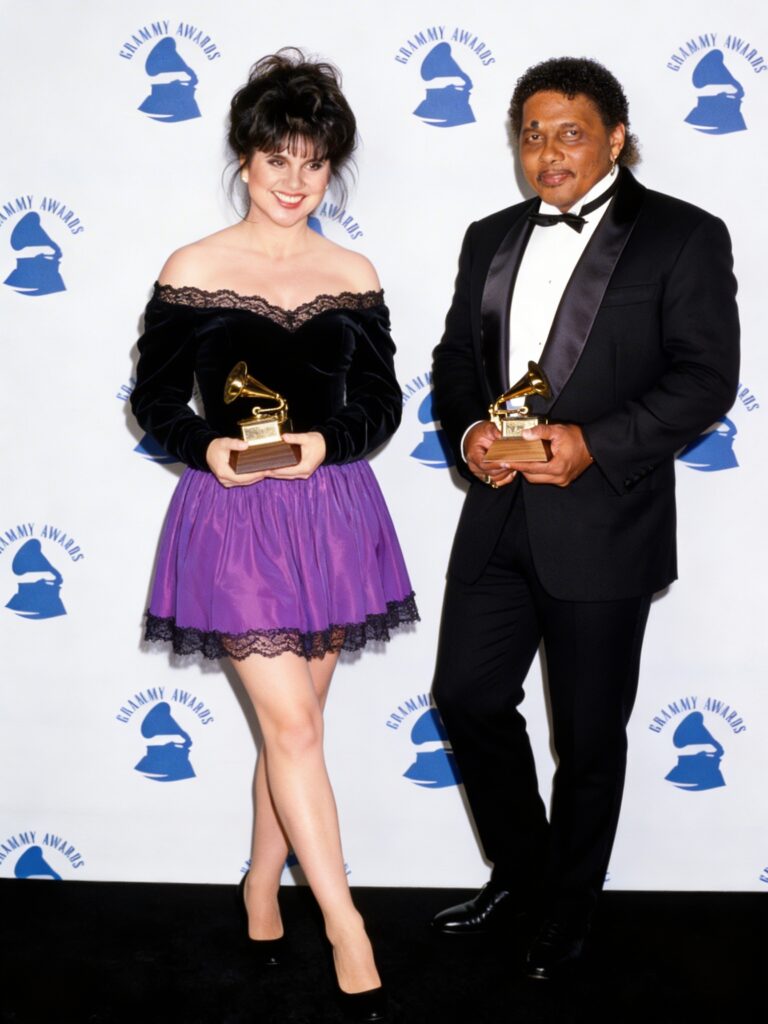
One of the most important facts to place right at the beginning is that “Don’t Know Much” was released in 1989 as a duet by Linda Ronstadt and Aaron Neville on the album Cry Like a Rainstorm, Howl Like the Wind, which came out on October 2, 1989. The song itself became a major international hit, rising to No. 2 on the Billboard Hot 100, reaching No. 1 on Billboard’s Adult Contemporary chart, and climbing to No. 2 on the UK Singles Chart while also topping the chart in Ireland. At the 1990 Grammy Awards, Ronstadt and Neville won Best Pop Performance by a Duo or Group with Vocal, and the song was also nominated for Song of the Year. Those facts matter because they make clear that this was not merely a beautiful collaboration admired by musicians. It was a true event—commercially, critically, and emotionally.
The phrase “impossible Grammy duet” fits because the pairing looked, on paper, almost too unusual to work. Linda Ronstadt came from a world of country-rock, pop, standards, and Mexican traditional music. Aaron Neville came with that instantly recognizable New Orleans soul phrasing—delicate, tremulous, almost airborne in its tenderness. Their voices were utterly different in texture, age, and emotional grain. Yet when they met in “Don’t Know Much,” those differences did not clash. They completed one another. Ronstadt brought strength, warmth, and grounded ache. Neville brought vulnerability, velvet, and that strange angelic quiver that made every word sound newly exposed. Together they turned a well-written song into something much rarer: a conversation between two emotional truths.
The song itself had an earlier life before they touched it. “Don’t Know Much” was written by Barry Mann, Cynthia Weil, and Tom Snow, and it first appeared in 1980 on a recording by Barry Mann. Other versions followed, but none changed the song’s fate the way Ronstadt and Neville did. Their performance did not merely revive an overlooked composition. It revealed what had always been waiting inside it. That is one of the old miracles of popular music: sometimes a song is born before its true voices arrive.
What gives the duet such lasting power is its humility. “Don’t Know Much” is not a flashy song. It does not boast of grand romantic certainty. In fact, its central idea is the opposite. The singers admit ignorance. They do not claim to understand everything about life, books, science, or the world. What they do know is the feeling between them. That is a very old and very beautiful idea: love not as intellectual mastery, but as one clear truth amid the confusion of being alive. In lesser hands, that could sound sentimental. In Ronstadt and Neville’s hands, it sounds almost sacred.
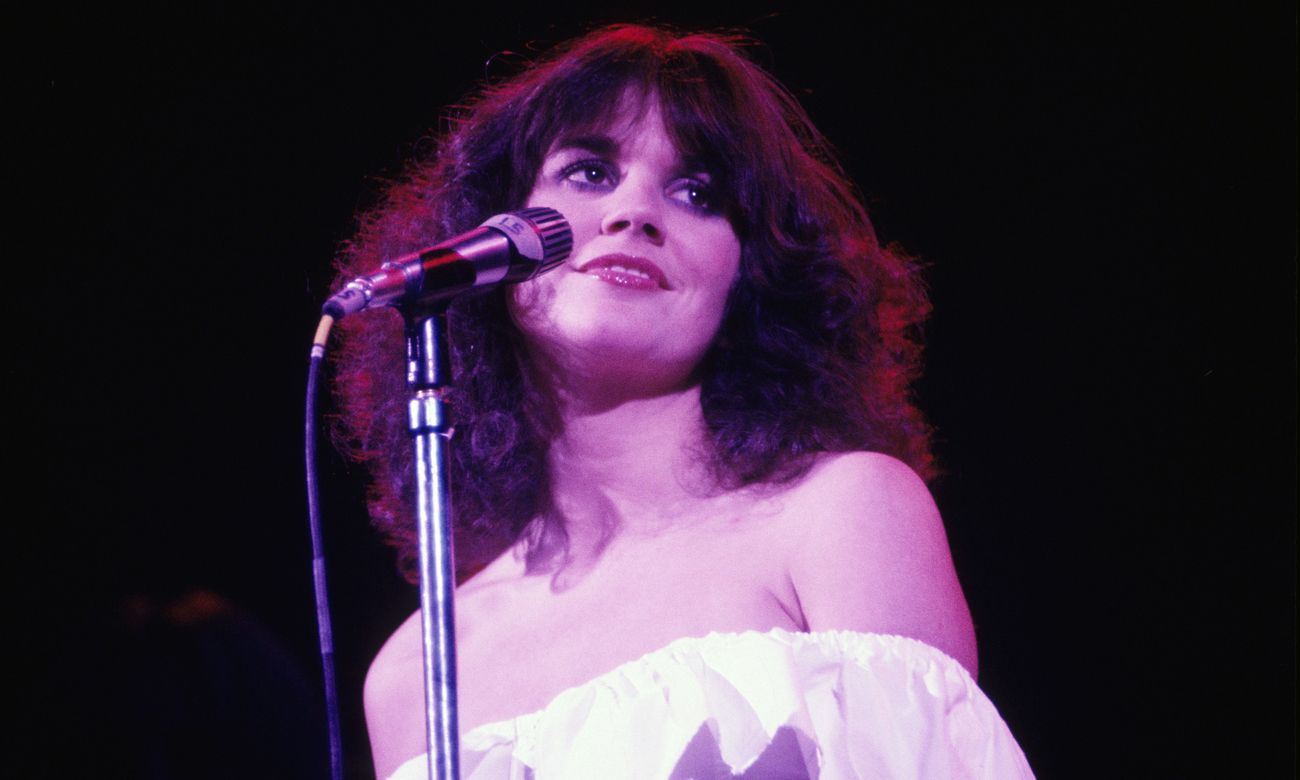
That is where the performance becomes so moving. Linda Ronstadt sings the song with her characteristic emotional steadiness. She does not overreach. She lets the lyric stand in open light. Aaron Neville, by contrast, seems to float into the song from another atmosphere entirely. His voice sounds almost breakable, and that fragility makes the declaration of love feel even more sincere. The tension between her grounded strength and his delicate uplift is the entire emotional architecture of the duet. One voice holds the earth. The other lifts toward heaven. And somewhere in the middle, the song glows.
Placed within Cry Like a Rainstorm, Howl Like the Wind, the duet becomes even more meaningful. That album was one of Linda Ronstadt’s great late-career pop triumphs, reaching No. 7 on the Billboard 200 and eventually earning triple-platinum certification in the United States. It was filled with lush arrangements, emotional sweep, and several duets with Neville, but “Don’t Know Much” stood above the rest in immediate impact. It became the album’s emotional centerpiece and the clearest proof that this pairing was no novelty. It was destiny, at least for a moment in song.
The famous 1990 Grammy performance only deepened that feeling. By then, the record was already a huge success, and when they sang it on that stage, the song no longer belonged only to the studio. It became public myth. The performance still circulates because it captures what people sensed instantly: this was one of those duets where technical beauty and emotional inevitability meet so perfectly that the result feels almost unreal.
So “Don’t Know Much” deserves to be heard as far more than a late-1980s hit duet. It was a 1989 single from Cry Like a Rainstorm, Howl Like the Wind, a No. 2 smash in America and Britain, a Grammy-winning performance, and one of the great vocal pairings of its era. But beyond the awards and chart peaks lies the real reason it lasts. It sounds like two very different souls discovering the same truth at the same time. And once heard that way, the duet no longer feels merely successful. It feels miraculous.
