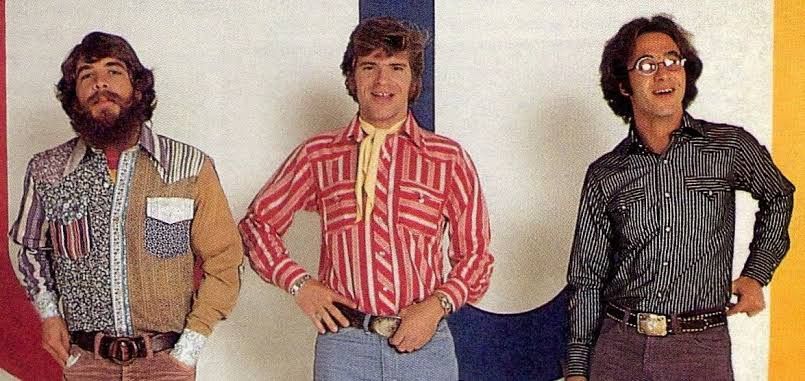
John Fogerty returned on Centerfield with his old fire still intact, but “I Can’t Help Myself” let that comeback move to a sharper, more mechanical 1985 heartbeat.
When John Fogerty released Centerfield in 1985, it was not simply another album arriving in the normal rhythm of a rock career. It was a return after years of public silence, legal strain, and distance from the world that had once known him as the driving voice, guitarist, and principal songwriter of Creedence Clearwater Revival. Within that comeback album, “I Can’t Help Myself” occupies a revealing place: not as the most famous track, and not as the song most often used to define the record, but as a compact burst of urgency where Fogerty’s familiar instincts meet the electronic drum textures of the mid-1980s.
That detail matters. Centerfield is often remembered through the bright baseball metaphor of its title track and the swampy menace of “The Old Man Down the Road”, songs that made the album feel like a man stepping back into the light with his guitar already tuned. But “I Can’t Help Myself” tells a different part of the comeback story. Its electronic drums do not simply decorate the track with period style; they place Fogerty’s return inside the sound of its moment. The beat is clipped, insistent, and less earthy than the old Creedence groove. It does not roll like a bar band in a humid room. It snaps forward, as if time itself has become part of the rhythm.
For an artist so closely associated with lean guitars, roots music, and a voice that seemed to come from some weathered American back road, that 1985 pulse creates an interesting tension. Fogerty was not trying to become a new-wave singer, nor was he abandoning the rock-and-roll directness that had always made his best work feel so immediate. Instead, the track feels like a man testing the machinery around him and discovering that he can still cut through it. The electronic drums provide the frame, but the emotional pressure still comes from Fogerty’s voice and guitar sense: tight, restless, and unwilling to turn the song into mere studio fashion.
The title “I Can’t Help Myself” also gains extra weight when heard in the context of Centerfield as a comeback album. On the surface, it is a phrase of compulsion, desire, and human impulse. Inside Fogerty’s 1985 return, it can also be heard as a quiet artistic statement. After years away from releasing a proper solo studio album, he sounded like someone pulled back not by nostalgia alone, but by necessity. Music was not just an old profession waiting for him. It was a reflex. A force. Something he could resist for a while, perhaps, but not forever.
Fogerty handled Centerfield as a largely self-contained studio project, building the record with the precision of a musician who knew exactly what he wanted from each sound. That sense of control can be heard in “I Can’t Help Myself”. The track does not sprawl. It does not ask for grandeur. It moves with the disciplined impatience of someone who has spent too long outside the conversation and now wants every second to count. The drums press the song forward; the guitars bite around the edges; the vocal carries that unmistakable Fogerty grain, rough enough to feel lived-in but focused enough to hit its mark.
What makes the recording compelling today is the way it refuses to behave like a museum piece. Many comeback records lean heavily on reassurance, reminding listeners that the artist can still sound like the person they remember. Centerfield certainly offered some of that reassurance, and its commercial success proved how deeply people still wanted to hear Fogerty’s voice. The album reached the top of the U.S. album chart and restored him to a prominent place in rock music. Yet “I Can’t Help Myself” is not merely a nod to past triumphs. Its electronic drum pulse gives it a slightly unsettled edge, a reminder that returning is never the same as going backward.
That is the emotional secret of the track. Fogerty was coming back, but he was coming back into a different decade, a different industry, and a different sonic landscape. The old instincts were still there: the concise writing, the punch of the arrangement, the sense that a song should move with purpose. But the surface had changed. The studio had changed. The rhythmic language around rock music had changed. Rather than pretending none of that had happened, “I Can’t Help Myself” lets the change be heard.
In that way, the song becomes one of the album’s more quietly revealing moments. It is not the anthem that crowds remember first, and it is not the radio landmark that usually carries the story of Centerfield. But it captures the comeback from another angle: not the public celebration of a star returning to the field, but the private momentum of a musician who still feels the pull. The machine pulse, the clipped drive, the old voice pushing through new textures—all of it suggests that Fogerty’s return was not only about reclaiming a place in rock history. It was about proving, in real time, that the need to make music had survived the silence.
He could have leaned entirely on memory. Instead, on “I Can’t Help Myself”, he let the present tense into the room. That is why the track still feels worth hearing closely: it catches a familiar artist at the moment when the past is behind him, the future is uncertain, and the beat under his feet is telling him to move.
