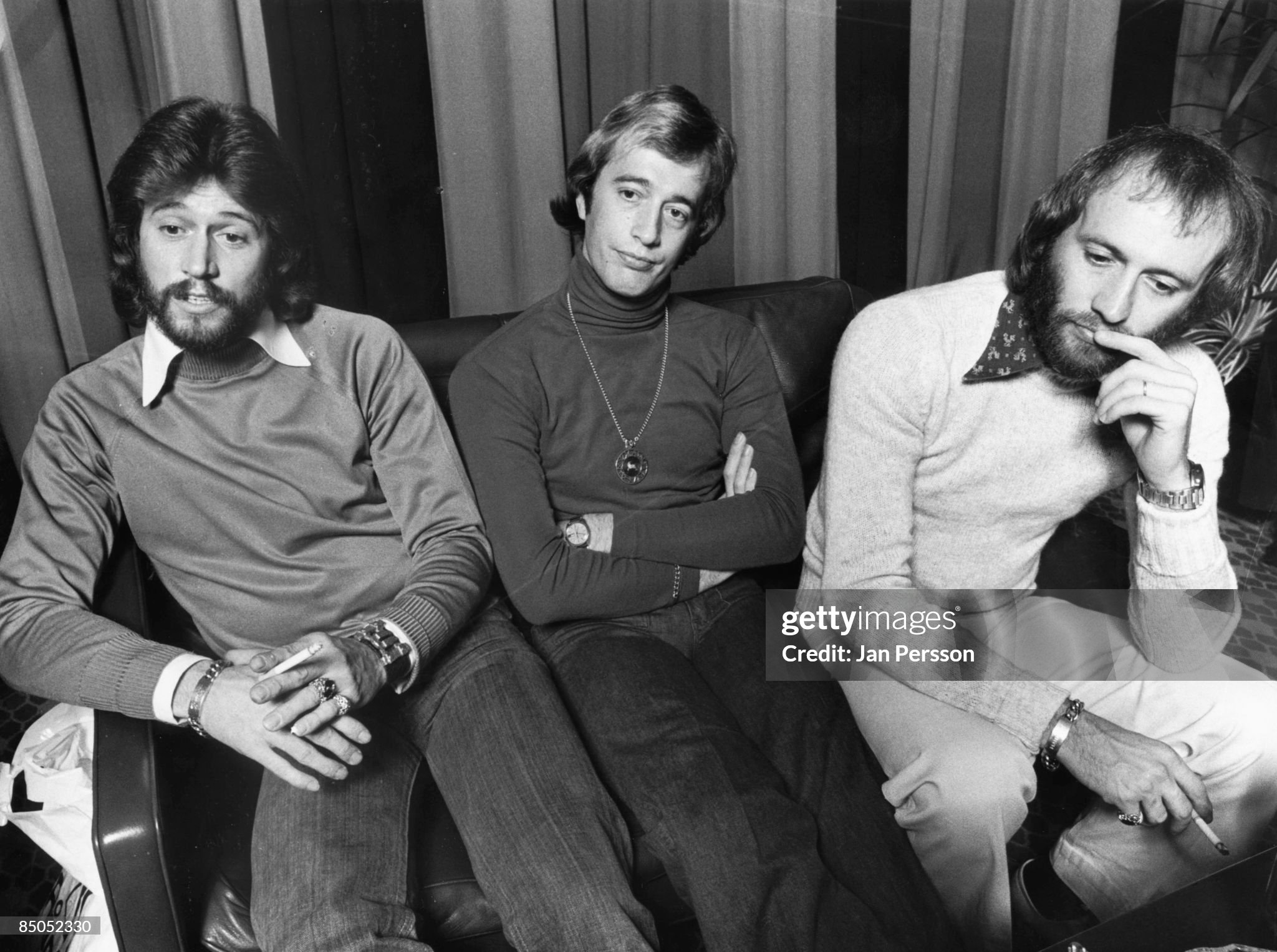
Before the world fixed the Bee Gees in later memory, “Red Chair, Fade Away” caught them chasing a stranger, more psychedelic kind of pop.
“Red Chair, Fade Away” sits inside the 1967 album Bee Gees’ 1st like a brightly painted room with the door left half open. Released during the group’s first major international chapter, the album introduced Barry Gibb, Robin Gibb, and Maurice Gibb to a wider pop audience at a moment when British music was changing shape almost by the week. Though the title suggested a beginning, Bee Gees’ 1st was not literally their first album; it was their first internationally issued LP after the brothers returned from Australia to Britain and entered the late-sixties pop conversation with startling speed. The best-known songs from the record, including “New York Mining Disaster 1941”, “To Love Somebody”, and “Holiday”, gave listeners the melodic and emotional qualities that would define much of the group’s public reputation. But deep in the album’s sequence, “Red Chair, Fade Away” reveals something more peculiar and ambitious.
The song belongs to the album era in the truest sense: not simply as a track placed between singles, but as part of a wider imaginative landscape. In 1967, pop albums were becoming places where a band could test identity, atmosphere, and narrative without having to reduce every idea to a radio hook. The Bee Gees, still very young, arrived in that environment with extraordinary melodic instincts and a willingness to dress those melodies in unusual colors. “Red Chair, Fade Away”, credited to the Gibb brothers, shows them leaning into the psychedelic language of the time without abandoning their gift for compact songwriting.
The recording is often noted for its mellotron, an instrument that could make a pop song feel as if a small orchestra, a ghost choir, or a dream machine had been folded into the tape. In the hands of many late-sixties groups, the mellotron became a shortcut to strangeness, but on “Red Chair, Fade Away” it does more than decorate the surface. It helps create the sense of a room shifting around the listener. The title image itself feels unstable: a red chair, a fading away, an object turned into a vanishing point. The track does not explain itself in plain language. Instead, it lets sound and imagery blur together, as if the listener has stepped into a domestic scene where the furniture is no longer trustworthy.
That quality matters because it complicates the easy version of the Bee Gees story. Popular memory often moves quickly from the early ballads to the group’s later global success in the disco era, leaving less space for the experimental pop craftsmen they were in 1967. Yet Bee Gees’ 1st is full of restless signs: baroque pop touches, theatrical characters, unusual song titles, abrupt mood changes, and harmonies that could sound angelic one minute and oddly anxious the next. “Red Chair, Fade Away” is one of the places where those impulses become especially clear. It is not merely a charming curiosity. It is evidence of a band listening closely to the possibilities opening around them.
The vocal blend is crucial. The brothers’ harmonies had a sweetness that could have softened the edges of almost any material, but here that sweetness is placed against a more disorienting musical frame. The contrast gives the song its charge. You hear young voices, precise and melodic, moving through an arrangement that does not feel completely settled. The result is not heavy psychedelia in the more aggressive sense; it is something more theatrical, more pop-conscious, almost like a miniature stage set built for a dream sequence. It suggests that the group’s ambition was never only to write pretty songs. They wanted to construct little worlds.
Within the context of Bee Gees’ 1st, the track also helps show how wide the group’s early palette was. The album could move from the solemn drama of “New York Mining Disaster 1941” to the devotional ache of “To Love Somebody”, then into more eccentric corners where character sketches and surreal images took over. “Red Chair, Fade Away” belongs to that adventurous side of the record, the side that was willing to sound ornate, curious, and slightly off balance. It carries traces of the same late-sixties air that surrounded records by the Beatles, the Moody Blues, and other groups exploring what studio pop could become, but it remains recognizably a Gibb creation because the melody never disappears beneath the experiment.
That may be the most revealing thing about the song. Even at their most psychedelic, the Bee Gees were rarely interested in chaos for its own sake. Their strangeness tended to be built around tune, structure, and emotional contour. “Red Chair, Fade Away” can feel whimsical on first contact, but repeated listening brings out its discipline: the way the arrangement frames the vocal line, the way the mellotron colors the space without swallowing it, the way the title phrase leaves behind an image rather than an explanation. It is compact, but it points outward.
Hearing the song now, with the long arc of the Bee Gees career behind it, can be quietly startling. This is not the group as a fixed monument of pop history. This is the group in motion, still discovering how many rooms their music could enter. “Red Chair, Fade Away” reminds us that the early Bee Gees were not simply balladeers waiting for a later transformation. They were young architects of atmosphere, testing progressive pop ideas inside three-minute forms, letting harmonies drift through painted corridors, and trusting that melody could survive even when the furniture began to dissolve.
